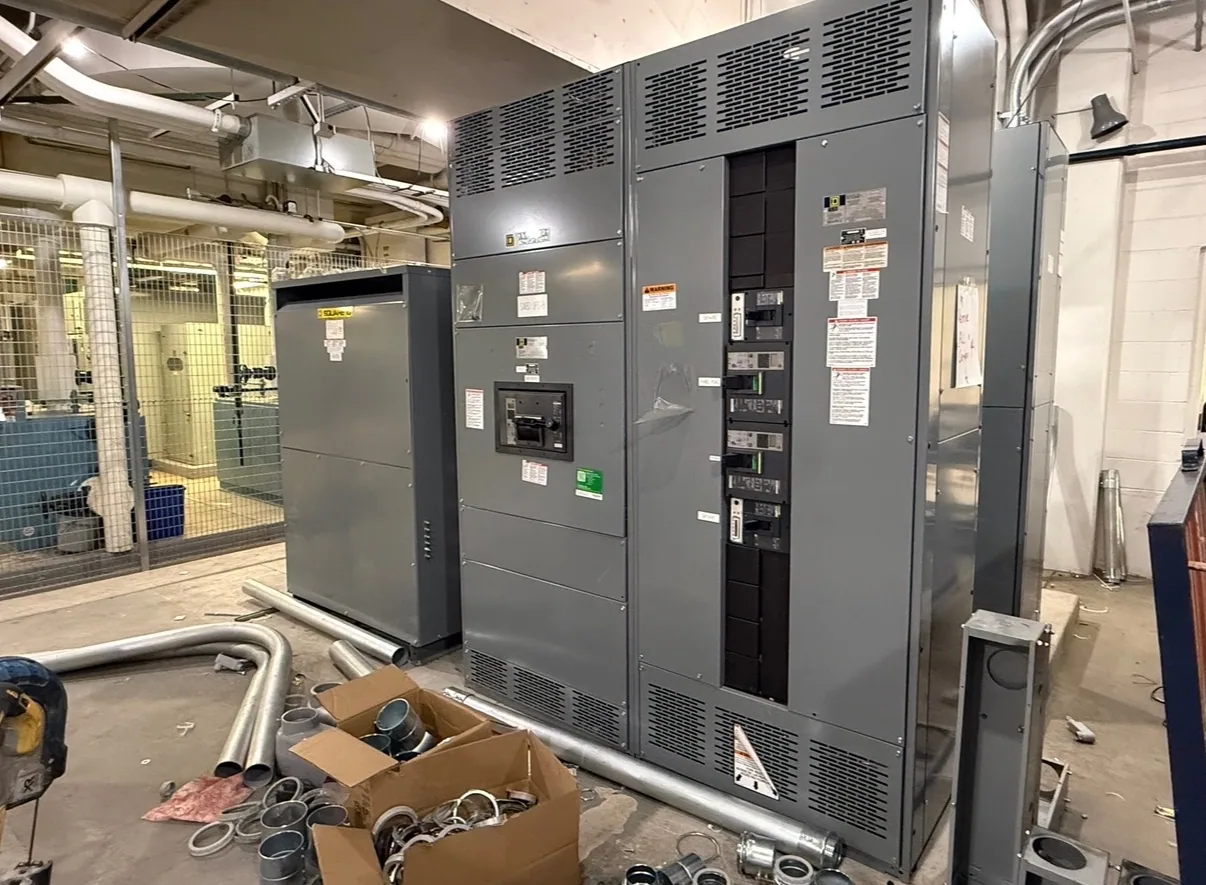
Coordinate the equipment decision with the project
New switchgear affects more than the electrical package: its specifications and physical arrangement must fit the one-line diagram, building plans, procurement sequence, and installation plan. Buyers may be owners, general contractors, electrical contractors, or procurement teams working from an engineer’s design. Establish who has authority to resolve technical questions and who approves substitutions before requesting a quote.
Start by identifying the project phase and the date by which equipment information is needed—not merely the desired delivery date. Early design may leave ratings, room dimensions, or utility interfaces unresolved; procurement documents should identify open items rather than silently assume answers. Align the purchase decision with design approval, submittal review, site readiness, and installation planning, allowing the responsible parties to confirm timing for the actual order.
Confirm the electrical scope before selecting equipment
Use the project’s current electrical documents to define what the equipment must do. Provide the one-line diagram, applicable specifications, system voltage class, source and feeder arrangement, and any stated ratings or operating requirements. Identify whether the scope calls for low-voltage switchgear, a switchboard, or medium-voltage switchgear. Those terms are not interchangeable; the engineer should confirm the equipment type and design basis for the application.
Short-circuit requirements deserve particular attention. Send the specified rating and the study or design information on which it is based, if available, and ask the responsible engineer to confirm that the proposed assembly suits the system. Avoid treating a rating from another building or an earlier drawing as automatically applicable. Project-specific ratings, configuration, and any required listing or testing need review against the actual design and supplied equipment.
Make layout and interfaces part of purchasing
Compare the proposed lineup with architectural and electrical room drawings before the order is finalized. Confirm the available footprint, access and working space requirements, cable-entry approach, routing, equipment orientation, and any constraints on moving the equipment into the building. The project team must resolve these against its plans and applicable requirements; a product description alone cannot establish that an assembly will fit or be installable at a particular site.
List interfaces that can affect adjacent work: incoming sources, outgoing feeders, control or communication connections, grounding provisions, and coordination with transformers or other electrical equipment. Identify which party supplies each interface and which drawings govern it. If the project has phased energization, future expansion, or special operating sequences, raise those needs during specification review. Late clarification can affect drawings, adjacent trades, room readiness, and the procurement schedule.
Sequence submittals, approval, and procurement
Build a document path that identifies who prepares, reviews, comments on, and approves submittals. The manufacturer needs a sufficiently complete specification to develop a project-specific proposal and equipment information. The engineer or designated reviewer then evaluates it against the contract documents; the buyer should track comments and resolve deviations before authorizing production. Request the documents needed for coordination early enough to inform room and cable planning.
For a quote, send the latest approved or clearly marked design basis, requested quantity, project location, desired procurement milestones, and the name or role of the technical reviewer. Include known drawing revisions and identify pending decisions. South Carolina Switchgear Builders manufactures new, custom-to-specification equipment in the United States using all-American components and ships nationwide. Availability and actual lead times depend on the order and must be confirmed; do not base the construction schedule on an unverified estimate.
Assign responsibilities and manage schedule risk
The owner or buyer establishes commercial scope and approvals; the design professional defines and confirms electrical requirements; and the manufacturer reviews the requested configuration against the information provided. The electrical contractor and construction team coordinate receiving, handling, installation, and site readiness. Carriers coordinate transportation, while the project team confirms access, unloading arrangements, and any site restrictions. Make these responsibilities explicit rather than assuming one party covers every handoff.
Track dependencies alongside the equipment milestone: approved drawings, resolved technical comments, confirmed delivery expectations, prepared room and pathways, and agreed receiving arrangements. Ask which decisions could affect the order and who must close them. Dates, shipping details, testing, and documentation are order-specific; confirm them with the manufacturer and project team. Installation, inspection, testing, and maintenance belong to qualified personnel following applicable safety procedures.
Prepare a useful request and choose the next decision
Before requesting a proposal, assemble a practical package: current one-line diagram; project specification; system voltage class and engineer-confirmed ratings; lineup and room constraints; interface and cable-entry requirements; relevant drawing revisions; quantity; destination; and target procurement milestones. Mark unanswered questions clearly, name the party responsible for each, and distinguish mandatory requirements from preferences. This helps reviewers identify gaps without turning assumptions into purchase requirements.
Next, ask the design team to confirm the equipment category, ratings, and unresolved interfaces, then request a manufacturer review and quote based on that defined scope. Compare proposals against the same documents, noting exceptions, drawing-review expectations, availability, and delivery assumptions for written confirmation. A disciplined handoff—from design basis to approved submittal, purchase authorization, and site coordination—gives the construction team a clearer path to integrating new switchgear without treating an unconfirmed schedule or configuration as settled.