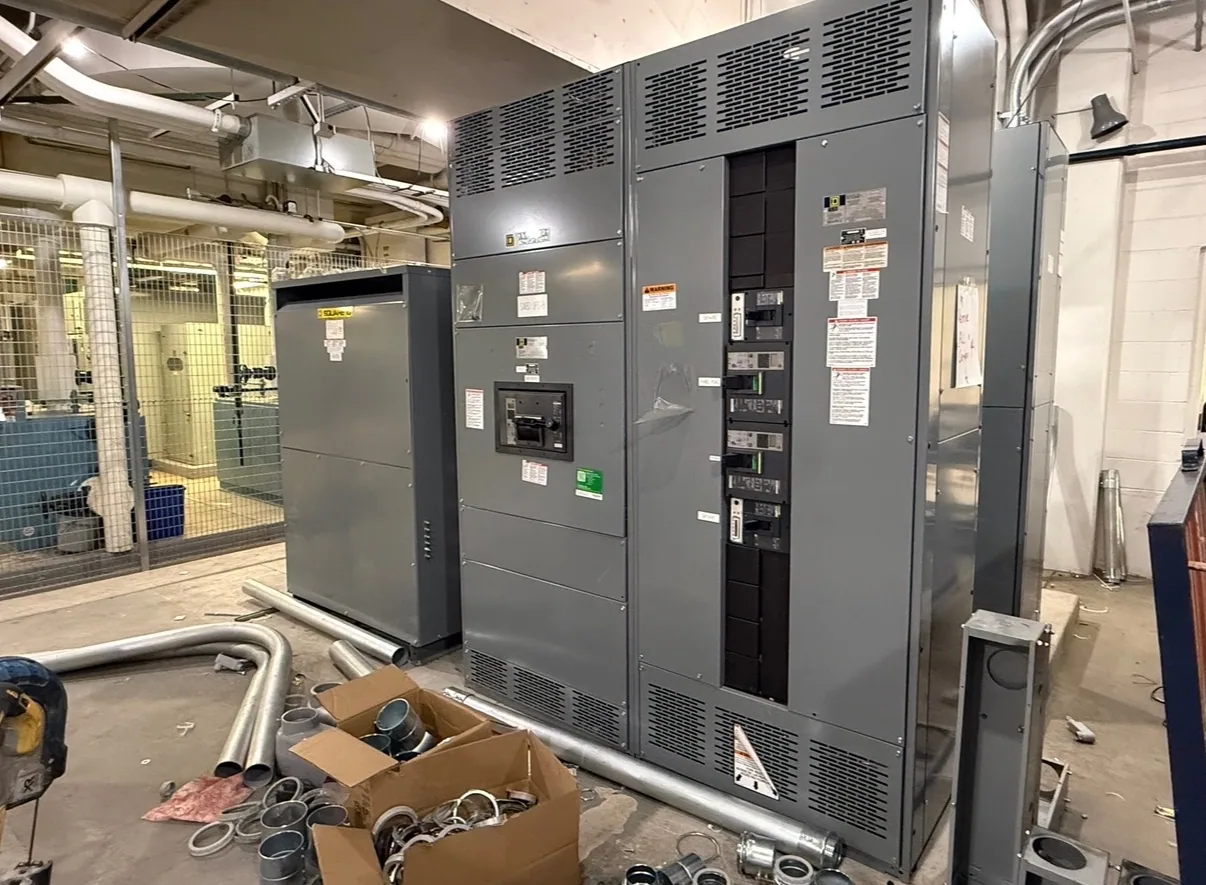
What low-voltage switchgear does
Low-voltage switchgear is an assembly for distributing electrical power at low voltage, with protective devices arranged to control and isolate portions of a system. The configuration is not interchangeable across projects: incoming sources, feeder circuits, protective functions, operating needs, and the available installation space all influence the design. South Carolina Switchgear Builders manufactures new equipment custom to specification and ships nationwide.
Start by confirming the intended equipment category with the project engineer. A low-voltage switchboard and low-voltage switchgear may serve related distribution purposes, but their construction, applicable product standards, and design details are not automatically the same. UL 891 applies to eligible low-voltage switchboards; applicability and assembly listing must be verified for the specific design. Do not assume a listing, rating, or configuration without reviewing the equipment documentation.
Match voltage and current to the system
Provide the nominal system voltage, phase and wire arrangement, grounding approach, and source configuration. The equipment’s maximum voltage and insulation requirements also need to suit the system and project specification. A 480 V class assembly is low voltage; confirm that this is the intended class rather than inferring it from a facility description. If the project requires 5 kV or 15 kV class equipment, that is medium-voltage switchgear and should be scoped accordingly.
Normal load current is only one part of current selection. The project team should identify expected demand, incoming and feeder circuit requirements, bus and protective-device ratings, and any stated growth allowance. Ambient conditions, enclosure arrangement, ventilation, operating temperature, and other derating conditions may affect the usable rating. Confirm these factors with the responsible engineer rather than selecting equipment from a single load figure or a general product label.
Specify fault protection and withstand capability
Interrupting ratings address a protective device’s ability to interrupt fault current under its specified conditions. Short-time withstand and related assembly ratings address the ability of equipment to withstand fault stresses for a defined duration or coordination purpose. These values are connected to the available fault current, source characteristics, protective-device selection, and the project’s coordination approach; they should not be guessed from nominal voltage or normal operating current.
Ask the project engineer to provide the calculated available fault current at the equipment location and the required device and assembly ratings. Include the protective-device types or functions, preferred coordination approach, and any project-specific study assumptions that affect selection. If source conditions or system topology may change, identify that possibility for review. The manufacturer can then evaluate the requested configuration against the supplied requirements, with final suitability confirmed through project engineering and approved submittals.
Balance access, footprint, and maintainability
Available floor space is not simply the width of an equipment lineup. Share room dimensions, entry and removal routes, door locations, obstructions, cable approach, and the intended arrangement of incoming and outgoing connections. The project team must confirm working space and access requirements under the applicable design and safety rules. A compact arrangement can conflict with cable bending needs, service access, heat management, or future circuit changes.
Discuss how qualified personnel are expected to inspect, operate, isolate, and maintain the assembly under approved procedures. Device placement, compartment arrangement, labeling, metering, and access strategy may affect both footprint and operating convenience. Explain whether the lineup serves a continuously operating process, critical loads, or equipment with planned shutdown windows. These factors help frame useful design questions without assuming that one construction option suits every facility.
Consider production loads and future changes
For a manufacturing application, map the distribution path to production lines, motor loads, auxiliary systems, and other major feeders. A line expansion or added motor load may change demand, protective-device requirements, and the number or size of circuits. Identify known phases of growth and distinguish firm loads from planning allowances. This gives the engineer a basis to assess spare capacity and reduces the risk of treating an unverified expansion estimate as a design requirement.
Trade-offs should be explicit. Additional provisions for future circuits can affect initial footprint and configuration, while a smaller lineup may limit later flexibility. Likewise, protection and coordination choices need to reflect the system study and operating goals rather than a broad preference for a particular device. For automotive manufacturing or other production environments, provide process and load context, but let the responsible engineer establish the electrical criteria for the specific installation.
Prepare a complete equipment request
A useful request for quotation identifies the project location and schedule needs, nominal voltage, system configuration, source information, normal load, available fault current, and required incoming and feeder circuits. Include one-line diagrams, specifications, room and access drawings, cable entry details, environmental conditions, metering needs, and requested protective functions when available. Mark open items clearly so the project team and manufacturer can distinguish confirmed requirements from assumptions requiring engineering review.
Also state requested documentation, testing, listing, and standards requirements for confirmation against the actual assembly; none should be presumed. The owner establishes operating needs and project constraints, the engineer defines and approves electrical criteria, and the contractor coordinates installation conditions and field interfaces. South Carolina Switchgear Builders can review the supplied specification for new, custom-to-specification equipment. Confirm configuration, ratings, applicable listing, testing, and delivery timing against the final approved scope before procurement and installation planning proceed.