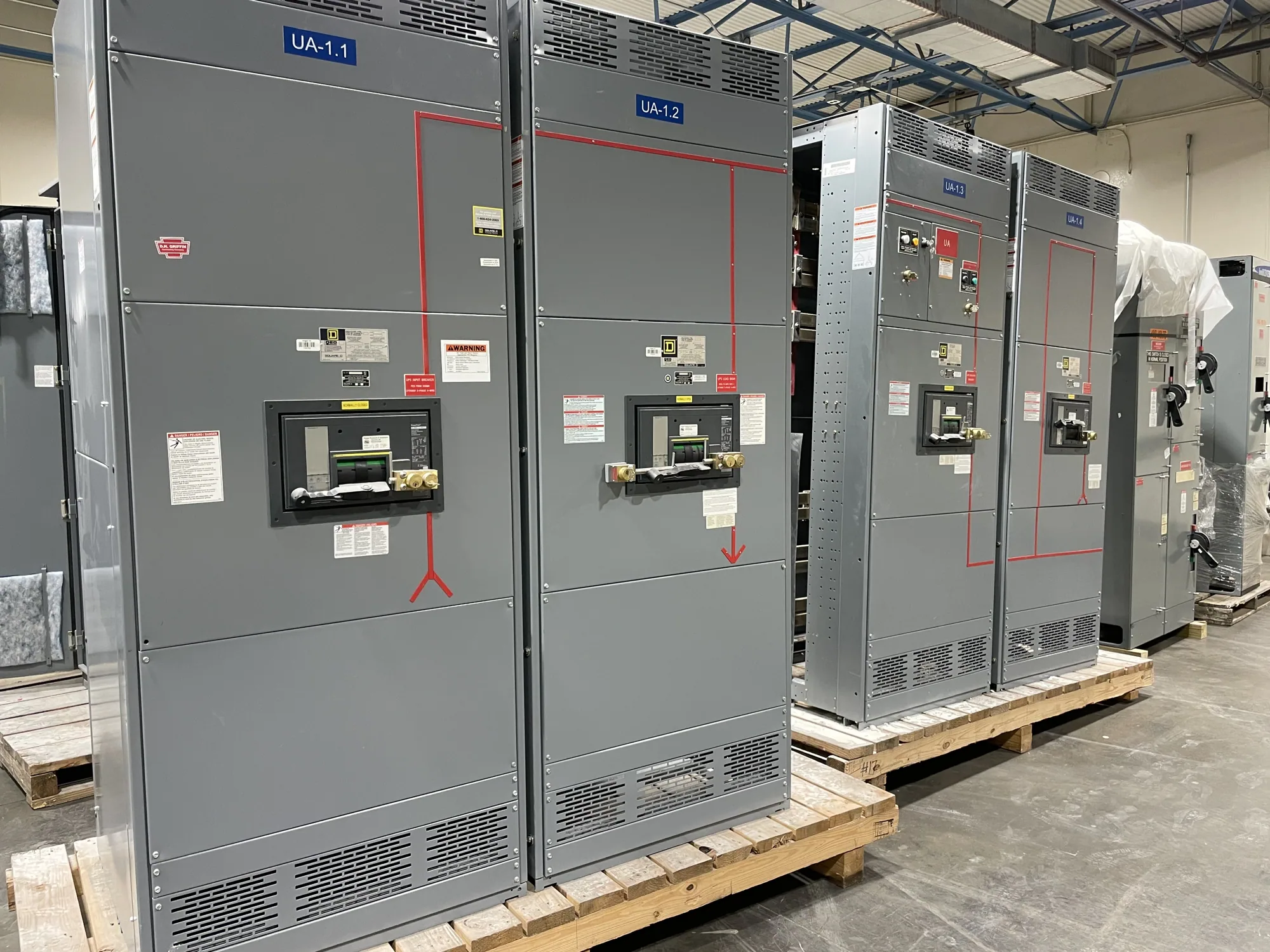
Start with the electrical system, not a product label
A voltage rating is useful only when it is interpreted in the context of the electrical system the equipment will serve. Begin with the system’s nominal voltage and configuration, then identify the equipment voltage class required by the project design. A catalog description or familiar service voltage is not enough to establish suitability; the responsible engineer must reconcile the equipment specification with the complete system information.
Voltage selection is also distinct from current, short-circuit, and continuous-current ratings. Those characteristics may affect the same equipment choice, but they answer different design questions. A voltage match does not establish that an assembly can carry the required load or withstand the available fault current. Treat each rating as a separate item to verify against the one-line diagram, load information, and applicable project requirements.
Understand nominal voltage and equipment maximum voltage
Nominal system voltage describes the system designation used in project documents. Equipment maximum voltage is a separate equipment characteristic associated with the voltage it is designed for under defined conditions. The relationship between these values depends on the equipment design and the applicable standard. Do not assume they are identical, or choose an assembly solely because its nameplate figure appears close to the system’s nominal value.
Ask the project engineer to identify the governing system voltage and the required equipment rating, including how the applicable standard treats those values. Confirm whether the project includes more than one voltage level, a transformer interface, or distribution equipment on both sides of a conversion point. The electrical one-line diagram, equipment schedules, and written specifications should tell a consistent story. Resolve discrepancies before a purchase order locks in a configuration.
Check insulation and system configuration together
Insulation considerations are tied to the equipment’s intended voltage class and design, not merely to a general statement that the insulation is “adequate.” The responsible engineer should specify applicable insulation requirements and confirm how they relate to the system, installation conditions, and governing standard. A manufacturer can review the requested configuration, but project-specific applicability must be confirmed against the actual design and supplied equipment.
System configuration matters as well. Document whether the system is grounded or ungrounded, the phase arrangement, and any other characteristics called for by the project specification. These details can affect the required equipment design and the way protection and distribution are coordinated. Avoid inferring configuration from a nominal voltage alone. If the design documents leave a condition unclear, record it as an open engineering question rather than assuming a default.
Choose the correct voltage class
A 480 V class assembly is low-voltage equipment, while 5 kV and 15 kV class equipment are medium-voltage. These examples identify classes; they do not establish a universal cutoff or determine which product belongs in a particular project. Select the class that matches the specified system and equipment requirements. Product type and voltage class should be stated explicitly in the request so the manufacturer can review the intended application.
For example, a project may include a 480 V distribution section and a separate medium-voltage section connected through a transformer. The correct question is not which broad category sounds appropriate for the site, but what voltage each section must serve and what ratings its specification requires. The engineer should confirm the nominal voltage, equipment maximum voltage, insulation requirements, system configuration, and interfaces for each section independently.
Balance requirements with design coordination
More capability is not automatically a better fit. A rating or configuration that is not required can affect equipment selection and coordination, while a rating below the project requirement can make the proposed assembly unsuitable. Have the responsible engineer define the required values and acceptable design basis before comparing proposals. Then check that the equipment description, drawings, and supporting documentation all refer to the same voltage class and system arrangement.
For new custom equipment, provide the manufacturer with the latest one-line diagram, equipment schedule, project specification, and known interface information. Identify the nominal system voltage, requested equipment class, required equipment maximum voltage, insulation criteria, and grounding or phase details where specified. Flag unresolved conditions and indicate which project documents govern if they conflict. This gives the manufacturer a clear basis to review the request and identify information needing confirmation.
Prepare a voltage-rating checklist for the RFQ
Before requesting a quotation, assemble a concise voltage data set: the nominal voltage at each equipment section; the required equipment voltage class and maximum voltage; system configuration and grounding; specified insulation requirements; and the applicable standard or design criteria. Include transformer connections and upstream or downstream interfaces where relevant. Ask the engineer to confirm that these inputs agree with the drawings and that no separate voltage level has been omitted.
Also request documentation that identifies the proposed equipment rating and design basis, and clarify which listing, testing, or standards requirements apply to the specific assembly. Applicability depends on the equipment and final specification; UL 891, for example, applies to eligible low-voltage switchboards, not medium-voltage switchgear, and any assembly listing must be confirmed for that design. Confirm availability and delivery timing for the actual order rather than assuming either from a general product description.
Coordinate review before equipment release
Voltage selection is strongest when engineering, procurement, and manufacturing work from the same controlled documents. Submit revisions when the one-line diagram or specification changes, and request written clarification for unresolved ratings before approving final drawings or releasing the order. Review the proposed equipment description and interfaces against the project documents, then record accepted deviations through the project’s normal approval process.
South Carolina Switchgear Builders manufactures new switchgear and switchboards to specification, with US-built equipment and nationwide shipping. Configuration, availability, applicable ratings, listing, and delivery dates depend on the order and require confirmation. With the system voltage and design requirements clearly documented, the project team can evaluate a proposal on a defined basis and move toward equipment that fits the intended distribution application.