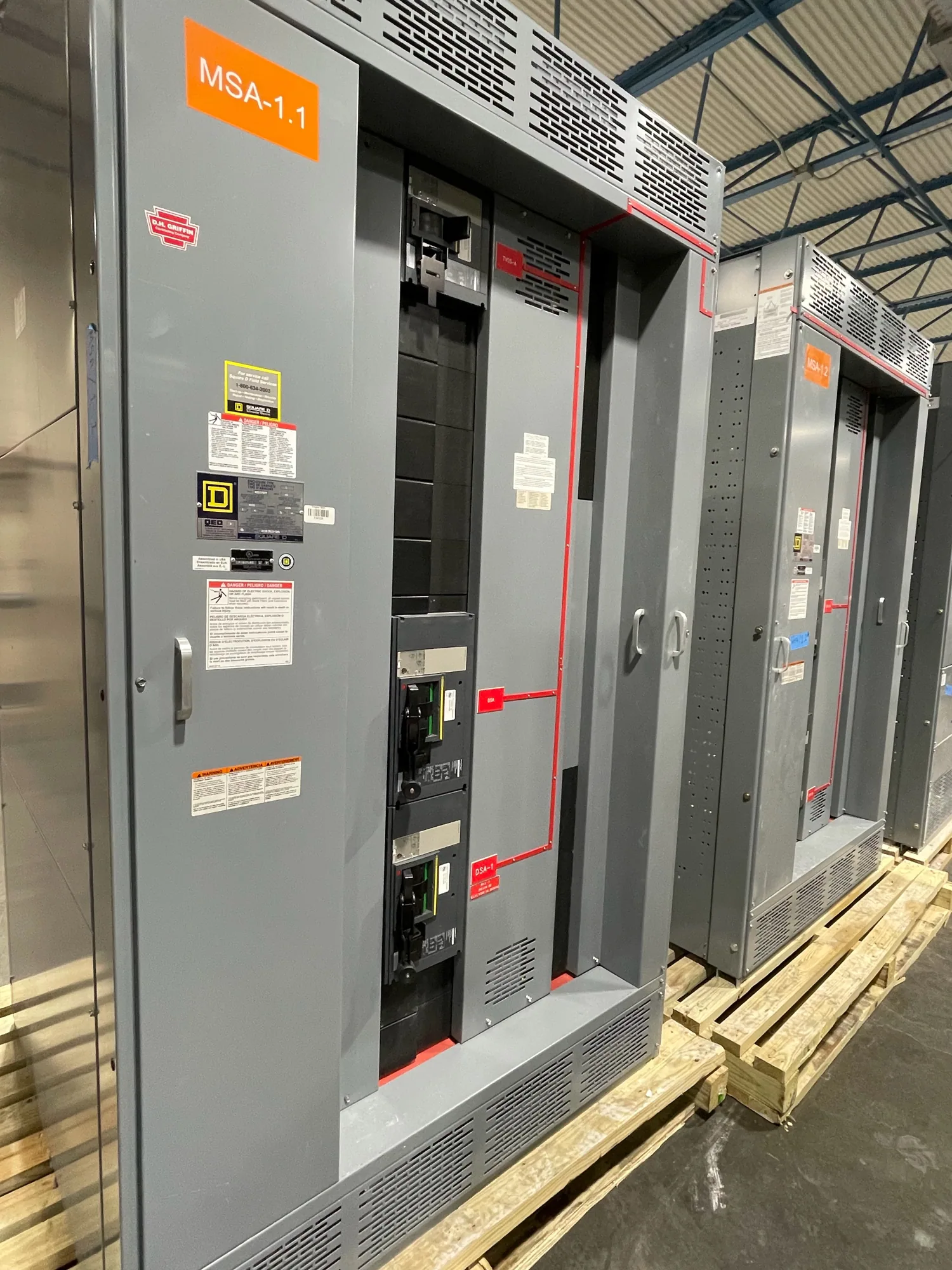
Start with the fault current at each point
Short-circuit ratings are not a single number that can be selected independently of the electrical system. A useful specification begins with the available fault current at the equipment’s connection point and considers how the equipment is expected to handle and interrupt a fault. The responsible engineer must establish the system conditions and verify the relevant ratings for the proposed equipment and configuration.
Available fault current is the prospective current that the system could supply at a particular location under defined conditions. It can differ between the service, a distribution bus and downstream equipment because source characteristics, transformers, conductors and system configuration affect the calculation. Therefore, a rating suitable at one point cannot automatically be assumed suitable elsewhere. A project study and equipment documentation should use consistent assumptions.
Separate device capacity from assembly ratings
An interrupting rating describes a circuit breaker’s ability to interrupt fault current under stated conditions. It is not interchangeable with an assembly’s short-circuit current rating or withstand capability. Switchgear and switchboards comprise interacting components and connections; their applicable assembly ratings depend on the design and the conditions identified for that assembly. The specification should distinguish the breaker rating from the rating of the complete equipment lineup.
Terms and rating methods vary by equipment class and applicable standards, so avoid treating “withstand,” “short-circuit current rating,” and “interrupting capacity” as synonyms. Ask the engineer to identify the required rating basis, system voltage, relevant time or operating conditions, and any restrictions associated with a tested or listed configuration. Confirm that documentation for the actual proposed design supports the stated ratings; do not rely on a component value as proof of an assembly value.
Use system data to establish requirements
To evaluate requirements, gather the one-line diagram, nominal system voltage, source and transformer information, conductor details, grounding approach, protective-device data, and any fault-current study available for the project. Provide known operating configurations, such as alternate sources or planned ties, for the engineer to assess. Missing or changing inputs can alter calculated fault current, so label assumptions and identify items awaiting confirmation.
Review fault current at each relevant bus and equipment connection, rather than applying a service-level figure throughout the installation. Consider both the current available and the protective devices’ clearing behavior where the selected rating method makes that relevant. The engineer should assess whether a proposed arrangement and its documentation support the required conditions. If system changes are planned, evaluate whether they affect the fault-current calculation or equipment specification before finalizing the order.
Compare low- and medium-voltage applications carefully
For a 480 V class low-voltage switchgear application, the engineer may compare calculated bus fault current with the interrupting rating of the specified breakers and the applicable rating of the complete assembly. The exact required values cannot be inferred from voltage class alone. Confirm the actual source, system configuration, protective-device arrangement and equipment design, then obtain documentation showing which ratings apply to the supplied lineup.
For a 5 kV or 15 kV class medium-voltage switchgear application, the same disciplined approach applies, but use ratings and terminology appropriate to that equipment class. Do not transfer a low-voltage switchboard criterion or assume that a breaker’s figure alone establishes the lineup’s capability. Ask the project engineer and manufacturer to verify the specified voltage class, fault-current basis, switching arrangement and supporting design documentation for the exact equipment being considered.
Balance ratings with coordination and design
Choosing a rating is part of a broader engineering decision. Protective-device coordination, system expansion, available space, maintainability and the intended arrangement may affect the specification. A higher rating should not be selected casually as a substitute for reliable system data, nor should cost or footprint be considered without confirming technical suitability. The responsible engineer determines appropriate requirements and reviews any design alternatives against the project’s electrical study and applicable rules.
Ask whether changes to transformers, utility sources, generators, motors or bus connections could increase available fault current or change the operating cases that matter. Discuss protective relay and breaker functions as part of the coordination review, while keeping their settings and capabilities distinct from assembly ratings. Any proposed alternate or reduced-rating approach requires project-specific engineering analysis and verification; it should not be assumed acceptable from a general description.
Prepare a clear equipment specification and RFQ
For a useful request for quotation, provide the one-line diagram and identify each lineup’s location, voltage class, source arrangement and required short-circuit rating basis. Include the fault-current study or calculated values, system conditions used, protective-device requirements, preferred construction details and requested documentation. Separate confirmed requirements from open questions so the manufacturer can identify information needed to evaluate a custom-to-specification design.
Request confirmation of the ratings applicable to the proposed assembly and its specified components, along with the documents available for that exact configuration. If a low-voltage switchboard is involved, ask whether UL 891 applies to the proposed design and verify any assembly listing directly; do not assume it applies to every switchboard or to medium-voltage switchgear. Applicable standards, listing, testing and ratings must be confirmed for the supplied equipment.
Coordinate review before release
Before approval, have the responsible engineer compare the final submittal with the current study, one-line diagram and project requirements. Resolve discrepancies in voltage, fault-current values, device selections, operating cases or assembly documentation before equipment release. Share revisions promptly if the source arrangement or project scope changes, and confirm which drawings and ratings represent the final proposed design.
Installation, testing and maintenance should be planned and carried out by qualified personnel under applicable safety procedures. For a new equipment inquiry, South Carolina Switchgear Builders can review project information for custom equipment built to specification and shipped nationwide. Availability and lead times depend on the order and must be confirmed; provide complete engineering inputs early so ratings, design details and project coordination can be reviewed together.