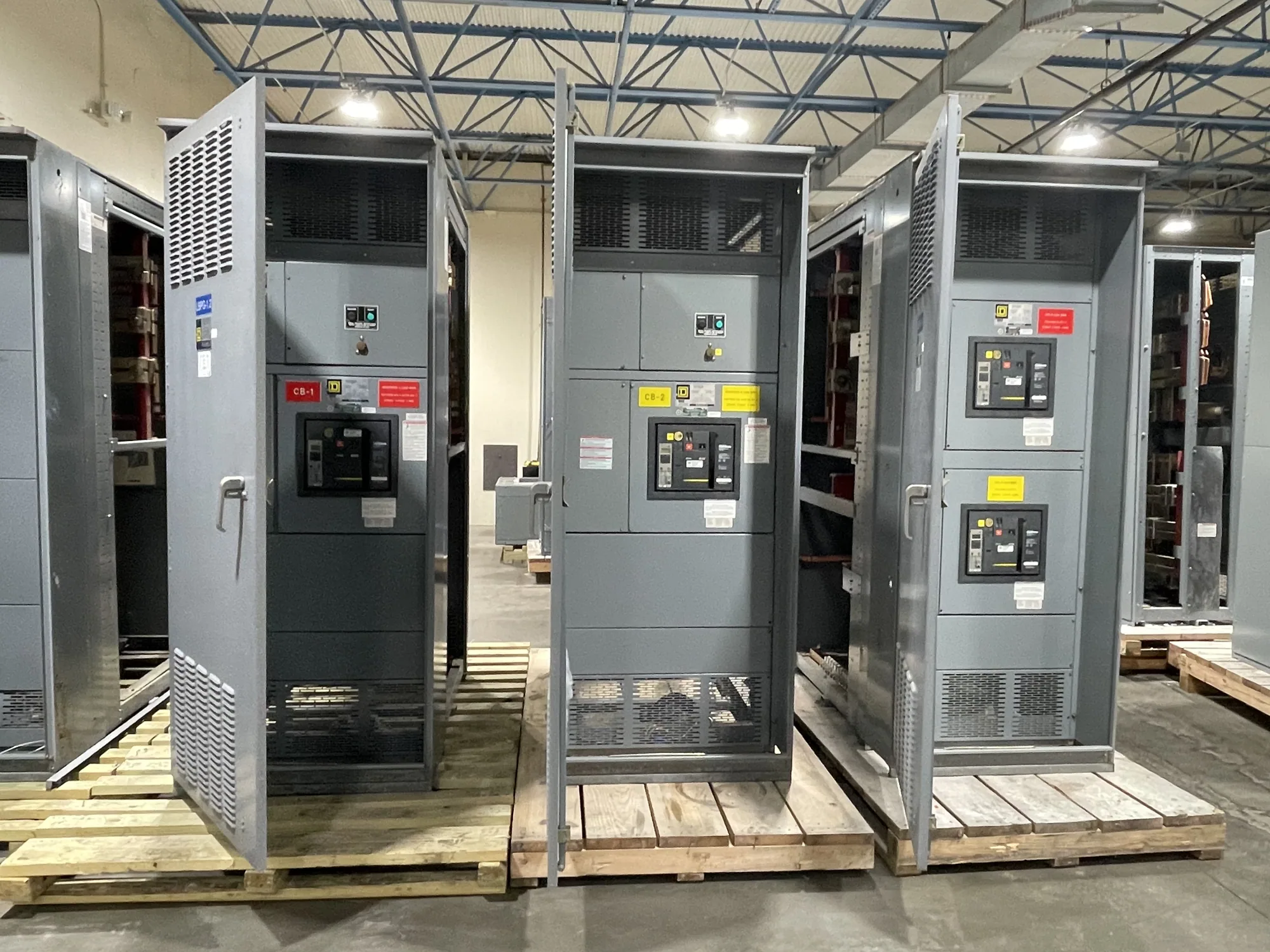
Equipment for South Carolina projects
South Carolina Switchgear Builders is an American manufacturer of new switchgear and switchboards, serving customers in South Carolina and shipping nationwide. The company’s equipment is US-built, uses all-American components, and can be configured to specification. We offer short lead times, with availability and delivery dates confirmed for each equipment configuration and project.
Electrical contractors, consulting engineers, facility owners, and purchasing teams may enter a project at different stages. Some are defining a distribution arrangement, while others have a developed specification and need a manufacturer to quote new equipment. In either case, the best starting point is the project’s electrical requirements and scope, rather than a generic product label.
Choose the equipment category by function
Switchgear, switchboards, motor control centers, and panelboards serve related but distinct roles. Switchgear assemblies are selected for the switching, protection, and distribution functions required by a project. Switchboards are low-voltage distribution assemblies with their own construction and application considerations. A motor control center groups motor control equipment; a panelboard distributes power through branch circuits. The design professional should identify which assembly fits the one-line diagram and intended use.
Do not treat these product names as interchangeable. If the project calls for a particular lineup, incoming arrangement, outgoing devices, controls, or compartmentation, those needs should appear in the specification or be resolved with the responsible engineer. A conversation about equipment scope can prevent a quote from comparing unlike assemblies or omitting equipment that another part of the project assumes is included.
Define voltage class and electrical requirements
Voltage class is a central selection decision. A 480 V class assembly is low voltage; 5 kV and 15 kV class equipment is medium voltage. These are distinct product categories, not simply size options. Identify the system voltage and the intended equipment class from project documents, and have the engineer confirm the required ratings and protective-device arrangement. Do not infer ratings from a facility name, industry, or an existing cabinet’s appearance.
Provide the available one-line diagram, load information, and specification when requesting a proposal, if those documents are ready for release. Include known requirements for bus, incoming and outgoing circuits, metering, control power, protective devices, and connection points. If a value remains under engineering review, mark it as pending rather than guessing. The final configuration, ratings, and standards applicability must be confirmed for the specific design.
Account for application and installation conditions
The site and operating context influence equipment choices. Indoor or outdoor placement, environmental exposure, access for operation, cable entry, working space, and the route into the electrical room may affect enclosure and lineup planning. For an automotive manufacturing facility, for example, the project team may need to consider production loads and how distribution interfaces with the planned installation. The application is useful context, but it does not establish a particular rating or configuration.
Share the available room dimensions, access constraints, preferred entry direction, and relevant site conditions with the project team. Coordinate these details with the installer and engineer before the design is finalized. A lineup that satisfies an electrical schedule still needs a workable path to its installation location and space for qualified personnel to complete installation, testing, and maintenance under applicable safety procedures.
Review listing, testing, and specification details
Ask which standards, listing, and testing requirements apply to the proposed assembly, and request confirmation against the actual design. UL 891 concerns eligible low-voltage switchboards; applicability and assembly listing must be verified for the specific switchboard. It should not be applied to medium-voltage switchgear or assumed to cover every type of switchgear. Listing, testing, ratings, and compliance are project-specific matters, not automatic attributes of a product category.
Review the submittal requirements and approval sequence with the engineer, contractor, and purchasing team. Confirm which drawings and technical documents are needed, who reviews them, and how approved changes will be recorded. Clarifying responsibilities before release helps align the purchased assembly with the project documents and reduces the risk of relying on assumptions about included equipment or acceptance criteria.
Prepare a useful purchase request
A clear request for quotation should identify the project, equipment category, voltage class, quantity, and requested scope. Attach the latest available one-line diagram, specifications, load schedules, and relevant room or connection information. Call out deviations, alternates, and unresolved requirements explicitly. If the project needs both switchgear and switchboards, list them separately so each assembly can be evaluated against the right requirements.
Also identify the project schedule milestones that affect procurement, including when approved submittals are needed and the planned delivery window. These dates are inputs for confirmation, not a promise that any particular schedule can be met. South Carolina Switchgear Builders describes short lead times, but actual availability and delivery timing require review of the specified equipment and order details.
Coordinate the next project steps
Before placing an order, align the manufacturer’s proposal with the project specification and confirm any exceptions, options, ratings, and applicable listing requirements. Establish who will approve drawings and how changes will be handled. Coordinate shipment planning with the receiving location and installation team; nationwide shipping is available, while delivery dates and project-specific logistics should be confirmed for the order.
For a productive discussion, bring the documents and open questions that shape the equipment selection. Confirm whether the need is low-voltage switchgear, a low-voltage switchboard, or another assembly; establish the engineer-approved electrical requirements; and identify the installation constraints. With that scope in hand, buyers can evaluate a new, custom-to-specification proposal on the details that matter to their South Carolina project.