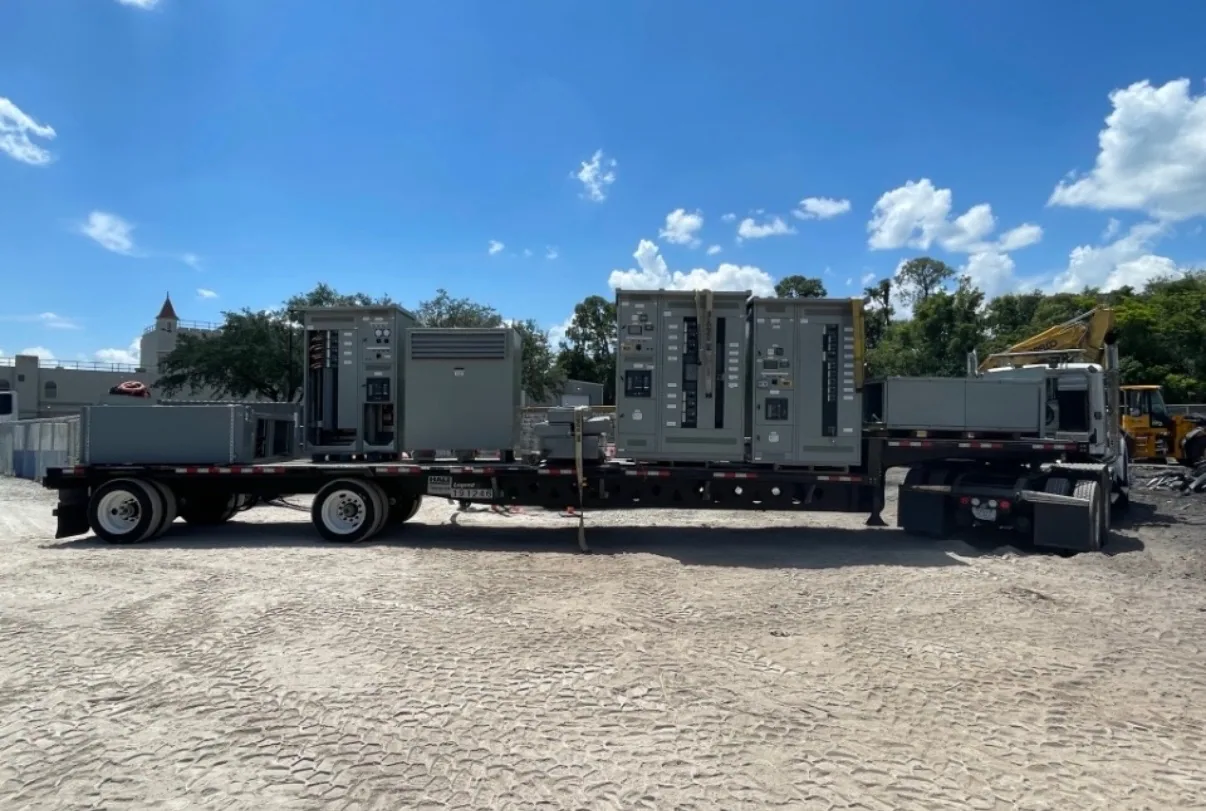
Start with the equipment question
Switchgear questions often begin with a practical decision: what equipment belongs in the project, and what information will an engineering team need to specify it? Facility owners, electrical contractors, consulting engineers, and purchasing teams may approach that decision differently. The useful starting point is the system requirement—not a product name or a general-purpose rating.
South Carolina Switchgear Builders manufactures and supplies new switchgear and switchboards, custom to specification, with nationwide shipping. Equipment configuration, availability, delivery timing, ratings, testing, and listing depend on the order and design and should be confirmed for the specific project. The answers below help organize the discussion before a buyer requests a quote.
How do I choose between switchgear and a switchboard?
These terms describe related but distinct equipment, and the right choice depends on the electrical distribution design. Consider the intended application, voltage class, system arrangement, protective devices, available space, access for operation and maintenance, and the project’s required ratings. A switchboard may suit a particular low-voltage distribution arrangement; another project may call for switchgear based on its design and operational needs.
Do not decide from terminology alone. Ask the responsible project engineer to identify the equipment type and explain the basis for that selection. Confirm how incoming and outgoing circuits, protective functions, metering, and future provisions are intended to fit together. This avoids treating switchboards and switchgear as interchangeable or assuming that one format automatically meets a project’s needs.
What do voltage class and ratings tell me?
Specify the system voltage and the equipment class explicitly. A 480 V class product is low voltage, while 5 kV and 15 kV class products are medium voltage. The correct class is only one part of selection: the project engineer must also establish applicable system conditions and the ratings needed for the particular assembly and installation.
Short-circuit ratings deserve particular attention because they are not a substitute for a complete system review. Provide the available fault-current information and the specified rating basis, when established, and ask the responsible engineer to confirm that the proposed design is appropriate. Do not infer a rating from a catalog label or assume it applies to every configuration. The supplied equipment specification and design need to be checked together.
What information should a buyer provide?
A useful request for quotation identifies the equipment type, voltage class, intended application, required ratings, and project quantity. Include the one-line diagram and applicable drawings or specifications if available. Note the required incoming and outgoing arrangements, protective and metering requirements, enclosure or installation conditions, and any space or access constraints that affect configuration.
Also state the project location, requested delivery window, review milestones, and who will answer engineering questions. If a requirement is not yet settled, mark it for confirmation rather than guessing. Clear documentation helps the manufacturer assess the requested scope and identify open items. A quote can only be evaluated properly when the proposed equipment is compared with the same project requirements and assumptions.
How are testing, listing, and delivery confirmed?
Testing and listing are specific to the equipment design and order; they should not be assumed from a general product description. Ask what inspection, documentation, testing, and listing apply to the proposed assembly, and have those details confirmed against the actual specification. UL 891 may apply to eligible low-voltage switchboards, but applicability and assembly listing must be verified for that design. It does not apply as a blanket claim to medium-voltage switchgear.
Likewise, ask for an order-specific availability and delivery estimate. Short lead times may be available, but actual timing depends on the configuration and order and must be confirmed. Coordinate drawing review, approvals, manufacturing requirements, shipping, site readiness, and receiving arrangements early. Do not treat an estimate as a delivery guarantee unless the order terms establish it.
What about installation, commissioning, and safety?
Plan installation, testing, commissioning, and maintenance with qualified personnel and the project’s applicable safety procedures. The manufacturer’s scope and the project’s installation responsibilities should be clear before purchase. Confirm what equipment documentation is supplied, what information the site team needs, and who is responsible for coordinating interfaces with the rest of the electrical system.
Never treat a general FAQ as authorization to work on energized equipment or as a replacement for project-specific procedures. Questions about safe work boundaries, protective measures, and commissioning steps belong with qualified personnel who know the installation and applicable requirements. Resolve responsibilities and documentation needs before delivery so that equipment receipt and planned work can be coordinated responsibly.
What should I do next?
For a focused purchase discussion, gather the one-line diagram, project specification, required ratings, equipment quantities, schedule, and known installation constraints. Identify unresolved decisions and the person responsible for confirming them. The clearer the scope, the easier it is to review whether a proposed configuration addresses the project’s stated needs and to distinguish confirmed requirements from assumptions.
Use a switchgear RFQ checklist to organize the request, consult a glossary when terminology is unclear, and review the project’s short-circuit rating requirements with the responsible engineer. If the central question is equipment selection, compare low-voltage switchgear and switchboards in the context of the actual design. A complete, scope-specific request gives the manufacturer a sound basis to discuss new equipment, confirm design details, and coordinate the next steps.