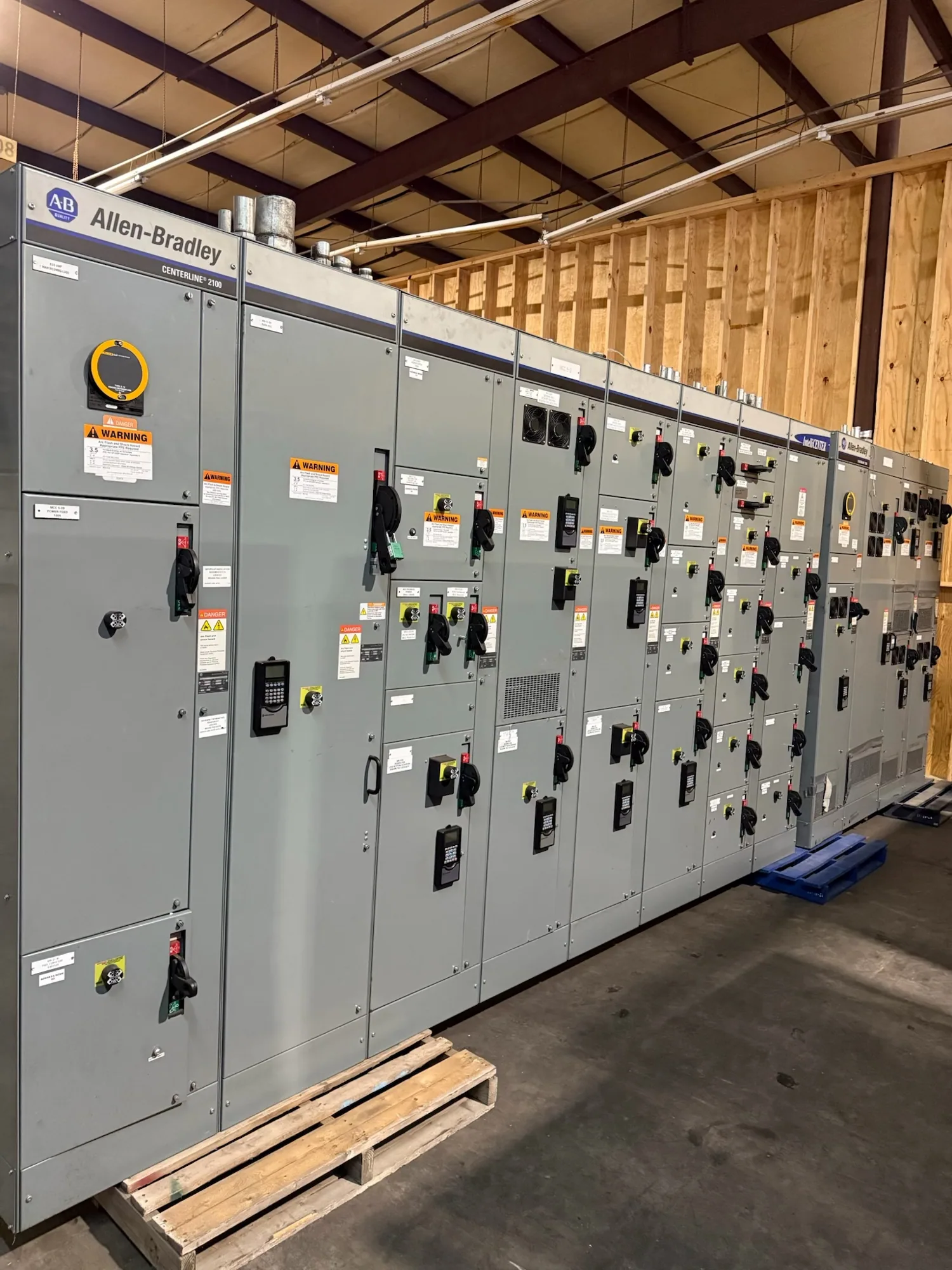
Start with the equipment’s role
Low-voltage switchgear and switchboards both distribute electrical power and provide ways to control or protect circuits, but they are not interchangeable labels for one standard design. The right comparison begins with the function required in your system: incoming service or source connection, distribution to downstream loads, circuit protection, isolation, or a combination. The project’s electrical engineer should define those needs and the operating conditions before selecting equipment.
In this comparison, low-voltage switchgear means equipment designed for the project’s low-voltage system; a 480 V class system is one example. A switchboard is a distinct equipment type commonly used to distribute power among feeders and branch circuits. Names alone do not establish construction, ratings, or suitability. Confirm the proposed assembly’s actual design and documentation against the project specification rather than assuming that products with similar labels perform the same role.
Construction and applicable standards
Construction is a consequential point of difference. A switchboard and a switchgear assembly may arrange bus, protective devices, barriers, and access differently. The specific design determines how compartments are organized, how devices are installed and connected, and what access is provided for inspection or replacement. These details affect the equipment footprint, cable entry, coordination with adjacent gear, and planned maintenance. Request drawings and a configuration description to evaluate the assembly rather than relying on a category name.
Standards must be checked for the particular equipment and intended application. UL 891 applies to eligible low-voltage switchboards, but applicability and any assembly listing must be verified for the specific design. It should not be applied indiscriminately to all switchboards, and it is not the governing label for medium-voltage switchgear. Ask which standards and listing requirements the project calls for, and have the manufacturer confirm whether the offered assembly meets them. Do not infer compliance from a product family or a general statement.
Protective devices and coordination
Both equipment types may be configured with protective devices, but the device selection and arrangement depend on the electrical study, system architecture, and specification. Relevant questions include the required interrupting capability, available fault current at the equipment, protective-device settings, selectivity or coordination objectives, and whether metering or control components are needed. The responsible engineer must establish the required values and confirm the proposed equipment is suitable; a comparison article cannot determine them from voltage class alone.
Consider how the chosen arrangement fits the wider distribution system. An incoming main, tie, or feeder arrangement may affect operating procedures and coordination with upstream and downstream devices. If future expansion is important, identify the circuits or spare provisions being requested and confirm that the proposed configuration supports them. Avoid treating a larger-looking lineup or a particular equipment name as proof of greater capacity, selectivity, or flexibility; those outcomes are design-specific and need documented review.
Maintainability and project trade-offs
Maintenance needs can influence the selection as much as initial layout. Ask what routine inspection and servicing the equipment design permits, which components require access, and whether work can be planned without obstructing adjacent equipment. Consider clearances, room layout, cable access, labeling, and the owner’s maintenance practices. All inspection, testing, installation, and maintenance must be performed by qualified personnel under applicable safety procedures; equipment choice does not make energized work appropriate.
A representative decision might involve a facility replacing or adding a low-voltage distribution lineup. If its specification calls for a particular switchboard arrangement and applicable listing, the buyer should compare compliant switchboard designs and their feeder layout. If the required functions and project documents instead call for a switchgear assembly, evaluate that equipment on its specified construction and protective-device requirements. Neither outcome is universal: available fault current, operating needs, standards, and engineering direction shape the decision.
Information to gather before requesting equipment
Prepare the single-line diagram, system voltage and phase, source and load information, and the intended role of the new assembly. Include available fault-current data and required protective-device details when established by the engineer. State the equipment type if the design has already selected one, along with required ratings, enclosure or environmental conditions, cable entry, metering, control, and physical constraints. Identify applicable project standards and any listing requirements that must be confirmed for the specific configuration.
Also explain the project stage, target delivery window, shipping destination, and who will review drawings and submittals. Availability and actual lead times depend on the order and must be confirmed. South Carolina Switchgear Builders manufactures new equipment to specification, with US-built, all-American components and nationwide shipping; configuration, applicable listing, testing, ratings, and delivery timing require confirmation against the actual order. Clear inputs help the manufacturer assess scope and identify open questions before an order is finalized.
Make the decision through documented review
Before purchase, compare the proposed equipment against the engineer-approved one-line diagram and written specification, not just a quote heading. Verify the equipment category, protective-device schedule, required ratings, dimensions, cable provisions, applicable standards, and submittal details. Resolve differences in writing, including any requested deviations. Confirm who approves drawings, how revisions are handled, and what information is needed to coordinate manufacturing and delivery. These steps help prevent a nominally similar assembly from missing a critical project requirement.
The practical choice is the equipment type and configuration that satisfy the project’s documented electrical, operational, space, and compliance needs. If the distinction remains unclear, ask the responsible engineer to define the required equipment category and performance criteria, then have the manufacturer respond against those requirements. A careful comparison produces a more useful purchase decision than choosing by terminology alone—and gives the project team a shared basis for reviewing the new equipment before release.