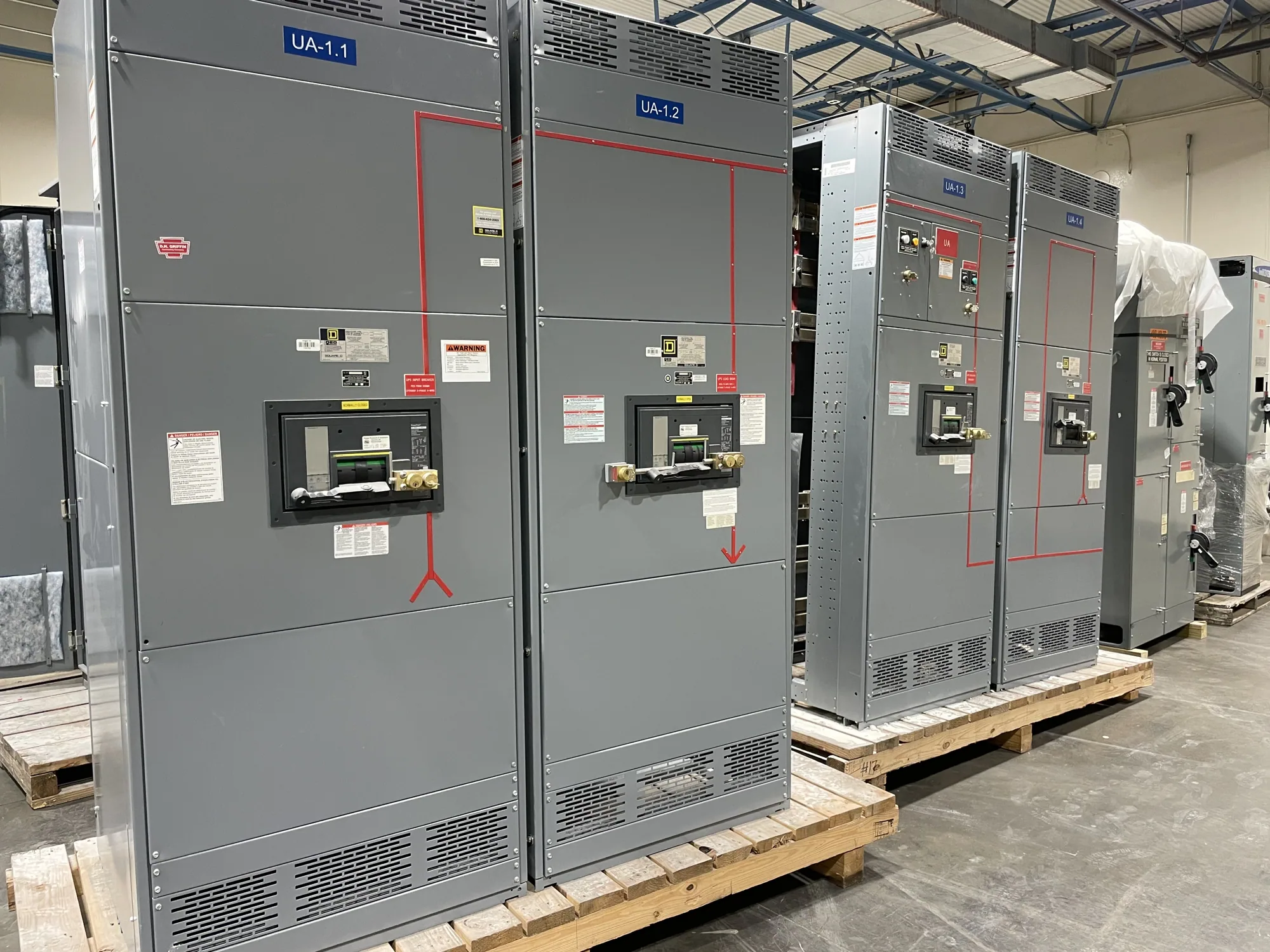
Where switchboards fit in a distribution system
A low-voltage switchboard is an assembly used to receive and distribute electrical power through service and feeder devices. For a South Carolina facility planning new equipment, the first step is to define the assembly’s role: what source supplies it, what loads it serves, and where it sits in the overall distribution arrangement. This context helps distinguish a switchboard requirement from a medium-voltage switchgear application or another equipment scope.
Switchboards are not interchangeable with every product described as switchgear. Voltage class, construction, intended function, and the project specification determine the appropriate equipment category. A 480 V class assembly is low voltage; 5 kV and 15 kV class equipment are medium voltage. Confirm the actual system and equipment requirements with the responsible engineer rather than relying on a general product label or an assumed voltage boundary.
Define voltage, current, and fault requirements
Provide the nominal system voltage and configuration, including relevant phase and grounding details. The design team should reconcile those facts with the equipment’s required maximum voltage and insulation requirements. These values are related but not identical. Do not select an assembly solely from a nominal voltage description; the responsible project engineer must establish the applicable system conditions and specify equipment suitable for them.
Normal load current is another starting point, not the whole rating decision. Identify expected service load, feeder loads, continuous operating conditions, and any known future demand. Bus and device current ratings must be evaluated against the actual application, including operating temperature and any conditions that could require derating. The engineer should confirm the selected ratings for the complete assembly and its intended environment.
Available fault current at the installation point is essential to specifying short-circuit performance. Ask the engineer or other responsible party to provide the applicable fault-current information and required rating basis. The service and feeder devices, bus arrangement, and assembly must be coordinated to the project’s requirements. A rating cannot be responsibly inferred from facility size or from a typical application; confirm it for the specific design and source conditions.
Choose service and feeder devices around the loads
The service device establishes how incoming power is controlled and protected; feeder devices divide distribution among downstream circuits. Their selection depends on the electrical design, load characteristics, protection and coordination objectives, and the interface with downstream equipment. Document the intended functions and required device characteristics instead of treating a device name or frame size as a complete specification. The project engineer should approve protection decisions and system coordination.
For a facility with production lines and motor loads, feeder planning should account for the actual circuits and the way the operation may change. A line expansion could call for additional feeder positions, revised load calculations, or space reserved for later work, but spare capacity should not be assumed from an enclosure’s apparent size. The buyer should discuss present and planned loads with the engineer and identify which future provisions belong in the initial equipment scope.
Balance layout, access, and expansion
Physical dimensions affect more than room fit. Provide the available equipment footprint, access and working-space constraints, cable entry direction, routing needs, and any known obstructions or environmental conditions. Confirm these details with the project team before the design is finalized. The required arrangement may influence section count, device placement, bus configuration, and installation planning; no particular dimensions or construction should be presumed without reviewing the actual specification.
Expansion provisions involve a practical tradeoff. Reserving space or accommodating future feeders can support later changes, while a larger assembly may affect room layout and initial project scope. Ask whether future circuits are defined, what capacity is genuinely required, and how additions would be coordinated with the distribution design. The answer should be documented in the equipment specification, not left to an informal assumption during procurement.
Prepare a useful request for quotation
A clear RFQ should identify the project location, requested equipment category, nominal voltage and system configuration, source and service arrangement, load information, required service and feeder devices, available fault current, and applicable project specifications. Include one-line diagrams, load schedules, connection details, dimensions, cable entry expectations, and environmental information when available. Mark unresolved items for engineering review instead of supplying guesses that could lead to a mismatched design.
Also state the requested scope and submittal expectations. Ask which options, ratings, testing, listing, and standards can be confirmed for the proposed assembly. UL 891 applies to eligible low-voltage switchboards, but applicability and assembly listing must be verified for the specific design; it should not be assumed for every switchboard. Confirm availability and delivery dates against the final specification rather than treating general lead-time positioning as a project commitment.
Coordinate responsibilities through delivery
The owner or buyer can define operational goals, site constraints, and procurement requirements. The responsible engineer establishes and approves electrical design criteria, including system ratings, fault-duty requirements, and protection coordination. The contractor coordinates installation conditions, connections, access, and construction sequencing with the design team and equipment documentation. Clear responsibility boundaries reduce late changes and help keep the equipment scope aligned with the project.
South Carolina Switchgear Builders manufactures new switchboards to specification, using US-built equipment and all-American components, and ships nationwide. Share the project’s current drawings and confirmed requirements to begin a practical equipment discussion. Design-dependent ratings, configuration, listing, testing, availability, and delivery timing must be verified for the specific assembly. Installation, testing, and maintenance should be performed by qualified personnel following applicable safety procedures.