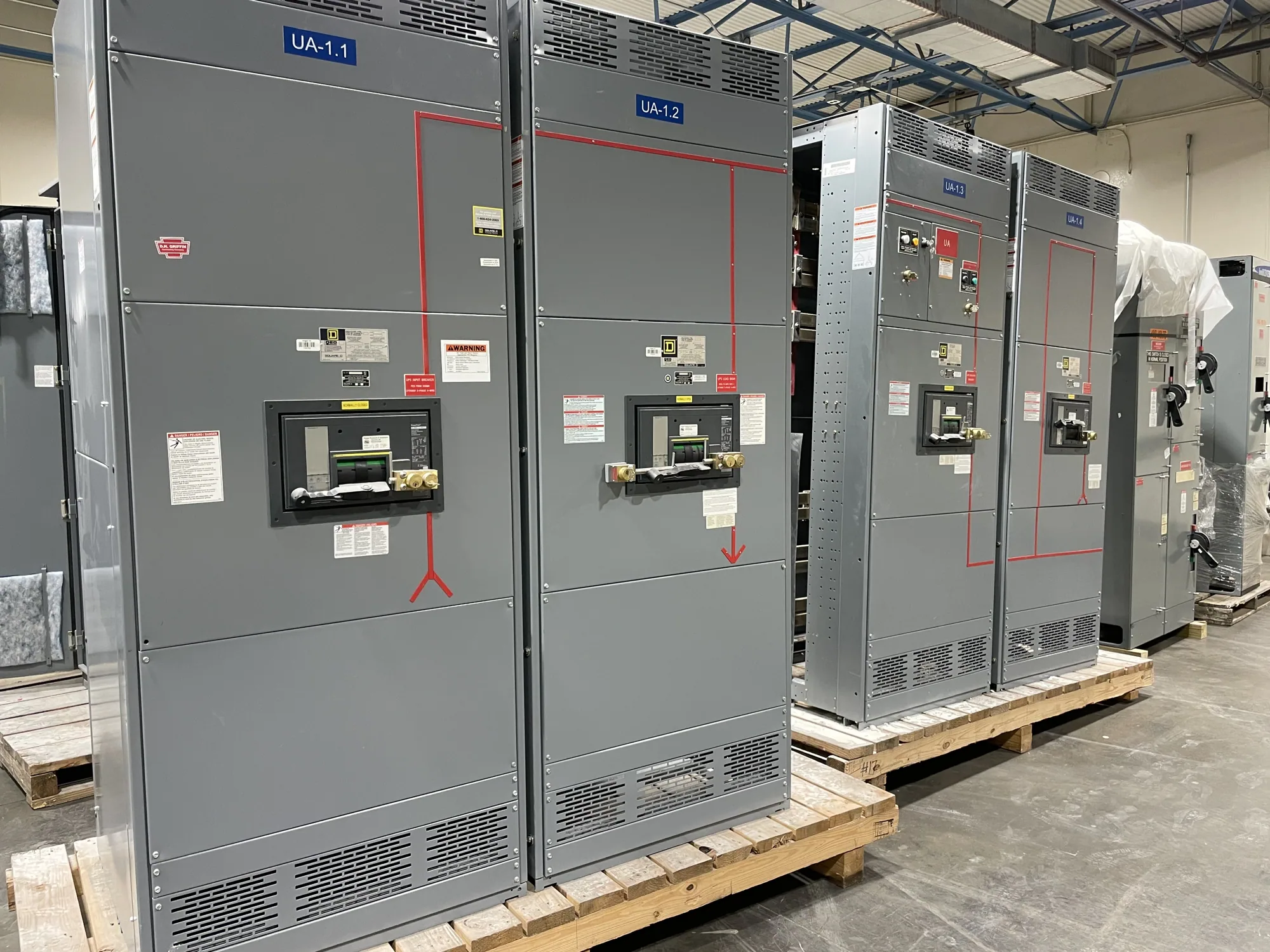
Separate equipment standards from installation requirements
“Codes and standards” can refer to several different requirements, and they do not all govern the same part of a project. A product standard addresses equipment design, construction, or evaluation. An electrical installation code governs how equipment is incorporated into a facility. Utility rules may apply at the service connection, while the authority having jurisdiction (AHJ) interprets and enforces applicable requirements for a project.
Start by identifying which equipment is being specified, where it will be installed, and what project stage is under review. A manufacturer’s equipment proposal cannot by itself settle every installation, utility, or permitting question. The responsible engineer, installer, utility, and AHJ may each need to confirm different portions of the requirements. Treat each source as a separate item to verify rather than assuming one standard covers the entire installation.
Identify the equipment and its application first
Before choosing a standard, define the actual assembly and its duty. Establish whether the project calls for low-voltage switchgear, medium-voltage switchgear, or a switchboard; these are not interchangeable names. Record the system voltage and frequency, service or distribution role, source and load arrangement, available fault information, grounding method, operating environment, and any interface with other equipment. The responsible project engineer should confirm which inputs are required.
Then match those facts to the applicable product category and the project’s governing documents. For instance, UL 891 applies to eligible low-voltage switchboards, not to medium-voltage switchgear or automatically to every low-voltage switchgear assembly. Whether a particular design is eligible and whether its assembly listing is required or available must be confirmed for that exact configuration. Do not infer listing, certification, or compliance from a product name or a general reference in a specification.
Confirm the correct edition and adoption path
A standard’s title alone is not enough. Confirm the edition named in the contract, the edition adopted or referenced by the applicable jurisdiction, and any project-specific amendments or owner requirements. Requirements can vary with location and project scope. Ask the electrical engineer or code professional to document which editions govern equipment design, installation, inspection, and any special application; have the AHJ clarify interpretations that affect approval.
Also check how documents interact. A specification may cite a product standard, an installation code, utility service rules, and owner criteria in separate sections. If dates or requirements conflict, do not choose whichever appears newest without review. Request a written resolution from the responsible design authority, and confirm the approved basis before equipment design is released. This keeps procurement aligned with the documents that will be used for review and installation.
Evaluate ratings and design conditions, not labels
Standards do not supply project-specific ratings by themselves. The engineer should establish required voltage class, continuous current, short-circuit duty, insulation coordination where applicable, enclosure and environmental conditions, control power, metering, protection, and operating arrangements. Which characteristics apply depends on the system and equipment. Provide verified study data and the sequence of operation where available; identify assumptions that still require engineering confirmation.
Compare the specified performance with the proposed assembly on a like-for-like basis. Ask which ratings are confirmed for the offered configuration, what testing or documentation is included, and whether any option changes the evaluated assembly. Request exceptions in writing. Availability, delivery dates, testing, ratings, and standards applicability must be confirmed against the actual specification and supplied equipment; do not treat a general capability statement as project approval.
Use voltage class to frame the questions
Consider a project evaluating 480 V class low-voltage switchgear alongside 5 kV or 15 kV class medium-voltage switchgear. The voltage class helps identify the product category, but it does not determine every applicable requirement. For the 480 V equipment, confirm whether the specified product is switchgear or a switchboard and whether any requested listing applies to that exact assembly. For medium-voltage equipment, confirm the standards and tests relevant to its design and application rather than applying a low-voltage switchboard standard.
For either option, the engineer must verify system fault data, protective-device coordination, grounding, environmental conditions, interfaces, and the project’s adopted code editions. The utility and AHJ may have separate requirements affecting the service or installation. If the project is comparing architectures, document what each alternative must accomplish and ask the design team to assess the tradeoffs. Voltage alone is not a complete basis for selecting equipment or determining compliance.
Build a reviewable specification package
Before requesting a proposal, assemble the one-line diagram, equipment schedule, project location, service details, available electrical studies, operating sequence, environmental conditions, and applicable specification sections. Identify required standards and editions, utility criteria, owner requirements, and known AHJ direction. Mark unresolved items clearly instead of silently filling gaps with assumed values. A concise, consistent package helps the manufacturer identify what is specified and what needs clarification.
During review, request a compliance or exception response tied to the actual configuration, together with applicable drawings, ratings, and documentation identified in the contract. Coordinate drawing review, approval, manufacturing release, delivery planning, installation, and acceptance activities with the project team. Confirm availability and lead time for the specific order; neither should be assumed from a general statement. Installation, testing, and maintenance should be performed by qualified personnel following applicable safety procedures.
Close open requirements before procurement
Use a short decision record to capture the equipment category, voltage class, governing standard and edition, installation-code basis, utility requirements, AHJ questions, required ratings, and responsible reviewer for each item. Include the date and source of each confirmation. If a requirement is not settled, assign it to the engineer, utility, AHJ, or owner who can resolve it, and track the response before final equipment approval.
This process turns broad references to “applicable codes and standards” into verifiable project requirements. The final specification should state what the assembly must do, which documents govern, and how exceptions will be handled. Once those points are clear, the equipment can be evaluated against the project’s actual needs, with design and procurement decisions coordinated rather than based on assumptions.