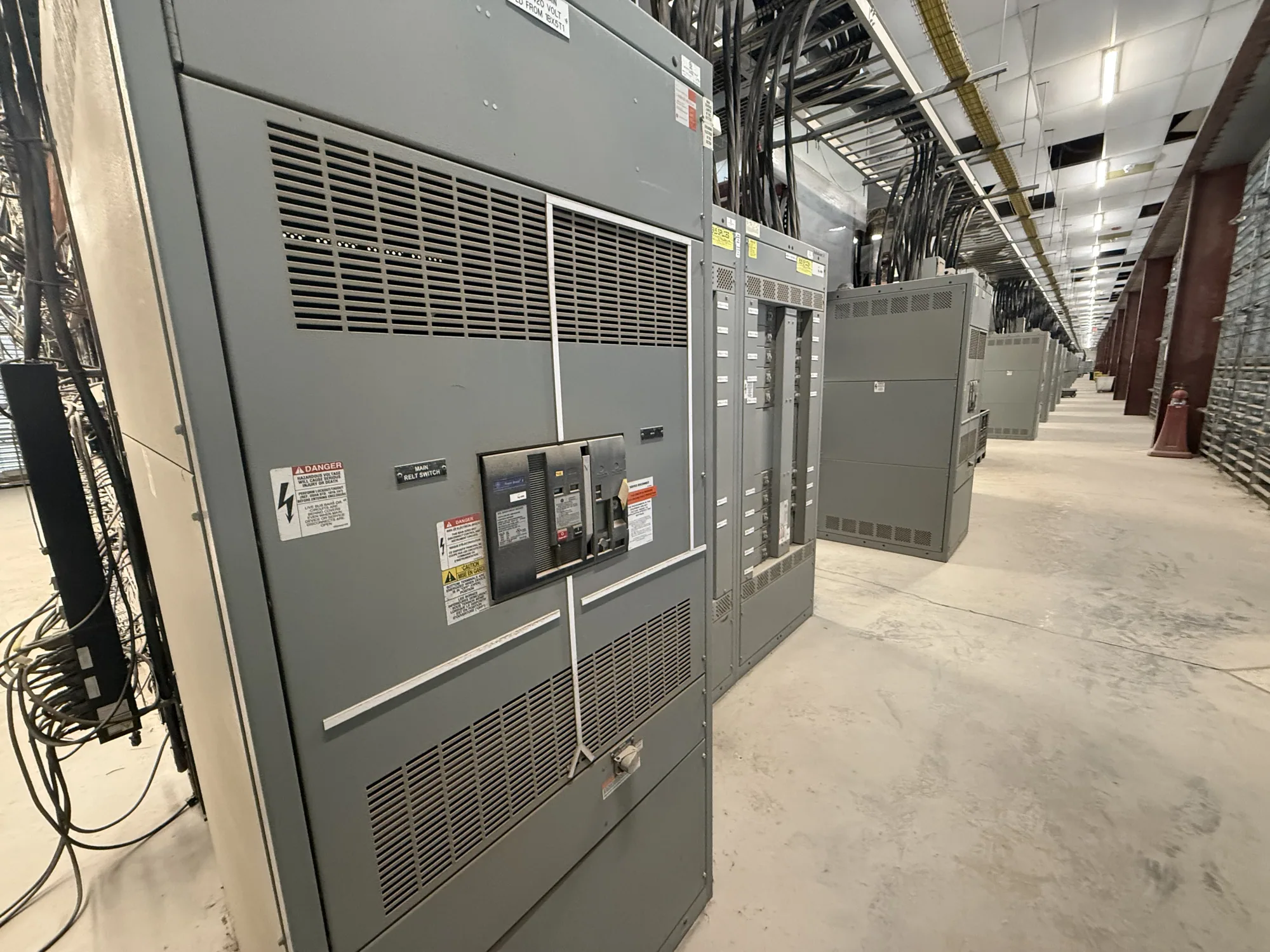
Start with the project scope — What project information is needed for a low-voltage switchgear quote?
To request a low-voltage switchgear quote, provide the latest one-line diagram, the project voltage and phase, required continuous current, available fault-current information, and the intended equipment scope. Include site and schedule constraints, drawings or specifications, and a contact for technical questions. The more clearly the request separates confirmed requirements from items still under engineering review, the less likely a quote will rely on assumptions.
Clarify whether the request is for new equipment for a new installation, a replacement, or a project expansion. For replacement work, identify the existing equipment and explain what must connect to it; do not assume dimensions or interfaces can be carried forward without review. State who is responsible for engineering, installation, field connections, and any commissioning or testing scope, if requested. A quote should define what is included rather than imply unconfirmed services.
Drawings and electrical fundamentals
Send the current one-line diagram, including the source, main device, bus arrangement, feeder devices, tie breakers, metering, and loads within the requested scope. Mark proposed changes and identify future provisions separately from equipment required now. If the drawing is preliminary, label it accordingly and note what is likely to change. Supporting load schedules and specifications can clarify operating conditions that a simplified one-line does not show.
State nominal system voltage, phase and wire configuration, frequency, and the intended service arrangement. Provide required bus and device current ratings or the design criteria used to determine them. Do not rely on a general description such as “standard service”; ratings and configuration must match the actual project. If load growth, continuous operation, redundancy, or a tie arrangement matters, explain the requirement so the design can be evaluated rather than inferred.
Fault duty and protective devices
Short-circuit information is essential to evaluating an assembly and its protective devices. Provide the available fault current at the equipment location, the source or transformer data used to establish it, and any study or project specification that governs. Include the required short-circuit rating and protective-device expectations if they have already been established. The responsible engineer and manufacturer must confirm the applicable ratings and coordination for the actual configuration.
A frequent misunderstanding is to treat a switchboard or switchgear rating as a substitute for a system study. Fault duty depends on the installation and source conditions; a rating cannot safely be selected from voltage alone. If the available fault-current value or study is pending, say so and identify who will provide it. Likewise, list requested trip functions, metering, ground-fault provisions, or communications only when the project requires them, and have their compatibility confirmed.
Physical layout and operating needs
Provide the available room dimensions and equipment footprint limits, along with required cable-entry direction, cable types or termination constraints, and any access or routing limitations. Include the intended lineup orientation and indicate adjacent walls, other equipment, or obstructions on a room plan when possible. Identify transportation path or doorway limits if they may constrain the shipment or equipment arrangement. Final dimensions and clearances must be reviewed against the project design and applicable requirements.
Describe operating and maintenance preferences that affect the arrangement: front or rear access expectations, feeder grouping, metering locations, control power, and any specified communications interfaces. A compact layout may conflict with cable bending space, access, or future expansion; a more sectional lineup may help resolve some constraints but can affect footprint and scope. These are design questions, not assumptions to settle from a brief equipment label. Qualified project personnel should establish the applicable installation and safety requirements.
Example: a replacement lineup
Suppose a facility plans to replace a low-voltage lineup while retaining some outgoing circuits. A useful request would include the existing and proposed one-lines, verified system voltage and load needs, fault-current basis, device and metering requirements, room measurements, cable-entry details, and a marked list of circuits to retain or change. It should also state whether the project requires a specific outage window or phased installation, without treating a requested date as a confirmed delivery commitment.
If the existing drawings are incomplete, identify field-verified facts separately from estimates and list the measurements or engineering decisions still needed. This lets the manufacturer flag dependencies and quote against a defined basis. It does not establish that existing connections, ratings, or protection are suitable for reuse; the project engineer must verify those matters. Any final design, equipment configuration, availability, and delivery timing require confirmation against the complete specification.
Commercial scope and a useful checklist
Include the requested quantity, ship-to location, preferred quotation timing, project stage, and any required submittal or documentation expectations. Provide the governing specification and note exceptions or approved alternatives for review. Clarify whether the request includes only the equipment or calls for additional project items; define those items explicitly. Availability and lead time depend on the order and must be confirmed. New equipment can be custom to specification, and shipping is available nationwide.
Before sending the request, check that it answers these questions: What is the system voltage and required current? Which one-line and specification revisions govern? What fault duty and device functions apply? What footprint, access, and cable constraints matter? What is included in the requested supply, and what remains open? If the project’s voltage class or equipment type is uncertain, ask the responsible engineer to resolve it before pricing. A clear, revision-controlled package gives the manufacturer a sound basis to identify assumptions, request missing details, and develop a project-specific quote.