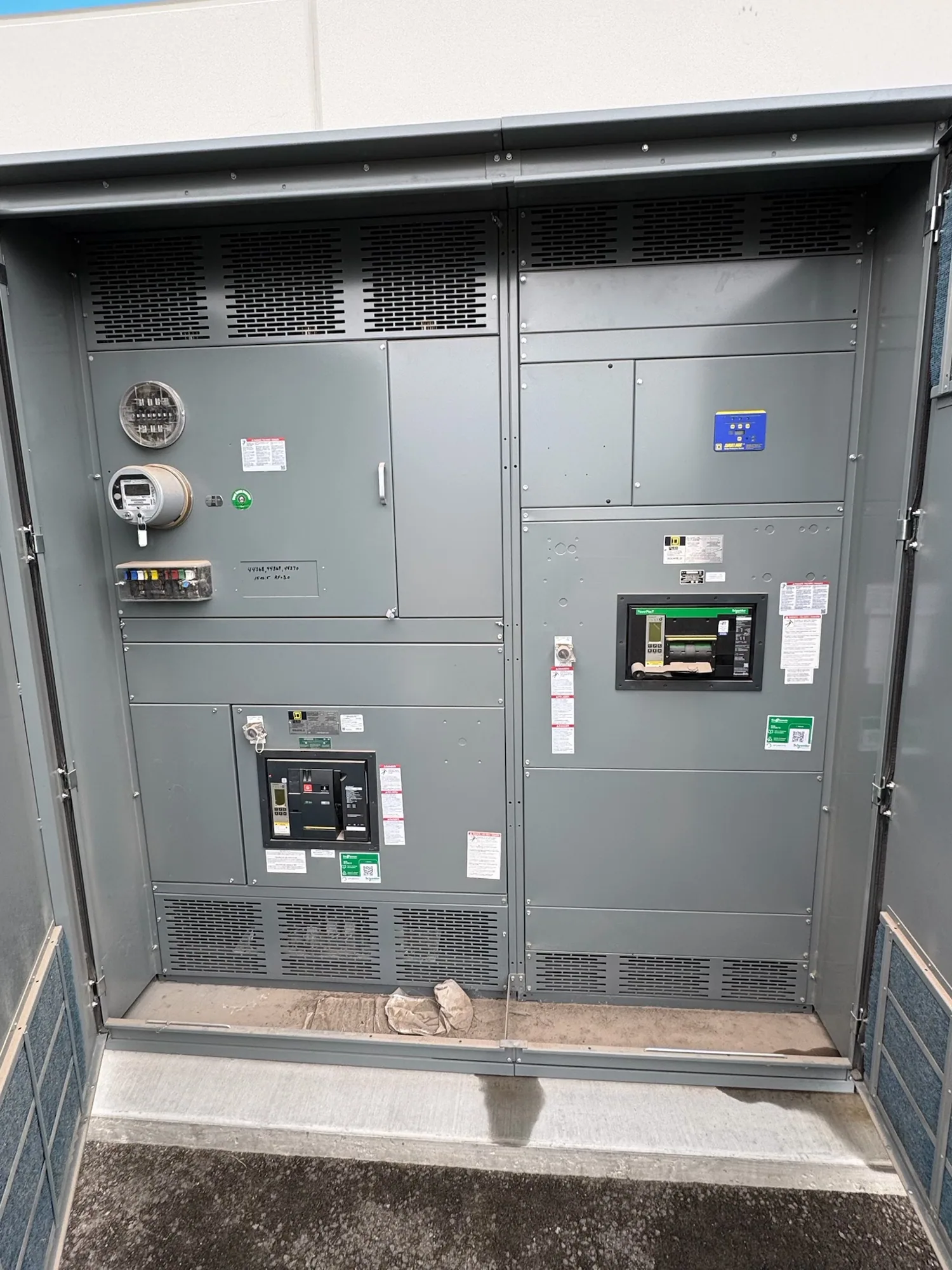
Outdoor does not mean suitable for every site
No. Outdoor switchgear is built for installation outside when its design and specified environmental conditions match the proposed location. The word “outdoor” alone does not establish that an assembly can tolerate every exposure, fit every site, or be installed without project-specific review. The equipment configuration, enclosure, installation details and site conditions all matter.
Start by treating location as part of the equipment specification, not as a decision to make after delivery. A qualified project engineer should evaluate the proposed placement and applicable requirements. The manufacturer can review the design information and confirm whether the specified equipment is suitable for the conditions described. Neither a general product label nor a broad enclosure description substitutes for that review.
Water, weather and environmental exposure
Document how water could reach the proposed location: direct rain, wind-driven rain, runoff, drainage patterns, standing water or flooding. Also consider nearby irrigation, washdown, salt exposure, dust, corrosive substances and other site-specific conditions. These are prompts for evaluation, not a claim that every outdoor assembly is designed to withstand each exposure. Conditions that seem occasional may still affect equipment selection and installation details.
Ask which environmental conditions the proposed enclosure and equipment are specified to address, and whether those conditions match the actual site. An enclosure rating must be confirmed for the specific assembly and application; it should not be assumed from the word “outdoor.” Discuss any additional barriers, drainage provisions, orientation or protective measures with the responsible engineer and manufacturer. The final design should account for the location as installed, rather than relying on a generic description of typical weather.
Access, working space and future maintenance
A site can be dry and still be unsuitable if personnel cannot safely reach the equipment or perform required work. Review the approach route for installation and future access, including gates, turning space, overhead restrictions and the path for moving equipment into position. Check door and panel operating space, as well as the clearances and working areas required by the project design and applicable rules.
Consider how qualified personnel will inspect, operate and maintain the assembly under the applicable safety procedures. Nearby fences, walls, stored materials, vehicle routes or other equipment may constrain access or create avoidable hazards. Do not assume that an enclosure can be placed close to an obstruction simply because it physically fits. The engineer should verify the arrangement, and the buyer should communicate any planned fencing, barriers or adjacent construction before the equipment layout is finalized.
Foundation, installation and heat management
The support must suit the equipment and site. Provide the proposed foundation or mounting arrangement, available footprint, elevation and relevant installation details for review. The responsible project team should confirm that the support, anchoring and equipment interfaces work together. Site grading and drainage also deserve attention: a location that collects runoff or leaves the base exposed to standing water may not match the assumptions behind the selected configuration.
Ventilation and heat dissipation are likewise design-dependent. Nearby walls, canopies or other structures can change airflow or access, while the equipment’s losses and operating conditions affect thermal review. Do not assume that adding a roof or placing the assembly in a recess is automatically beneficial; either choice can introduce new constraints. Have the project engineer and manufacturer assess the proposed arrangement against the actual equipment specification.
Example: a paved site beside a building
Imagine a paved area beside a building that appears convenient for an outdoor assembly. Before approving it, the team would check whether roof runoff or grading sends water toward the location, whether access and required working areas remain available, and whether the wall changes ventilation or limits equipment doors. It would also review the foundation, installation route and any site-specific environmental exposure that could affect the design.
This example has no universal answer: paving does not by itself prove the site is suitable, and proximity to a building does not automatically rule it out. The decision depends on the proposed assembly, site conditions and applicable project requirements. A common misunderstanding is that “outdoor-rated” means floodproof, maintenance-free or appropriate for unrestricted placement. Those conclusions require specific evidence and engineering review, not an assumption based on the product category.
Information to provide before ordering
For a useful review, share the intended location, a site layout, equipment footprint and access route, proposed foundation details, and known exposure to rain, runoff, standing water, dust or corrosive conditions. Identify nearby structures, barriers, other equipment and planned changes to the area. Include the application, electrical requirements and any project documents that define installation constraints. The more accurately the site is described, the more meaningful a manufacturer’s configuration review can be.
Ask the responsible engineer to identify the applicable codes and project requirements, and ask the manufacturer to confirm the proposed equipment and enclosure details against the submitted conditions. Confirm ratings, listing applicability, testing, availability and delivery timing for the specific design rather than assuming them. These checks should be resolved before purchase and coordinated with the installation plan; availability and lead times depend on the order.
Make placement a coordinated design decision
Before releasing an order, agree who will verify site suitability, foundation interfaces, access, environmental conditions and installation requirements. Confirm that the equipment drawings and project layout describe the same location and that any assumptions about drainage, ventilation or protective measures are explicit. If site conditions change, return the revised information for review rather than treating the original selection as automatically valid.
Outdoor switchgear can serve a wide range of applications, but placement is not unrestricted. Match the equipment specification to the actual environment, preserve practical access, coordinate support and installation, and have qualified project professionals verify applicable requirements. That process gives the buyer and manufacturer a clear basis for confirming whether the proposed location is appropriate for the particular assembly.