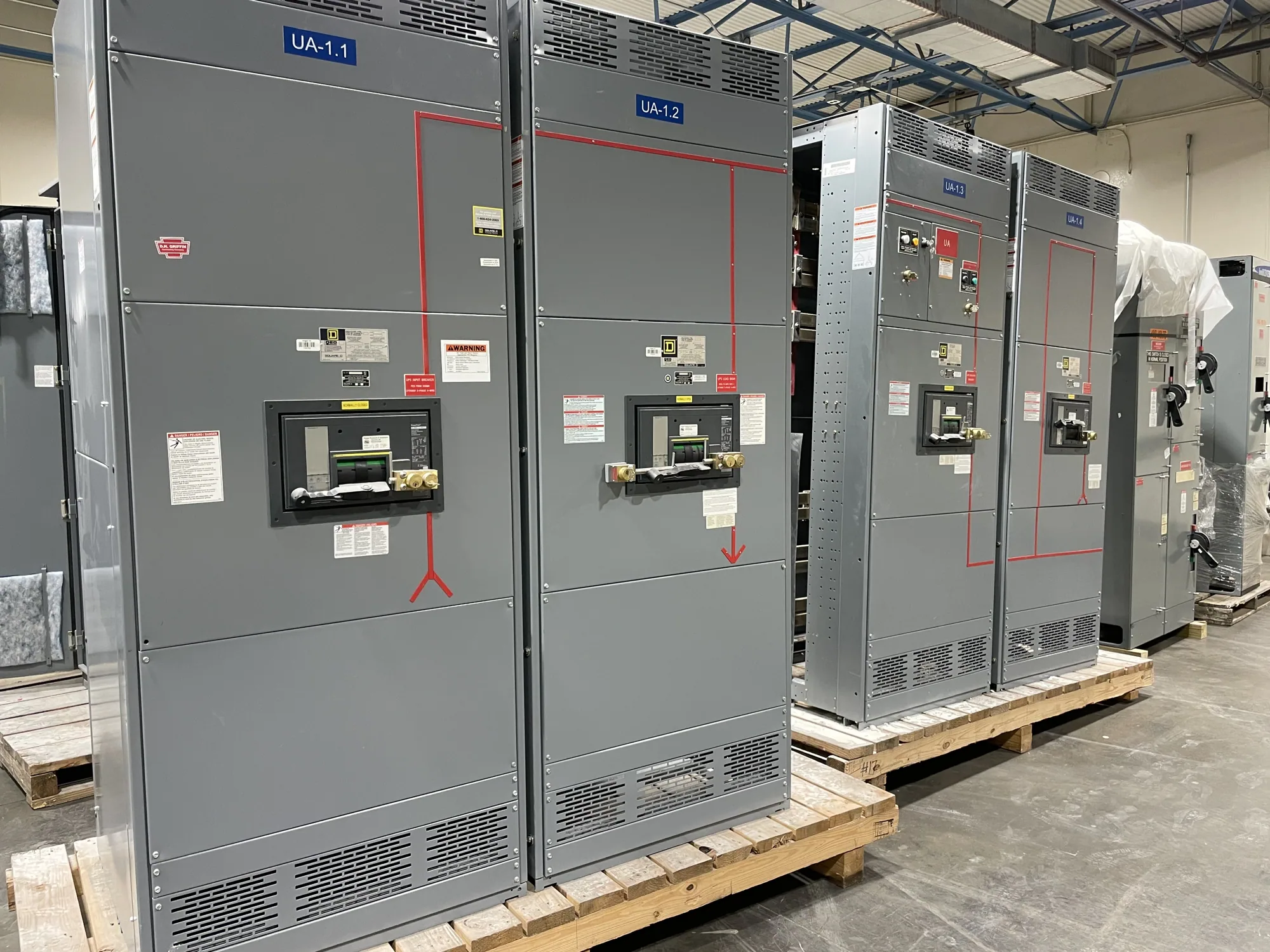
From project requirements to a documented shipment
Switchgear manufacturing is a coordinated sequence, not a single fabrication step. It begins with the project’s electrical and physical requirements, develops a design for review, and proceeds through material coordination, assembly, applicable verification, documentation, and shipment planning. Understanding these stages helps buyers distinguish the manufacturer’s scope from engineering, site, and contractor responsibilities.
The precise sequence depends on equipment type and project scope. A low-voltage switchboard and medium-voltage switchgear do not share every design detail or applicable standard. The buyer should confirm the equipment class, function, and specification with the responsible project engineer before requesting a proposal. South Carolina Switchgear Builders manufactures new equipment to specification, with project-specific details subject to confirmation.
Define the application before design is finalized
Useful starting information includes the one-line diagram, system voltage, required current and interrupting characteristics, source and load arrangement, protective-device requirements, and any metering or control needs. Include the intended installation environment, available space, access constraints, cable entry direction, and connection details when known. Missing or provisional information should be identified rather than silently assumed.
These inputs affect enclosure arrangement, bus configuration, device selection, compartment layout, and interfaces with adjacent equipment. The responsible engineer must resolve electrical coordination and confirm ratings against the actual system. Manufacturer review can identify questions or inconsistencies within the proposed equipment scope, but it does not replace the project engineer’s system design or the authority having jurisdiction’s review.
Coordinate standards, codes, and responsibility boundaries
Applicable product standards, installation codes, utility rules, and authority requirements depend on the equipment and project. For eligible low-voltage switchboards, UL 891 may be relevant; applicability and any assembly listing must be verified for the specific design. Do not assume that one standard applies to every switchgear product, or that a reference in a project document establishes compliance for a particular assembly.
Clarify which party supplies each interface: equipment manufacturer, electrical engineer, contractor, utility, or another supplier. For example, a contractor typically coordinates field installation and site readiness, while the manufacturer’s scope should be stated in the proposal and approved documents. Utility-owned equipment, field wiring, foundations, external conductors, and commissioning activities should not be assumed to be included unless the project documents explicitly define that responsibility.
Review drawings and supplier interfaces
Before manufacturing details are released, review drawings and submittals for the agreed arrangement, device designations, dimensions, access, connection points, control interfaces, and required project notes. Check that the latest one-line diagram and equipment schedule match. Mark deviations clearly, assign each open item to an owner, and return consolidated comments through the project’s agreed review process.
Some components or services may involve external suppliers or contractors; their availability and scope should be confirmed for the specific project. Ask which design elements are manufacturer-controlled, which rely on supplier data, and which require field coordination. Changes to approved information can affect design, procurement, or shipment planning, so route revisions through the designated contact and obtain written disposition before treating them as incorporated.
Manufacturing, verification, and documentation
After the approved design and required inputs are established, manufacturing can proceed according to the defined scope. Work may include coordinating components, preparing structural and electrical assemblies, installing specified devices, and checking that the completed equipment corresponds to approved information. The actual steps, equipment configuration, and inspection or test requirements vary; confirm them in the project documents rather than inferring a universal process.
Request clarity on what verification is included, what records will be provided, and whether any witness or acceptance steps require advance coordination. Documentation may include approved drawings, equipment information, and project-specific records where specified. Ratings, testing, listing, and standards claims must be checked against the particular assembly and its documentation. Installation, testing, and maintenance at the site belong to qualified personnel following applicable safety procedures.
Plan shipment and site readiness together
Shipment planning connects completed equipment to the receiving site, but delivery coordination is not the same as installation. Confirm the shipping destination, receiving contact, access and unloading arrangements, delivery constraints, and any required packaging or documentation. The buyer and contractor should align site readiness with the project schedule while confirming dates and availability directly; the lead time for the particular equipment should be confirmed before setting a project delivery commitment.
Nationwide shipping is available, with equipment built in the United States using all-American components. The specific configuration, component availability, and shipment date still require confirmation against the order. If the site or schedule changes, communicate that promptly so the parties can assess any effect on shipment coordination and scope.
Prepare a useful manufacturing handoff
For a productive next step, assemble the current one-line diagram, equipment schedule, specification, applicable project requirements, preliminary layout, cable and control interfaces, and a list of unresolved decisions. Identify who approves drawings, who confirms system ratings, who coordinates utility or site requirements, and who receives shipment. Separate mandatory requirements from preferences so design tradeoffs can be evaluated transparently.
With that information, the manufacturer can clarify scope, identify missing inputs, and develop a project-specific path from review to shipment. Keep approved documents and revision status aligned among the owner, engineer, manufacturer, suppliers, and contractor. That disciplined handoff reduces ambiguity while leaving engineering approvals, field installation, and site acceptance with the responsible parties.