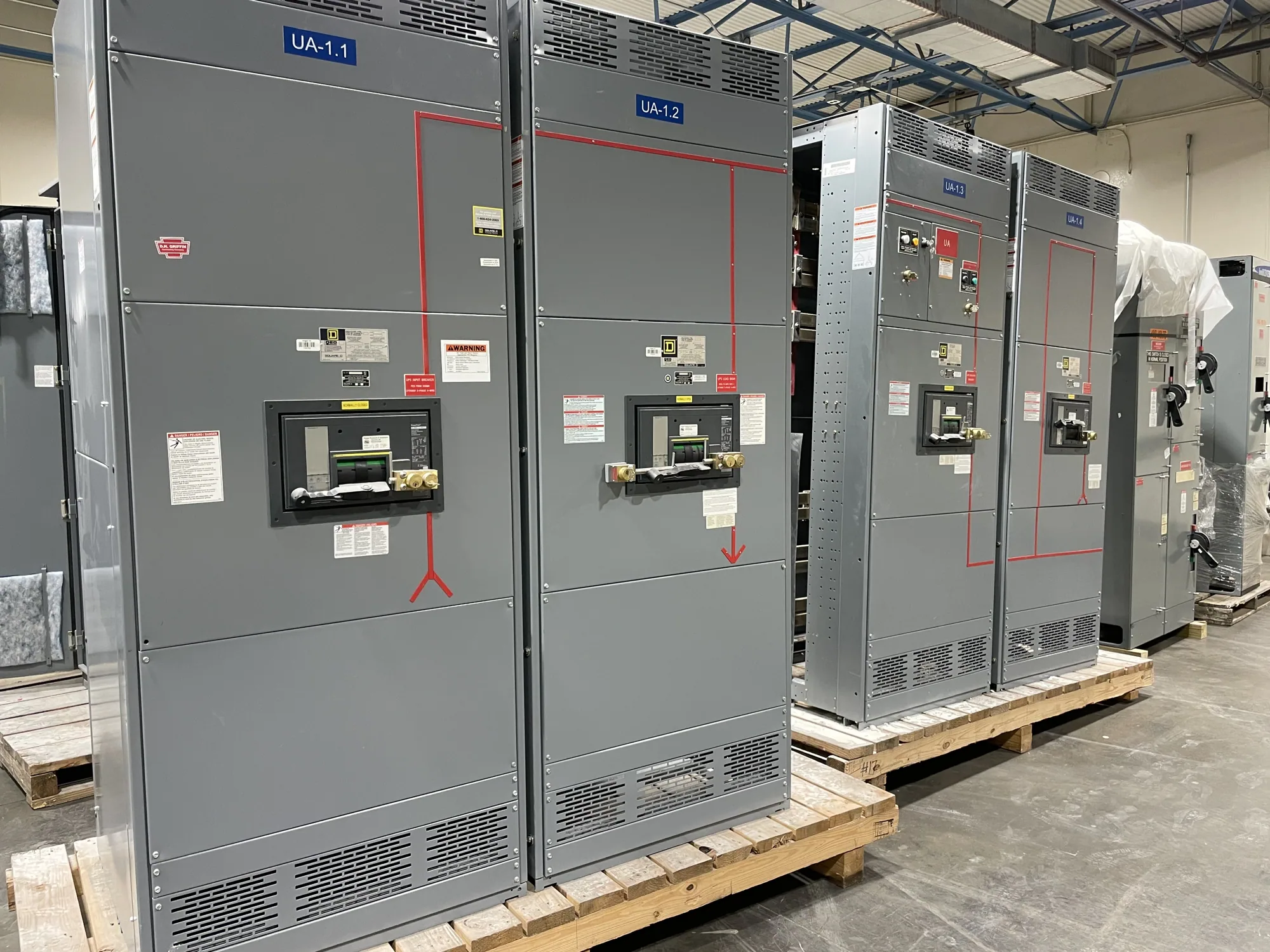
Start with the equipment you need quoted
A useful switchgear quote request describes the new equipment your project requires and the conditions the design must meet. South Carolina Switchgear Builders manufactures new switchgear and switchboards to specification, serving projects in South Carolina and shipping nationwide. Your inquiry can establish the project scope, identify documents available for review, and clarify which details still need confirmation by the responsible engineer.
Begin by naming the application and the equipment type under consideration. A 480 V class low-voltage project is not the same equipment category as a 5 kV or 15 kV class medium-voltage project. If the equipment class is undecided, say so rather than guessing. The quote should be based on the actual project requirements, not on a product label or a broad description alone.
Provide the electrical basis of design
Include the system voltage and any other ratings or configuration requirements established for the project. A one-line diagram is often valuable because it communicates the intended arrangement, sources, loads, and protective devices more clearly than a short written description. Identify the specific information that is preliminary, and have the project engineer confirm requirements that remain open before equipment design is finalized.
Note the intended installation environment and any applicable project constraints, such as available space, connection orientation, access, or coordination with adjacent equipment. State required standards, listing expectations, testing, and acceptance documentation as project requirements to be verified for the proposed assembly. For eligible low-voltage switchboards, UL 891 applicability and assembly listing must be confirmed for the specific design; it does not apply to medium-voltage switchgear.
Describe scope, interfaces, and options
Explain what belongs in the requested supply and what is being handled by others. Identify the number and general arrangement of sections if known, incoming and outgoing connections, metering or protective functions, and any specified accessories. Do not assume that a feature is included because it appears on an early drawing. Call out required functions and ask for clarification where the specification leaves room for alternatives.
Project interfaces can affect both configuration and coordination. Share relevant information about upstream and downstream equipment, available installation clearances, cable entry, and the intended connection points where these are established. If the design is still developing, distinguish firm requirements from preferences. That distinction helps focus the review on meaningful choices without treating a concept drawing as an approved, final design.
Make the RFQ package easy to review
Useful supporting documents may include the one-line diagram, equipment specification, plans or elevations, schedules, and applicable project notes. Provide current revisions and identify each document by title or revision date. If files cannot be attached through the inquiry channel you are using, state which documents are available and ask how they should be provided. Do not place sensitive project details in an unapproved channel.
Keep the request focused on information needed to define the equipment. You can summarize the project location, owner or contractor role, and current design stage without including credentials, access codes, or unrelated confidential material. If a drawing contains sensitive information, ask about an appropriate method for sharing it before sending. Clear document control helps prevent a quote review from relying on superseded requirements.
Set realistic schedule and delivery expectations
State the date by which the project needs equipment, the desired delivery location, and any important site or receiving constraints. Identify whether the date is a target or a fixed project milestone. Availability and actual lead times depend on the order and must be confirmed; do not treat a preliminary schedule as a delivery commitment. Nationwide shipping is available, while the specific delivery plan depends on the project and order.
Also note decision milestones that could affect the scope, such as drawing approval, procurement release, or a planned installation sequence. A quote request is not a substitute for confirming design details, availability, delivery dates, ratings, or listing. Those items require review against the actual specification and supplied equipment. If the project schedule is tight, identify the constraint early so it can be considered rather than assumed.
What to expect from a well-scoped inquiry
A complete request gives the manufacturer a basis to review the specified equipment, identify missing information, and discuss configuration questions. It does not establish an unverified response time or guarantee that every requested option is available. Custom equipment is built to specification, and the final proposal depends on the requirements and details that can be confirmed for the order.
Before submitting, check that the contact information is accurate, the project location and delivery destination are clear, and attachments match the revisions named in your request. Include the best project contact for technical questions and indicate who is responsible for design decisions. Qualified project personnel should determine and approve electrical requirements; installation, testing, and maintenance belong to qualified personnel following applicable safety procedures.
Prepare the next step
For a South Carolina equipment quote or a project elsewhere in the United States, send a concise inquiry describing the new switchgear or switchboard, the electrical basis of design, project scope, supporting documents, schedule, and delivery needs. Mark unresolved items plainly and identify which requirements are mandatory. This gives the quote review a practical starting point while leaving engineering-dependent decisions for confirmation against the project specification.
When final drawings or requirements change, identify the revision and summarize what changed so the equipment scope can be reviewed against current information. Confirm pricing, availability, configuration, applicable listing, testing, and delivery details before making procurement decisions. A clear, current request helps both sides focus on the new equipment the project needs and the information required to define it accurately.