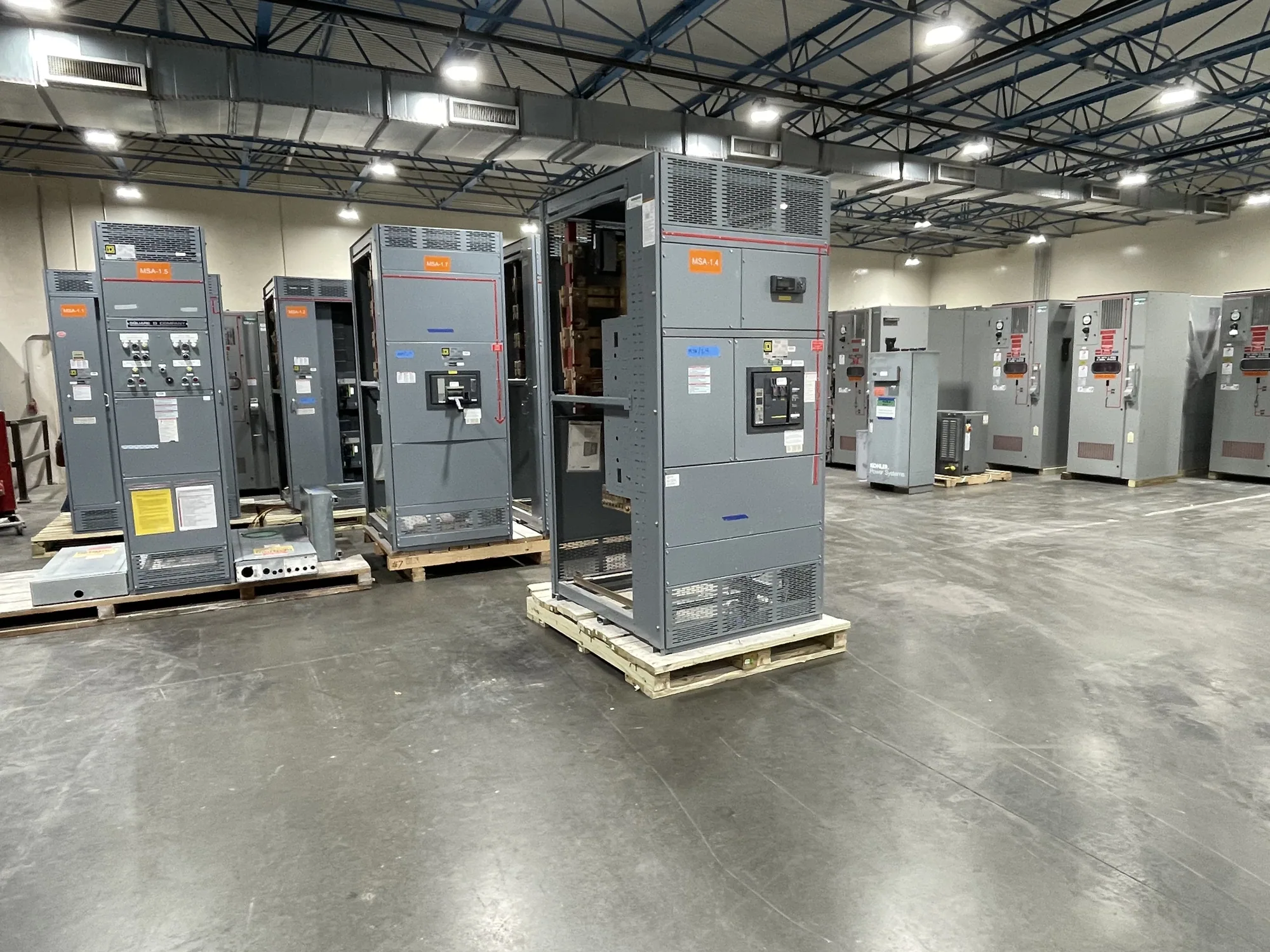
Contact the manufacturer about new equipment
When you are planning an electrical distribution project, contact our sales team to discuss new switchgear or switchboards built to your specifications. We work with contractors, engineers, facility owners, and purchasing teams that need to define equipment requirements and obtain a project-specific proposal. Our American manufacturing approach includes all-American components, with nationwide shipping available for confirmed orders.
Call the number shown on this page to discuss your project, or email the sales address listed below. You can also use the request form to prepare an email. The form opens your own email application, where you can review the message and choose to send it. If an email application is not available, contact the sales team directly by phone or email instead.
What to include in your first message
Start with the equipment category, quantity, project location, and the role the assembly needs to perform. If you know whether you need low-voltage or medium-voltage equipment, include that information, along with the required nominal system voltage. Mention whether the project is a new installation, an expansion, or new equipment intended to replace an existing lineup. These details help make the initial conversation more productive.
Provide the name and preferred contact information for the person coordinating the inquiry. Include the stage of the project, any submission deadline, and the documents available for review. If the responsible engineer is still evaluating a requirement, identify it as pending rather than guessing. A preliminary question is welcome; a complete specification is not required simply to begin a discussion.
Electrical information for a project-specific quote
If available, share the current one-line diagram and equipment schedule, along with the project specification and relevant drawings. Identify the required voltage, phase, frequency, continuous-current rating, available fault-current information, and any specified interrupting or withstand duties. These values serve different purposes, so they should be confirmed by the responsible project engineer rather than inferred from a cabinet label or an approximate description.
Also describe the incoming arrangement, outgoing circuits, protective devices, metering, controls, and any required interfaces with other equipment. If the project calls for future capacity or special monitoring, explain what is expected so it can be reviewed as part of the scope. Final configuration, ratings, testing, and any listing must be confirmed for the particular assembly and the project requirements.
Coordinate the physical and site details
Let us know whether the equipment will be installed indoors or outdoors and describe the intended location and environmental conditions. Share available room dimensions, access routes, cable-entry preferences, and any installation constraints identified by your design and construction team. Where new equipment must connect to an existing system, current drawings and verified interface dimensions can help clarify the proposed scope.
For South Carolina projects, provide the delivery destination and receiving constraints rather than assuming a local office or installation crew. Nationwide shipping is available, but the delivery method, unloading arrangements, and dates must be confirmed for the order. The installing contractor and responsible engineer should verify site conditions, access, clearances, and other applicable requirements for the actual project.
Discuss standards, documentation, and timing
Identify the standards, documentation, and approval requirements in your project specification. For an eligible low-voltage switchboard, UL 891 may be relevant; applicability and any assembly listing must be confirmed for the proposed design. A standard reference does not by itself establish a listing for every product. If drawings, test records, or other documentation are required, state those expectations when requesting a proposal.
Share the dates that matter to your project, such as when equipment is needed, when drawings should be reviewed, and whether shipment must be coordinated with a construction milestone. We emphasize short lead times, but an actual schedule depends on the configuration and must be confirmed with the sales team. Do not treat a preliminary discussion as a delivery commitment or a final equipment approval.
Send the request and plan the next conversation
Use the form on this page to prepare your inquiry, then send it from your email application. You may attach drawings or specifications to that email after it opens. Avoid sending sensitive personal information that is not needed to understand the equipment request, and follow your organization’s policies when sharing project documents. If you prefer, call the sales number to begin with a conversation.
Keep the project team involved as the scope develops. The owner, engineer, contractor, and manufacturer may have different responsibilities for design, field installation, controls, and acceptance. Confirm those boundaries in the proposal and project documents. Installation, testing, and maintenance should be performed by qualified personnel using applicable safety procedures. Clear information at the start helps everyone evaluate a new, custom-to-specification solution.