Start with the project, not the map — New Switchgear Suppliers Near Me
When searching for new switchgear suppliers near a project, proximity can matter, but it does not establish whether a supplier can furnish the required equipment or support the delivery. A manufacturer located elsewhere may serve a South Carolina site or ship nationwide; coverage, schedule and scope need to be confirmed for the actual order. Compare suppliers against the project specification and destination rather than assuming a nearby listing is the best fit.
First establish what the project needs: new switchgear or a switchboard, the electrical system and intended application, required configuration, and the procurement boundary. Clarify whether the request covers equipment only or also drawings, coordination information, testing, shipment planning or other deliverables. Those responsibilities vary by project and order. A clear scope makes supplier responses easier to compare and reduces the risk of interpreting an unpriced assumption as an included service.
Confirm equipment class and technical fit
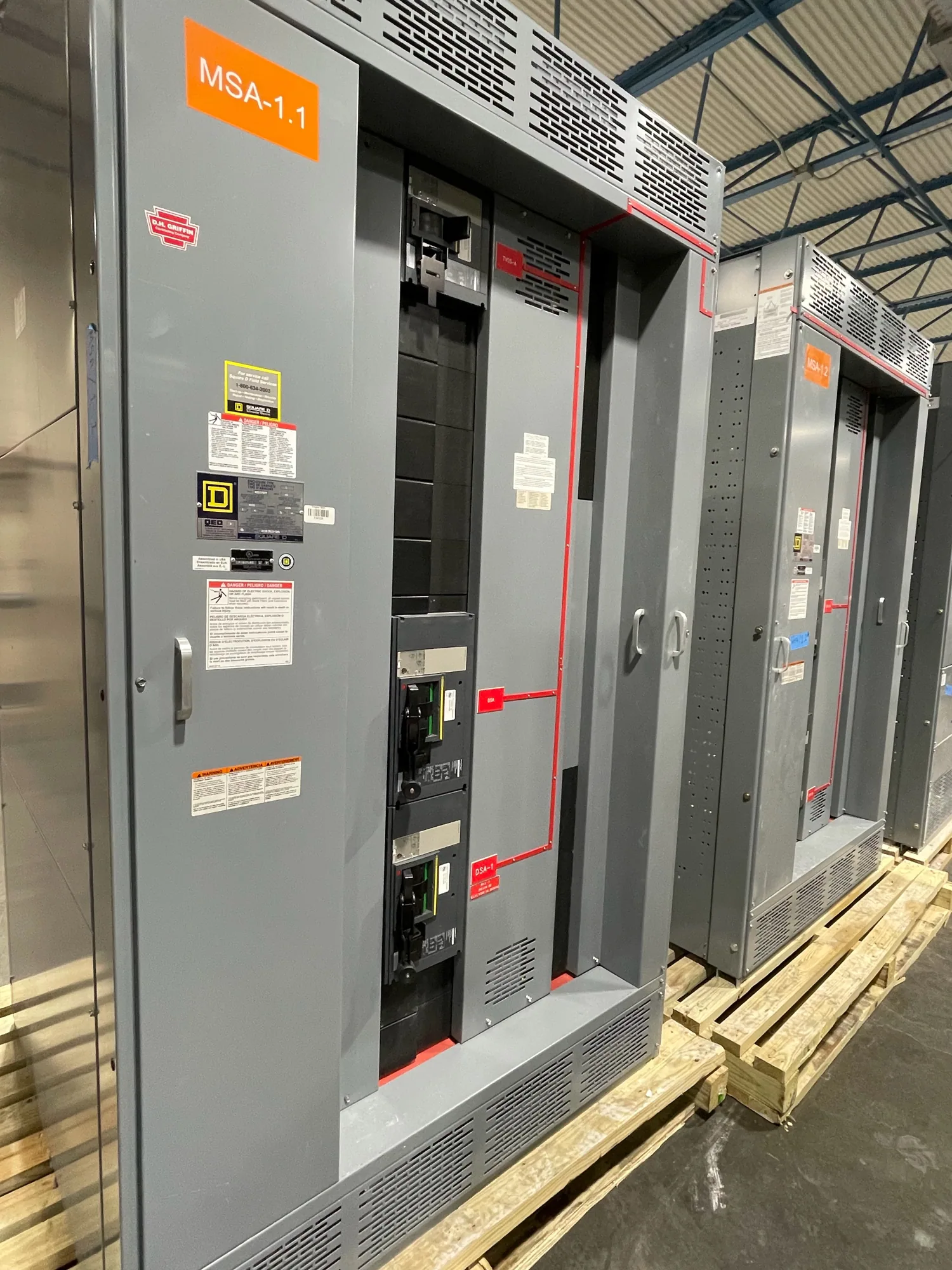
Use the project engineer’s requirements to distinguish low-voltage switchboards from medium-voltage switchgear and identify the specified voltage class. For example, 480 V class equipment is low voltage, while 5 kV and 15 kV class equipment are medium voltage. Do not select by a product label alone: the application, one-line diagram, ratings, arrangement and interfaces must align with the approved design. Ask suppliers to identify exceptions or open technical questions in their proposal.
Provide the applicable one-line diagram, equipment schedule, specification, site conditions and interface information available at the inquiry stage. Include required sections, incoming and outgoing arrangements, metering or control needs, cable entry and connection details, and any space or access constraints that affect configuration. The responsible engineer should confirm project-specific ratings, protective-device requirements and standards. For an eligible low-voltage switchboard, ask whether UL 891 applies and whether the proposed assembly’s listing can be verified; do not assume it applies to medium-voltage switchgear.
Verify service coverage and project support
Ask directly whether the supplier can quote and ship the specified new equipment to the project address, and whether the proposed scope supports the project’s procurement and coordination needs. South Carolina Switchgear Builders manufactures new switchgear and switchboards in the United States and ships nationwide. Its equipment is custom to specification, with all-American components. Confirm that the requested configuration is within scope and that the destination is serviceable for the order.
Clarify what “support” means before relying on it in a schedule or contract. Ask who will address technical questions, what submittal information is available, and which activities remain with the engineer, installer or other project parties. Confirm actual contact details and the communication process for the particular inquiry. Do not infer that a supplier has a local office, site crew or installation capability from appearing in a local search result; verify any such requirement explicitly.
Compare logistics and schedule realistically
Request a schedule based on the project’s actual configuration and procurement status. Short lead times may be available, but availability and actual lead times depend on the order and must be confirmed. Ask which milestones affect the forecast, when approved drawings or decisions are needed, and how changes could affect the production and delivery plan. Treat an unconfirmed estimate as planning information, not a guaranteed delivery date.
Give the supplier the complete delivery destination and receiving constraints. Identify whether the site has restricted delivery hours, limited truck access, unloading equipment, dock or laydown space, security procedures, appointment requirements or a receiving contact. Confirm packaging and shipment assumptions, who arranges transportation, and who is responsible for unloading and moving equipment after arrival. These details can affect the practical delivery plan even when the equipment itself meets the technical specification.
Evaluate proposals on comparable assumptions
Ask each supplier to state the offered equipment, included documentation, exclusions, assumptions, quoted destination and schedule basis. Compare technical deviations alongside price and timing, not after selection. If one proposal omits a requirement or assumes a different interface, request clarification rather than treating silence as acceptance. Confirm project-specific ratings, testing, listing, standards and delivery dates against the final design and order documents.
Keep boundaries clear between the equipment supplier’s scope and the responsibilities of the project team. Installation, commissioning, testing and maintenance arrangements should be assigned to qualified personnel using applicable safety procedures. Do not assume a supplier’s equipment quote includes field work, coordination with other contractors or site services unless those items are expressly confirmed. A written division of responsibilities helps procurement, engineering and construction teams plan around the same scope.
Prepare a useful supplier inquiry
Before requesting a quote, assemble the project location, required-on-site date, equipment type and voltage class, one-line diagram, specification, schedule, quantity, known site constraints and procurement scope. Note what remains undecided, who can resolve technical questions, and any submittal or approval milestones. This information gives a supplier a more credible basis to identify fit, exceptions, delivery considerations and schedule dependencies.
Then ask the supplier to confirm service to the destination, the proposed technical scope, open design questions, available project documentation, lead-time basis and delivery assumptions. South Carolina Switchgear Builders can review a request for new, custom-to-specification switchgear or switchboards and confirm availability and timing for the particular project. With destination and requirements clearly stated, buyers can compare responses on verifiable details and move toward an order without mistaking a search result for a confirmed local capability.