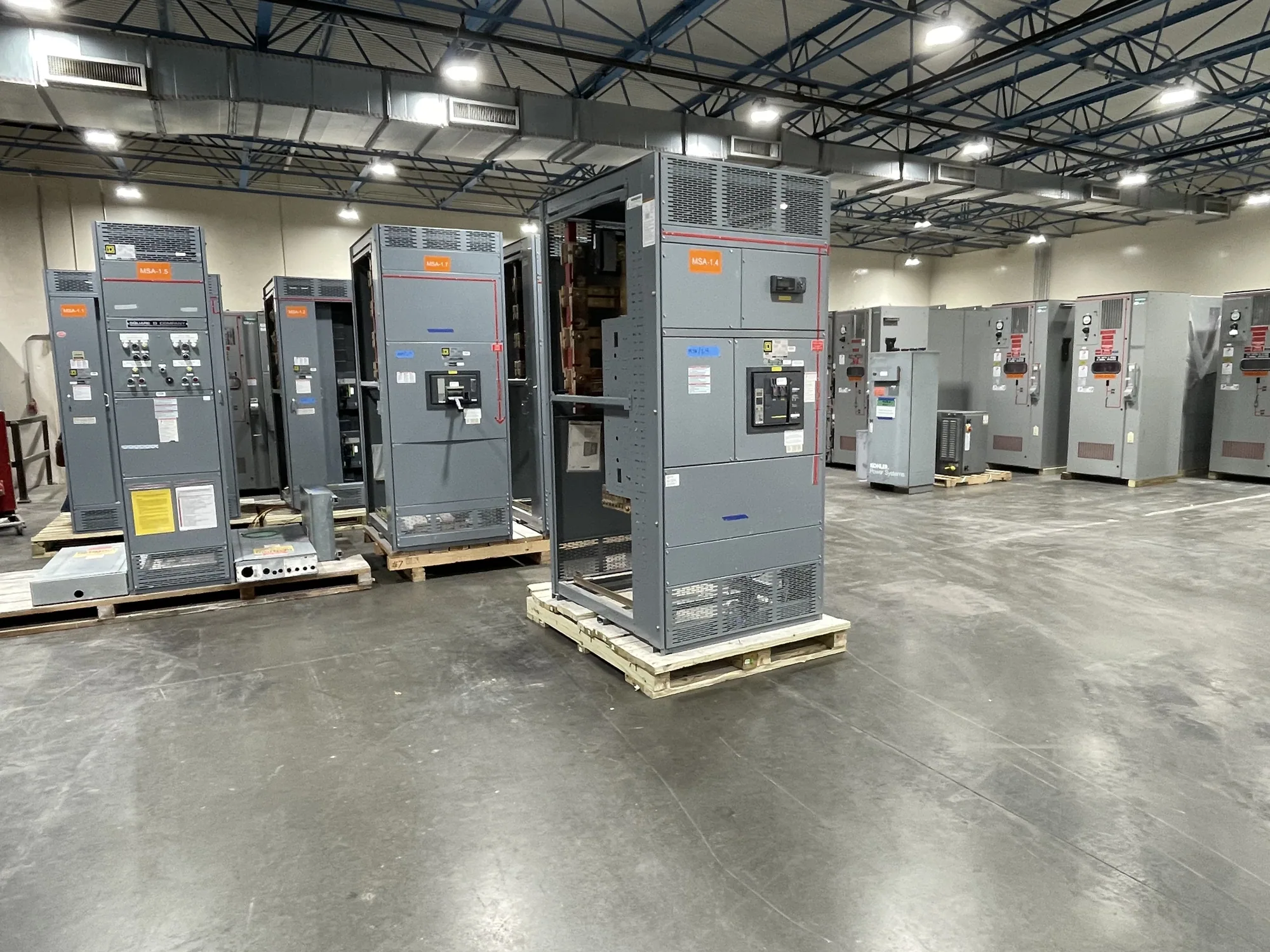
Start delivery planning with the project scope
Planning delivery for new switchgear is more than selecting a ship date. The equipment has to arrive in a sequence the project can receive, move, protect, and install. Shipment splits, building access, lifting arrangements, storage conditions, and the status of the electrical room all affect whether a delivery plan is workable. Bring these questions into purchasing discussions while the configuration and project schedule are still being coordinated.
First establish what equipment is included and how it is expected to ship. Confirm the specified assembly, related sections or components, destination, receiving hours, and any site restrictions. Do not assume every part will travel together or that a carrier can reach the final installation area. The project team should identify the planned receiving point and who has authority to accept and inspect each shipment.
Assign responsibilities before equipment ships
Give each party a defined role. The manufacturer can confirm the order scope, anticipated shipment arrangement, available shipping documents, and the delivery details it can support for the specific order. The carrier handles transportation under the agreed shipping terms and communicates transit or arrival information. The contractor typically coordinates site access and the planned unloading method, while the owner identifies site rules, receiving authority, and operational constraints.
Write down responsibility for unloading, moving equipment from the receiving area, temporary storage, and protection after arrival. These tasks are not automatically included in manufacturing or freight. Identify who supplies any required lifting equipment, rigging, labor, and supervision, and who verifies that the route and floor conditions are suitable. Confirm the actual division of work with the parties involved; contract terms and site conditions determine what is included.
Check access, unloading, and movement routes
Before confirming a delivery window, compare the equipment’s expected shipping dimensions and handling information with the route from truck access to its intended location. Consider gates, docks, doors, corridors, turning space, overhead obstructions, floor capacity, and any staging area. Ask the manufacturer what dimensions and weights are available for the configured shipment, and have the responsible project professionals determine whether the route and handling plan are adequate.
Decide how the shipment will be unloaded and where it can wait if the electrical room is not ready. A constrained site may need a scheduled receiving window, coordinated contractor attendance, or a different staging plan. Avoid relying on assumptions about a carrier’s unloading capability. Confirm who is providing the necessary equipment and qualified personnel, what site access they need, and how the delivery team will respond if access is blocked or the planned receiving contact is unavailable.
Coordinate shipment sequence with construction
Match the proposed shipment sequence to construction readiness and installation planning. Verify that the receiving area is accessible, protected from relevant site hazards, and suitable for the equipment’s specified storage conditions. If sections are expected in separate shipments, determine how each will be identified, received, protected, and held until installation. Request the order-specific shipping plan and clarify which documents will accompany or follow each shipment.
Delivery timing depends on the actual order, manufacturing schedule, shipping arrangements, and project conditions. South Carolina Switchgear Builders offers US-built equipment, all-American components, custom-to-specification manufacturing, short lead times, and nationwide shipping; actual availability and lead times must be confirmed for the order. Treat any schedule as a coordination input, not an assumed delivery guarantee. Align the proposed date with site readiness and confirm changes through the designated project contacts.
Plan receiving, inspection, and protection
Set a receiving procedure before dispatch. Identify the person authorized to accept the shipment, the records to check, and the process for documenting visible shipping damage, missing items, or discrepancies. Follow the shipment and equipment documentation for handling and inspection. Notify the appropriate manufacturer and carrier contacts promptly about concerns, preserving relevant records and photographs as required by the project’s receiving process.
After receipt, follow the manufacturer’s instructions and project requirements for storage and protection. Keep equipment secured from unauthorized access and protected from conditions that could affect it; the specific precautions depend on the supplied equipment and the storage environment. Do not treat delivery acceptance as a substitute for installation checks or commissioning. Installation, testing, and maintenance should be performed by qualified personnel under applicable safety procedures.
Confirm technical details that affect logistics
Physical shipping plans depend on the equipment actually specified, not a generic product label. Provide the manufacturer with the required voltage class, configuration, project drawings or connection requirements, destination constraints, and any known access limitations. Ask which shipment dimensions, weights, handling points, and separation details can be confirmed for the design. The responsible engineer should resolve technical and installation requirements, including clearances and equipment arrangement, rather than relying on freight assumptions.
Where ratings or standards affect procurement, identify them in the project specification and request confirmation for the proposed assembly. Do not infer ratings, listing, testing, or standards from a delivery plan. Those details require review against the actual equipment and design. Clear specifications help the manufacturer prepare the right order and help the contractor plan receiving and installation without treating unconfirmed assumptions as commitments.
Use a project-specific delivery checklist
- Confirm equipment scope, destination, shipment sequence, and expected shipping documents.
- Name the manufacturer, carrier, contractor, and owner contacts responsible for schedule updates and receiving decisions.
- Verify delivery access, receiving hours, unloading arrangements, route dimensions, staging location, and storage responsibilities.
- Align the proposed arrival window with construction readiness, qualified installation resources, and site procedures.
- Agree on how to record and report damage, shortages, or shipment discrepancies.
Before requesting a quotation, prepare the equipment specification, project schedule constraints, delivery address, site access notes, receiving contact, and known unloading or storage limitations. Ask which logistics details can be confirmed with the proposed configuration and what remains dependent on order review. This gives the manufacturer and project team a concrete basis for coordinating shipment, assigning open tasks, and making the next delivery decision with responsibilities understood.