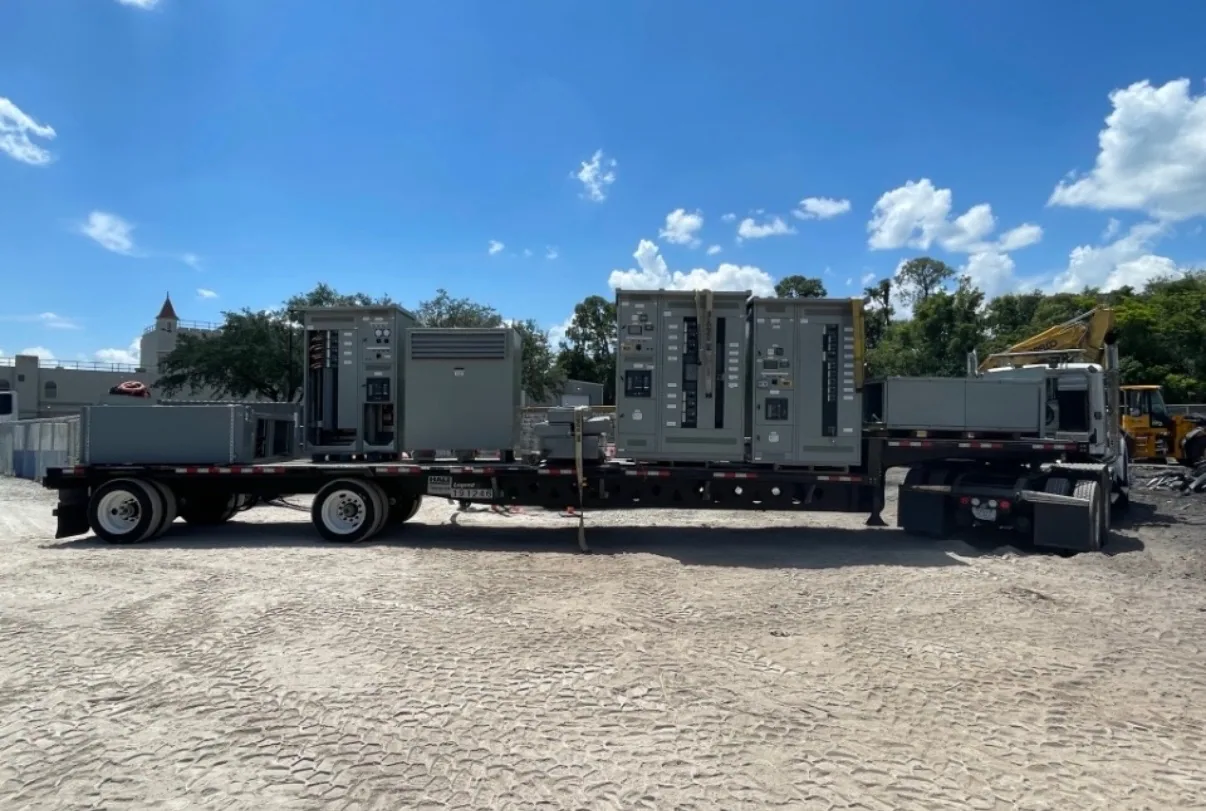
Where manufacturing ends and field work begins
Shipment and handover connect factory production with site installation, but they are not the same activity. Manufacturing covers the equipment built to the approved project specification. Delivery planning addresses how that equipment is prepared, divided for transport when applicable, received, and protected. Field installation, connections, commissioning, and energized operation belong to the project’s qualified contractors and responsible engineers.
Agree on this boundary before equipment is released for shipment. Identify who coordinates the carrier, who can receive and inspect each shipment, who controls unloading and movement into the building, and who maintains custody during storage. Confirm responsibilities in the project documents rather than assuming that a manufacturer, carrier, contractor, or site team covers work outside its agreed scope.
Coordinate the equipment sequence and shipping split
Switchgear lineups may require shipping in sections because of transportation limits, access routes, or the equipment design. The approved configuration determines whether a split is appropriate and how sections are identified and reassembled. Ask the project team to review the one-line diagram, lineup arrangement, room layout, and installation sequence together. A split that helps delivery still needs a workable plan for receiving, positioning, joining, and completing field connections.
Provide the delivery address, receiving hours, unloading arrangements, access restrictions, door and corridor dimensions, floor or route limitations, and any planned crane or rigging coordination. Clarify whether the site can accept the full shipment at once or needs scheduled deliveries. These details help the manufacturer and project coordinator discuss packaging and shipment planning; they do not replace the carrier’s requirements or the contractor’s site-specific lift plan.
Check environmental and storage conditions
Equipment protection depends on the conditions it will encounter before installation and during storage. Share the expected temperature and humidity range, possible condensation, salt exposure, dust, water exposure, altitude, and whether the storage location is indoors or outdoors. The project engineer should confirm which conditions affect the specified design and what protective measures are appropriate. Do not assume that a shipping enclosure is suitable for long-term outdoor storage or every site environment.
Plan a dry, secure storage area with enough space to keep sections identified and protected, while preserving access for inspection and later movement. Follow the equipment-specific handling, storage, and preservation instructions supplied with the shipment. If the site cannot meet those conditions, raise the issue before dispatch so responsible parties can agree on a suitable plan. Avoid opening or modifying equipment except as directed by the approved project procedures and qualified personnel.
Prepare for receipt and inspection
Assign a person to compare received packages and section labels with the shipping documents, note visible damage or missing items, and promptly report discrepancies through the agreed project channels. Establish how photographs, carrier records, and inspection notes will be retained. A receiving check is not a substitute for electrical testing or acceptance review, and it should not involve opening energized equipment or performing work beyond the receiver’s training and authorization.
Confirm in advance what documents will accompany or follow the shipment. Depending on the project and agreed scope, useful records may include identification and packing information, approved drawings, equipment instructions, and documentation tied to the specified design. Confirm the required document format, recipients, and review schedule. Listing, test documentation, ratings, and applicable standards must be verified for the actual assembly and project requirements; do not infer them from a general product description.
Resolve access, placement, and maintenance questions
Before dispatch, compare the planned delivery route and final equipment location with current site drawings. Check turning space, door openings, overhead restrictions, floor conditions, staging area, and the path from unloading point to electrical room. Confirm that the proposed shipping sections can be moved through the route and that the installation team has identified any field joining or connection work. Site dimensions and lifting assumptions should be verified by the responsible project team.
Room conditions matter after delivery, too. Confirm working space, ventilation or environmental provisions where specified, exposure to water, and access for operation and future maintenance. Consider whether nearby construction could introduce dust, moisture, impact, or other hazards before the equipment is ready for use. Resolve conflicts among room layout, equipment dimensions, access requirements, and the installation sequence before the shipment is committed to a delivery window.
Use a clear handover checklist
Before shipment, the project team should confirm the approved equipment configuration, section identification, delivery destination, receiving contact, unloading responsibility, access route, storage plan, environmental conditions, and document requirements. It should also identify who reviews discrepancies, who coordinates movement and installation, and how changes to delivery timing or site readiness will be communicated. Record open issues with an owner and a resolution date agreed by the project team.
At handover, confirm receipt of the expected sections and records, document visible concerns, and communicate any site or storage limitations to the responsible parties. The manufacturer can coordinate equipment and shipment details within the agreed scope, while carriers and contractors handle their contracted transportation and field activities. For a project-specific plan, provide the approved specification, drawings, site conditions, access information, and target delivery sequence so the equipment and handoff can be reviewed against the actual job.