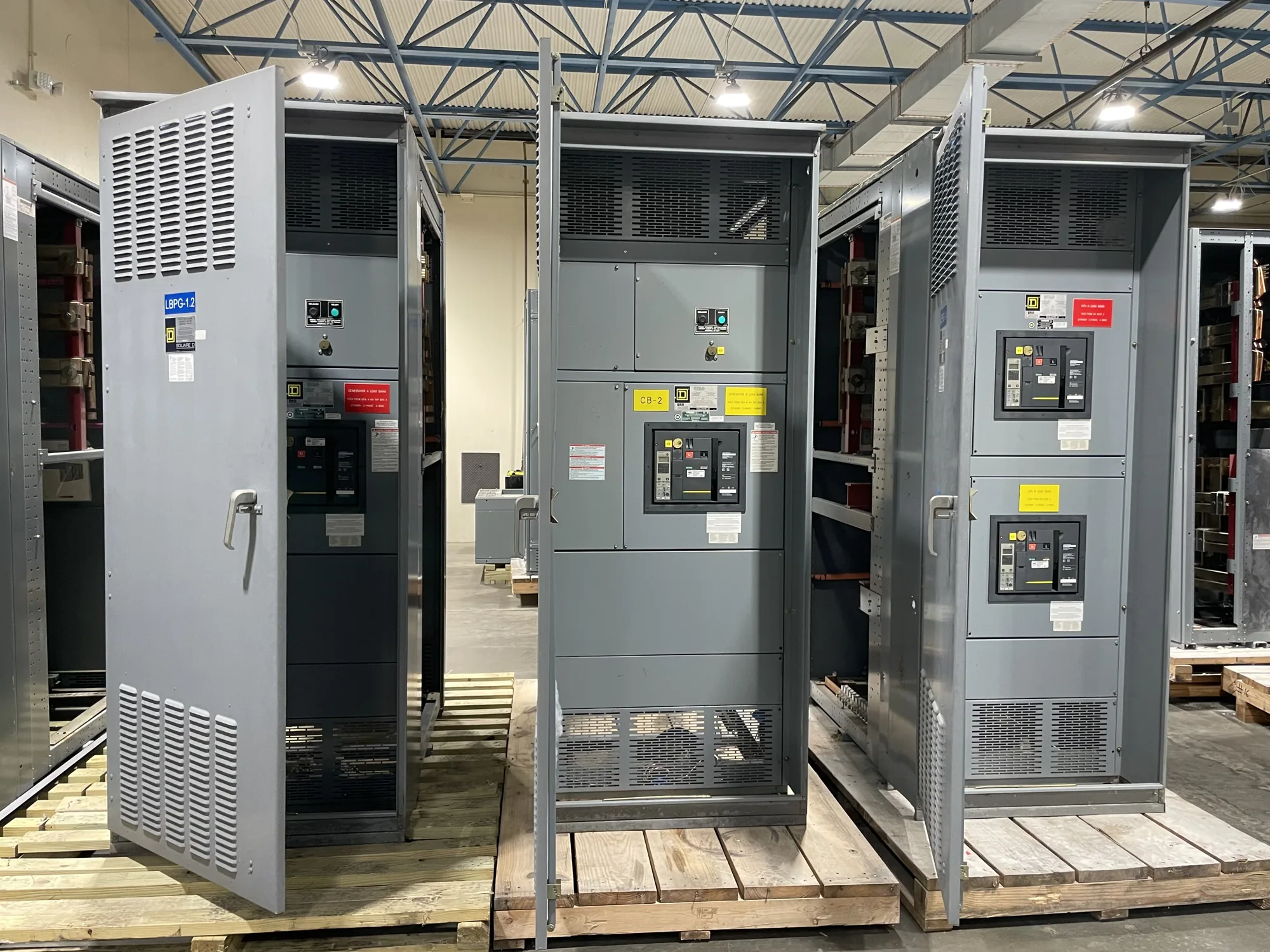
Start with your project’s actual scope
Evaluate a switchgear manufacturer by matching its demonstrated capabilities to the equipment and responsibilities your project requires—not by relying on broad claims or a general product list. Define whether you need low-voltage switchboards, medium-voltage switchgear, or another specified assembly, then identify the system requirements, interfaces, delivery expectations and project documents that govern the work.
Ask the manufacturer to explain which parts of the scope it will engineer, fabricate, assemble, inspect, test and document, and which depend on others. A clear responsibility boundary matters: project engineering, protection coordination, field installation and commissioning may involve the owner’s engineer, contractor, utility or other parties. Confirm who supplies each deliverable and who resolves design questions.
Request evidence that fits the equipment
Seek examples tied to the relevant voltage class, configuration and project complexity. Useful evidence may include redacted drawings, bills of material, submittal packages, inspection records or test documentation from comparable equipment, when available and shareable. Review whether the materials show disciplined revision control, clear equipment identification and traceable decisions—not merely polished formatting.
Ask who will be accountable for your project’s technical questions and what qualifications or experience are relevant to the assigned work. Request a named role or point of contact, rather than assuming that a sales conversation demonstrates engineering capacity. If a manufacturer uses outside engineering or production resources for any scope, ask how design authority, document changes and quality responsibilities are controlled.
Examine design and specification discipline
Provide the one-line diagram, equipment schedules, applicable specifications, load and fault information, site constraints, and interface requirements available at the inquiry stage. Ask the manufacturer to identify missing, conflicting or ambiguous inputs before finalizing a proposal. A capable response distinguishes confirmed requirements from assumptions and records open items for resolution with the responsible project engineer.
Compare proposals line by line. Confirm that the stated equipment type, arrangement, bus and feeder provisions, control interfaces, enclosures, accessories and documentation match the project documents. Do not treat a familiar product label as proof that every rating or configuration is suitable. The responsible engineer and manufacturer must verify each design-dependent rating and interface against the actual application and equipment specification.
Look beyond a quality slogan
Ask how the manufacturer controls incoming components, assembly instructions, inspections, nonconforming work, revisions and final records. Request a description or suitable sample showing how those controls apply to the equipment being quoted. Quality management is most useful when it connects requirements to identifiable checks, records and corrective actions; a policy statement alone does not establish that a particular assembly meets your project needs.
For low-voltage switchboards, ask whether UL 891 is applicable to the proposed design and whether the specific assembly can be supplied with the listing required by the project. Applicability and listing must be confirmed for that design. Do not apply UL 891 to medium-voltage switchgear or assume that every product or configuration is listed. Confirm any requested standards, ratings and documentation directly against the specification.
Clarify testing, records and acceptance
Ask what inspections and tests are included, what procedures or acceptance criteria apply, and what records the manufacturer will provide. Factory acceptance testing can support review of agreed functions and configuration before shipment, but its scope should be explicit. Confirm the test plan, witness arrangements, prerequisites, treatment of discrepancies and final documentation; do not assume a generic phrase such as “tested” means a particular test is included.
Consider a project requiring a switchboard with specified metering and controls. Before award, the buyer can request a draft submittal, a proposed acceptance-test outline and written confirmation of who will resolve interface questions. If the documents reveal that a control function, test criterion or drawing review is outside the quoted scope, clarify responsibility and cost implications before relying on it. The project engineer should approve technical choices.
Check coordination, delivery and accountability
Discuss the sequence from approved submittals through production, inspection, testing, shipment and receipt. Ask what information is needed to release the order, how changes are reviewed, and how schedule updates and technical issues will be communicated. Short lead times may be available, but actual availability and delivery dates depend on the order and require confirmation; avoid treating a preliminary estimate as a commitment.
South Carolina Switchgear Builders manufactures new equipment in the United States, uses all-American components, customizes equipment to specification and ships nationwide. Confirm the proposed configuration, component details, documentation, availability and delivery expectations for your order. Evaluate references only when they can be verified and are relevant to your scope; protect confidential project information when requesting or sharing examples.
Use a focused evaluation checklist
Before comparing suppliers, ask: What exact equipment and responsibilities are included? Which project inputs remain unresolved? Who owns engineering questions and document revisions? What evidence can demonstrate relevant design and quality processes? Which tests and records are included? What listing or standards apply to this specific assembly? What are the assumptions, exclusions and schedule dependencies? Written answers make competing proposals easier to compare and reduce surprises after award.
Use the responses to identify gaps, not to substitute for engineering review. Have qualified project personnel verify design suitability, ratings, protection and interfaces, and coordinate installation and testing under applicable safety procedures. A manufacturer’s capability is a practical fit when its evidence, assigned responsibilities and proposed deliverables align with the project—and when uncertain items are surfaced early, documented clearly and resolved by the right parties.