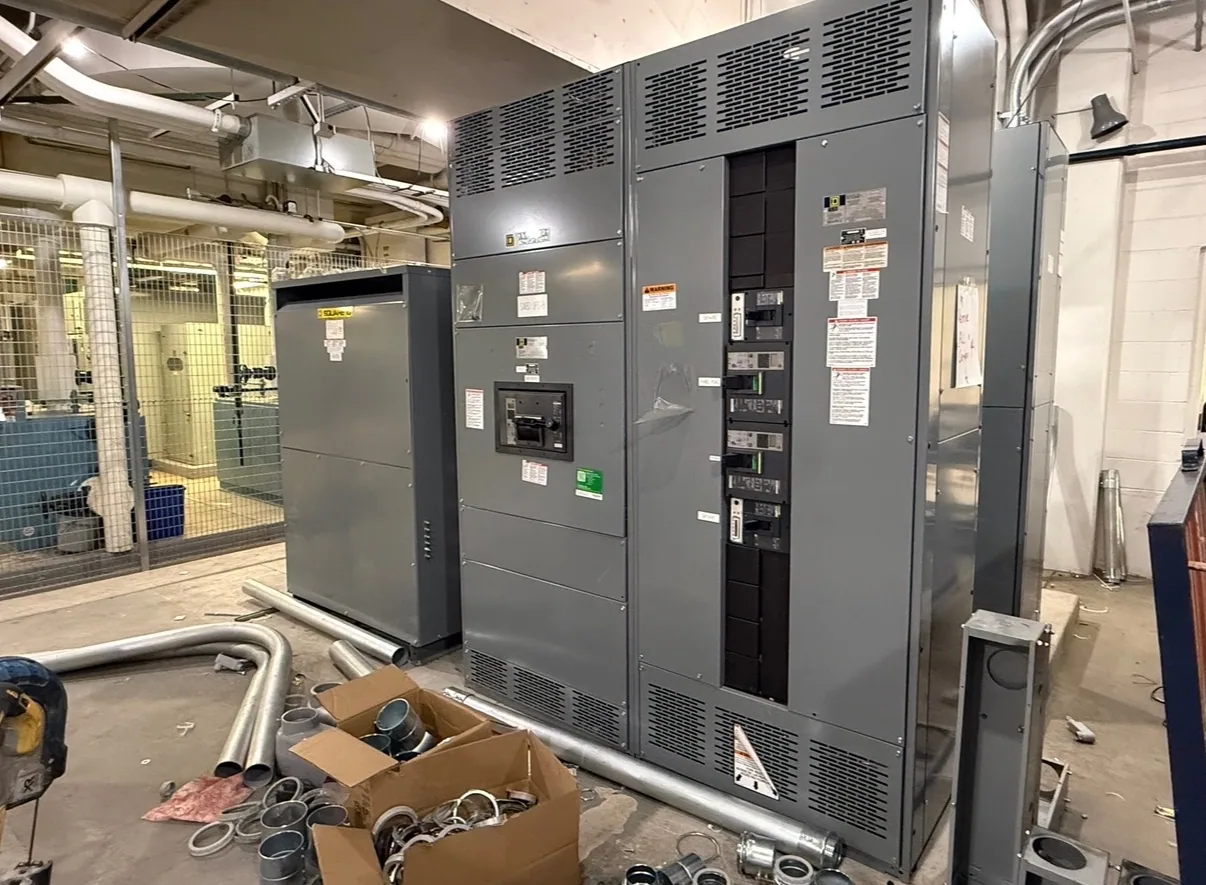
Start with scope, not a guessed delivery date
Plan for switchgear lead-time uncertainty by defining what the project needs, confirming the current schedule with the manufacturer, and revisiting that schedule as design and procurement information develops. A quoted or discussed delivery estimate is not a guaranteed date. Availability and actual lead times depend on the order, its specifications, component selection, and production conditions, so confirm them for the specific equipment and purchase timeline.
Begin with the equipment’s intended role and project constraints: voltage class, service configuration, required functions, installation location, and the date equipment must be available for the next project milestone. Identify who has authority to approve technical decisions and substitutions. A clear scope helps the manufacturer assess the requested design and makes later schedule updates more meaningful than a broad estimate detached from a defined configuration.
Identify the schedule’s real critical path
Work backward from the date the equipment must be installed or support a planned project phase. Include time for design coordination, submittal preparation and review, buyer approvals, manufacturing, shipping, receiving, site readiness, and installation by qualified personnel. The sequence and duration depend on the project; ask the project team to identify which steps actually control the completion date rather than assume manufacturing is the only constraint.
Separate fixed milestones from dates that can move. For example, a shutdown window, building turnover, or coordinated electrical installation may constrain the sequence, while some design reviews may have flexibility. Ask the general contractor, electrical contractor, engineer, and manufacturer to confirm their respective dependencies. Build reasonable schedule contingency where the project allows, but do not treat contingency as a substitute for confirming the order-specific schedule.
Confirm dates and assumptions with the manufacturer
Request a current estimate tied to the equipment description, configuration, and information available at that point. Ask when the estimate was prepared, what event starts the stated schedule, and which approvals or buyer-provided details must be complete first. Confirm whether the expected date refers to manufacturing completion, readiness to ship, or another milestone. These terms are not interchangeable, and the project needs to know which one affects its plan.
Ask how schedule updates will be communicated and what could change the estimate. Component availability, unresolved technical details, approval timing, and revisions may affect an individual order, but the manufacturer must confirm the implications for the actual design. South Carolina Switchgear Builders manufactures new, custom-to-specification equipment, is US-built with all-American components, and ships nationwide. Availability and lead times still require confirmation for each order.
Evaluate alternates before schedule pressure rises
Discuss potential alternates early enough for the responsible engineer and manufacturer to evaluate them before they become urgent. A different component, arrangement, or feature may affect compatibility, protection, controls, dimensions, ratings, documentation, or the assembly’s applicable requirements. Do not assume a substitute is equivalent simply because it appears to serve the same general function. Confirm whether it fits the project design and whether any revised documents or approvals are needed.
Consider an illustrative case: a project’s specified component has an uncertain availability date, while the equipment is needed before a scheduled installation phase. The team can ask the manufacturer whether a proposed alternative is feasible, then have the engineer review its electrical and project implications. If it is approved, document the exact change and obtain a revised schedule. If not, the team can assess a schedule adjustment or another technically acceptable path. Neither option should be assumed in advance.
Control changes and submittal timing
Treat the approved equipment description and submittals as schedule controls. Before release, reconcile the one-line diagram, equipment schedule, requested features, interface requirements, and installation constraints with the manufacturer’s proposed configuration. Assign responsibility for collecting comments and returning consolidated approvals. Ask which information is still outstanding and whether it prevents final design, component ordering, or production. The answer is specific to the order and should be reflected in the project schedule.
After approval or release, route every proposed change through a documented review. Even a seemingly small revision can require engineering review, updated drawings, renewed approval, or a schedule reassessment. Record who requested and approved the change, what documents it affects, and whether the manufacturer has confirmed a date impact. Avoid parallel instructions from different project participants; a single controlled record reduces conflicting assumptions about what is being built.
Use checkpoints instead of relying on one estimate
Set practical checkpoints at scope definition, quotation, submittal return, approval, order release, and later schedule updates. At each point, ask what has changed, what remains uncertain, who owns the next action, and whether the expected equipment milestone still supports the project sequence. Keep the manufacturer’s current information distinct from internal planning assumptions, and share revisions promptly with contractors and other affected parties.
Before placing an order, provide the manufacturer with the required equipment function, voltage class, project documents, preferred milestone dates, site and coordination constraints, and any proposed alternates. Ask what is needed to finalize the configuration, which dates are estimates, how updates will be handled, and what approvals are required. Have the responsible engineer verify technical suitability and project requirements. This disciplined exchange cannot eliminate uncertainty, but it gives the team a clearer basis for decisions and schedule changes.