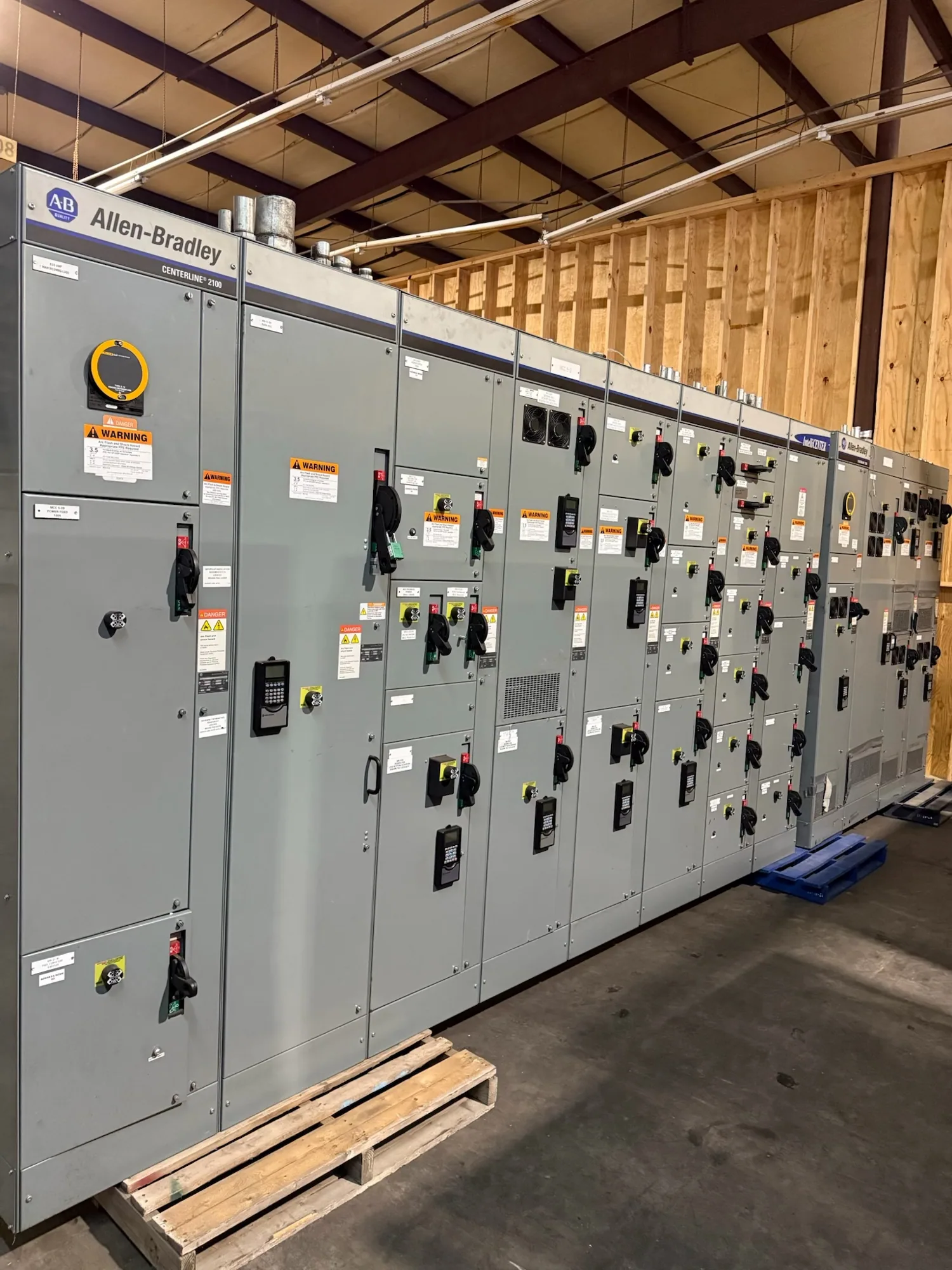
What factory acceptance testing covers
Factory acceptance testing, often called FAT, is a planned review and test of a new switchgear or switchboard assembly before it leaves the manufacturer. Its purpose is to check specified features and provide project stakeholders with evidence that the equipment was built and tested against agreed requirements. The exact work varies by design, voltage class, purchase specification, and approved test plan; FAT is not one universal test package.
Depending on the equipment and plan, activities may include a visual and mechanical inspection, confirmation of nameplates and installed devices, checks of accessible wiring, and operation of controls or interlocks. Electrical tests may also be specified where suitable for the particular assembly. The manufacturer and responsible project engineer should identify applicable procedures and acceptance criteria in advance rather than assuming a standard set of tests covers every project.
Agree on the plan before the test date
Start with the approved submittals, project specification, and purchase order. The test plan should identify the equipment sections or functions being reviewed, the inspection and test steps, the instruments or records required where applicable, and the criteria for passing each item. It should also state which tests are not included. Clarifying boundaries early helps avoid treating a factory demonstration as proof of every system-level operating condition.
Buyers should ask who will prepare and approve the plan, what documents will be available during the session, and how test results will be recorded. Confirm whether the test applies to all supplied sections or only identified representative sections, and whether any checks depend on project-provided devices or information. If drawings, settings, or wiring details change after approval, ask how revisions are incorporated and how affected checks are handled.
Witnessing, demonstrations, and records
A customer may be able to witness agreed FAT activities in person or through an arranged remote session, subject to project coordination and the manufacturer’s confirmed arrangements. Witnessing is an opportunity to observe the defined procedure, ask questions, and review results; it does not by itself broaden the test scope. The invitation should state the date, agenda, attendees, prerequisites, and how comments or observations will be documented.
Ask what records will be issued after the test. Depending on the agreed scope, these may include completed test sheets, inspection notes, identified instrument information, or a discrepancy list. The precise record package should be confirmed rather than presumed. Agree on how the customer will review and comment, who can disposition an observation, and whether written acceptance is required before shipment. Keep the approved drawings and test records aligned with the final equipment configuration.
Control wiring and functional checks
Control wiring often connects devices such as relays, meters, switches, and breaker controls, so its intended function should be clear from the approved diagrams. A FAT may include checks of selected wiring points or demonstrations of specified control sequences. The manufacturer and project engineer must confirm which circuits can be checked with the supplied configuration, what external signals or accessories are needed, and whether any functions are outside the factory test boundary.
For example, a project may require a demonstration that a specified local control operates as shown on the approved drawings and that a defined interlock prevents a particular sequence. The plan should identify the devices involved, the expected response, and how the result is recorded. That demonstration does not establish that every field cable, protection setting, utility interface, or complete site sequence is correct; those items depend on project conditions and may require separate verification.
Discrepancies and acceptance boundaries
If an inspection or test identifies a discrepancy, record it clearly: identify the affected section or document, describe the observed condition, and assign responsibility for review. The manufacturer and customer should agree on disposition, any required correction, and whether a repeat check is appropriate. A comment or observation is not automatically a failed test, and a successful FAT does not remove the need to resolve items that the project defines as acceptance conditions.
Factory testing also has practical limits. The equipment is evaluated in the factory configuration and under the conditions available for the agreed procedure. Site installation, external connections, integration with other equipment, and commissioning are distinct matters. Do not treat FAT as field commissioning or as authorization for energized work. Installation, testing, and maintenance must be performed by qualified personnel following applicable safety procedures.
Questions to settle before shipment
Before scheduling, provide the manufacturer with the approved equipment documents, current drawing revisions, requested test scope, witness preference, attendee details, and any project-specific acceptance criteria. Ask which tests are planned, what prerequisites apply, what records will be delivered, and how revisions or discrepancies will be managed. Confirm whether any project devices, settings, or customer-furnished information are needed, and identify who has authority to approve the final test record.
Finally, ask what remains outside the FAT and what the project team must verify after delivery. Shipment timing and availability depend on the order and must be confirmed; do not assume that a completed test alone establishes a delivery date or final acceptance. A clear plan gives the buyer, manufacturer, and project engineer a common basis for review, makes observed results easier to interpret, and sets realistic boundaries for the work that follows at the installation site.