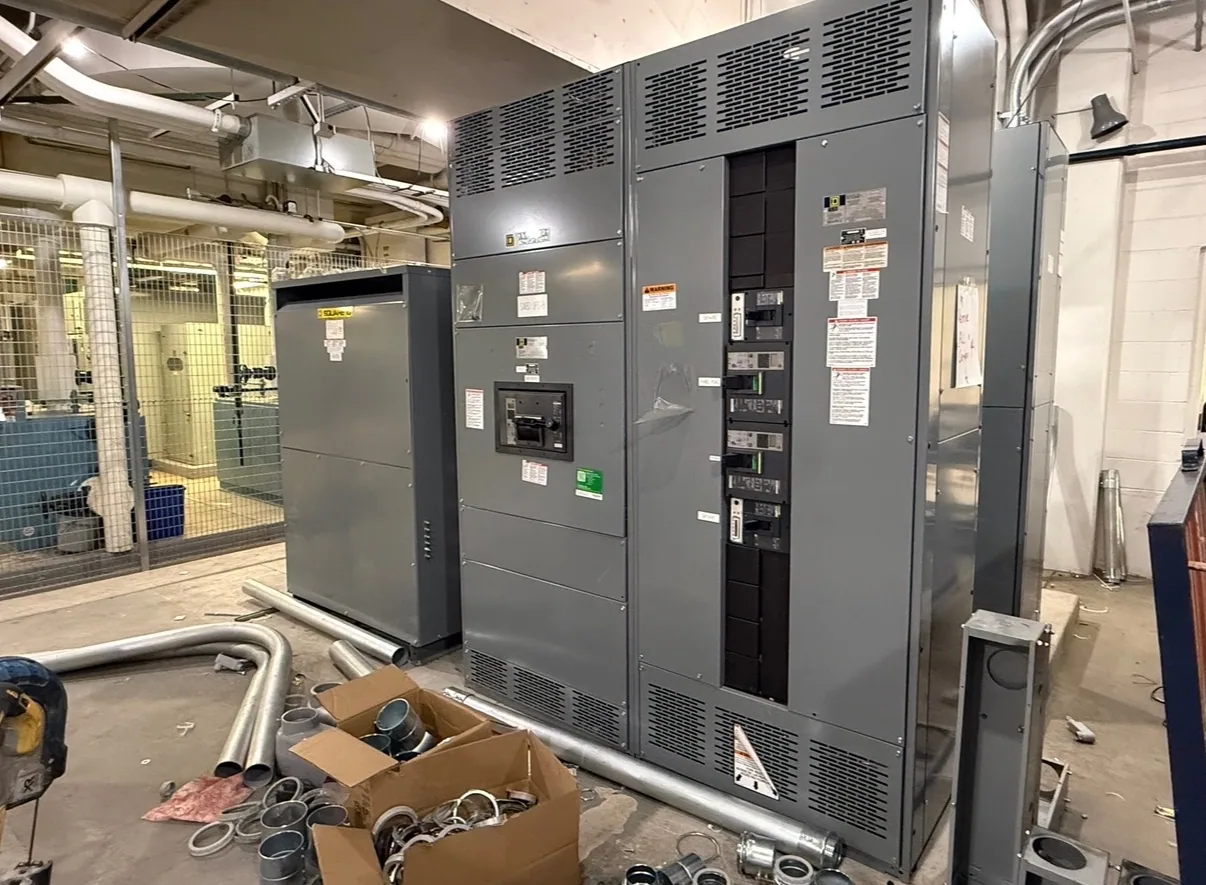
Where arc-resistant equipment fits
Water and wastewater facilities depend on electrical distribution for pumping, treatment processes, ventilation, controls and supporting services. A project may involve a central plant, a remote pumping station or equipment installed outdoors; each setting creates different demands for access, environment and coordination. Arc-resistant switchgear may be considered where a suitable design has been evaluated for the intended configuration and the project’s safety requirements.
Arc resistance is a characteristic of a specific tested equipment design and defined installation arrangement, not a blanket guarantee of personnel safety or a substitute for an electrical safety program. Buyers should identify the applicable equipment and testing basis, including the boundaries and conditions of the design. The project engineer and responsible safety professionals should determine whether that design addresses the application.
Start with the facility’s electrical duty
Build the scope from the distribution system and connected loads. List the pumps, process equipment, controls and other loads served, and identify which motors start across the line, use reduced-voltage starting or operate through drives. Starting method and operating sequence can affect equipment selection and coordination. Provide available system fault information and protection requirements for review rather than assuming a particular lineup will suit every motor duty.
Clarify nominal system voltage, equipment maximum voltage, insulation requirements and system configuration. These are related but distinct specification items; the nominal voltage alone does not settle the equipment rating. Identify whether the application is low-voltage or medium-voltage and provide the project’s grounding arrangement and other system details. The responsible engineer should resolve rating and insulation selections against the actual electrical design.
Match the tested design to access and location
Document how operators and qualified maintenance personnel approach the equipment, which sides need access, and whether the lineup will be installed against a wall or with clearance around it. A tested arc-resistant arrangement may have specific requirements for room dimensions, exhaust paths, ceiling conditions or other installation features. Confirm those limits with the applicable design documentation; do not assume that a rating transfers to a different enclosure position or room layout.
For remote or outdoor locations, describe exposure to moisture, dust, temperature changes, corrosive agents and washdown where those conditions exist. Specify enclosure and material requirements for the actual site, and ask how they affect the proposed configuration. Corrosion protection and environmental suitability are project-specific choices, not implied by an arc-resistant designation. Provide site conditions early so the manufacturer can assess whether the requested arrangement can be supplied as specified.
Coordinate motors, controls and outages
Describe the control interfaces needed for pumps and treatment processes, including signals, interlocks, metering and communication requirements. Identify whether controls are integrated into the switchgear or supplied separately, and define the boundaries between packages. A clear interface list helps prevent late changes to compartment layout, wiring and access. Confirm control voltage, external connections and documentation needs with the project team before the equipment design is finalized.
Provide the installation sequence, room constraints, cable-entry direction and planned outage windows. Existing facility conditions may limit when circuits can be interrupted or how new equipment can be moved into place. These constraints inform section arrangement, shipping splits and coordination with contractors, but do not establish a guaranteed installation plan. Manufacturer equipment supply is distinct from project engineering, field installation, commissioning and ongoing maintenance; assign each responsibility explicitly.
Weigh protection goals against design limits
Ask what the specified arc-resistant designation covers, what test basis applies, and which doors, covers, compartments and exhaust features must remain in the tested arrangement. Confirm any limitations on access, operation, lineup extension or adjacent equipment. A change in configuration can affect applicability, so substitutions and field modifications require review by the responsible parties. Do not treat the designation as a promise that every fault condition or installation scenario is covered.
Compare the proposed design with the facility’s operating and maintenance priorities. An arrangement that meets an access or exhaust requirement may need more room or different building coordination than a conventional layout. Consider how operators will identify equipment, isolate circuits under approved procedures and maintain process continuity. Qualified personnel must perform installation, testing and maintenance under applicable safety procedures; never plan work on energized equipment as a convenience.
Prepare a complete purchase specification
A useful request for quotation includes one-line diagrams, system voltage and configuration, available fault data, load schedules, motor starting details, protection and control requirements, and the requested arc-resistant design basis. Add indoor or outdoor location, environmental exposure, access clearances, cable entry, room constraints, shipping limitations and required drawings or submittals. Mark assumptions and open engineering decisions so they can be resolved rather than silently built into the proposal.
South Carolina Switchgear Builders manufactures new switchgear and can configure equipment to specification, with US-built construction and all-American components. Availability and actual lead time depend on the order and should be confirmed for the project; nationwide shipping can be coordinated as part of the purchase. Provide the complete application information and ask the manufacturer to confirm the offered configuration, ratings, listing or testing applicability, delivery expectations and scope boundaries against the final specification before placing an order.