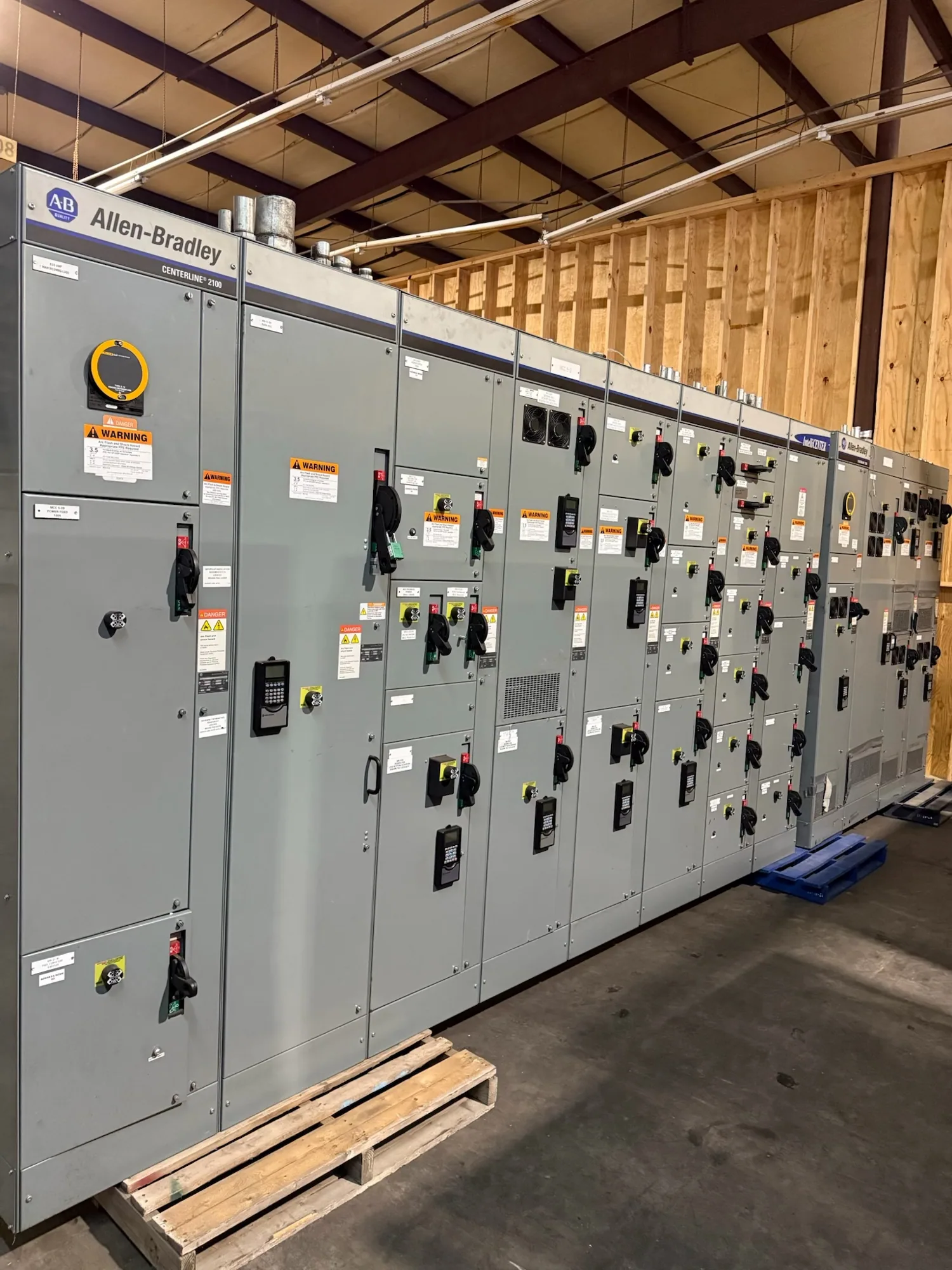
Why ratings matter inside a building
Indoor switchgear is installed in an equipment room or another protected building space, but the location does not reduce the need to evaluate short-circuit duty. A fault can expose switching and protective devices, bus, connections, and supporting structures to severe electrical and mechanical stresses. The equipment specification must address the calculated available fault current at the relevant point in the distribution system, not rely on a generic building description or a rating copied from another project.
Three related terms help frame the review: available fault current describes the prospective current at a point under stated system conditions; an interrupting rating concerns a device’s ability to interrupt a fault; and an assembly withstand or short-circuit current rating addresses the complete equipment assembly as specified. They are not interchangeable. The responsible engineer should identify which values apply to each device and assembly, and confirm that the proposed configuration supports the project’s design basis.
Start with the system fault-current study
Rating selection begins with system information, including the source, transformer data, conductor routes and sizes, and the proposed distribution arrangement. These inputs affect the calculated fault current at the switchgear terminals and at downstream locations. If the source configuration can change, such as through alternate feeds or operating arrangements, the study should evaluate the relevant cases rather than assume one normal condition represents every operating state.
Compare the available fault current at the equipment location with applicable device interrupting ratings and the assembly rating for the exact proposed design. The project engineer should also consider protective-device coordination and the stated conditions under which any rating applies. A higher number on one component does not, by itself, establish suitability of the full assembly. Confirm ratings, device combinations, and any required documentation against the equipment-specific specification before release.
Indoor room conditions affect equipment planning
Short-circuit ratings are only one part of a workable indoor installation. Room dimensions, access routes, door openings, ceiling height, floor loading, and the intended equipment lineup can constrain transport, placement, and future access. Provide the manufacturer with the room layout and the planned lineup orientation early enough to identify dimensional conflicts. Installation clearances and working space should be established by the project team under applicable requirements, not inferred from an enclosure footprint alone.
Heat rejection and ventilation also belong in the room review. The project team should provide environmental conditions and identify nearby heat sources, ventilation assumptions, and any room limitations that could affect the equipment design. These conditions do not change the calculated fault current, but they can influence equipment arrangement and project acceptance. Confirm that the proposed indoor equipment configuration, access provisions, and room plan are compatible before construction details are finalized.
Consider the whole distribution arrangement
Ratings need to follow the actual one-line diagram. Incoming devices, bus sections, tie arrangements, feeder devices, and connected sources may each have distinct duties. Where the system includes generators, parallel sources, or alternate connections, ask the engineer to document which configurations are included in the fault-current evaluation. Do not presume that a rating suitable for one operating mode automatically covers another, or that equipment from a different voltage class or design can be compared by a single number.
There can be practical tradeoffs among rating requirements, equipment layout, protective-device selection, and project cost or space constraints. A design decision should preserve the required electrical performance while fitting the building and installation plan. If selective coordination is required, evaluate it as a system-level objective alongside fault-current duty, rather than treating coordination and short-circuit ratings as substitutes for one another. The project engineer should resolve any conflicts before the final equipment schedule is approved.
Illustrative automotive manufacturing scenario
Consider an automotive manufacturing facility planning indoor distribution for production areas, process equipment, and building services. The actual source details, fault-current values, protective devices, and room dimensions are unknown in this example; no rating can be selected from the facility type alone. The engineering team would define the one-line diagram, operating cases, equipment locations, and loads, then calculate available fault current at the proposed switchgear and relevant downstream points.
That review can reveal questions about alternate feeds, future expansion, or production equipment that changes the system arrangement. The engineer should determine which conditions govern, review the applicable standards and project requirements, and document assumptions and exclusions. For example, the specification might ask the supplier to identify the proposed assembly rating and applicable device ratings for the listed configuration. The supplier’s submittal can then be checked against the approved design basis, rather than treated as a replacement for engineering analysis.
Information to provide in a purchase specification
For a useful equipment proposal, provide the voltage class, one-line diagram, source and transformer information available to the project, calculated fault-current study, protective-device requirements, and intended operating configurations. Include the number and function of incoming and feeder sections, metering or control needs, indoor environmental conditions, room plans, access route, and desired delivery schedule. Mark preliminary values as preliminary, and identify who will issue the final engineering data and approve deviations.
Ask the specification to identify the applicable interrupting and assembly withstand or short-circuit current ratings, the devices and sections they cover, and the conditions or exclusions attached to those ratings. Request equipment drawings, the proposed device schedule, and documentation needed for the project review. Any standards applicability, listing, ratings, and test documentation must be confirmed for the specific design; do not assume a general statement applies to every assembly. Clarify responsibilities for design review, submittal approval, and site coordination.
Coordinate the final design before release
South Carolina Switchgear Builders manufactures new switchgear and switchboards to specification, with US-built equipment, all-American components, and nationwide shipping. Actual configuration, availability, and lead time depend on the order and must be confirmed. Provide complete engineering inputs and room information when requesting a project-specific proposal; early clarification helps align the equipment schedule, drawings, and delivery planning without substituting for the responsible engineer’s calculations.
Before authorizing production, compare the approved submittal with the current one-line diagram, fault-current study, and room plan. Resolve mismatches in source assumptions, device ratings, lineup sections, access, or required documentation in writing. Qualified personnel should handle installation, testing, and maintenance under applicable safety procedures. With engineering criteria established and project responsibilities clear, the buyer can evaluate a new indoor switchgear configuration against the actual electrical duty and building constraints.