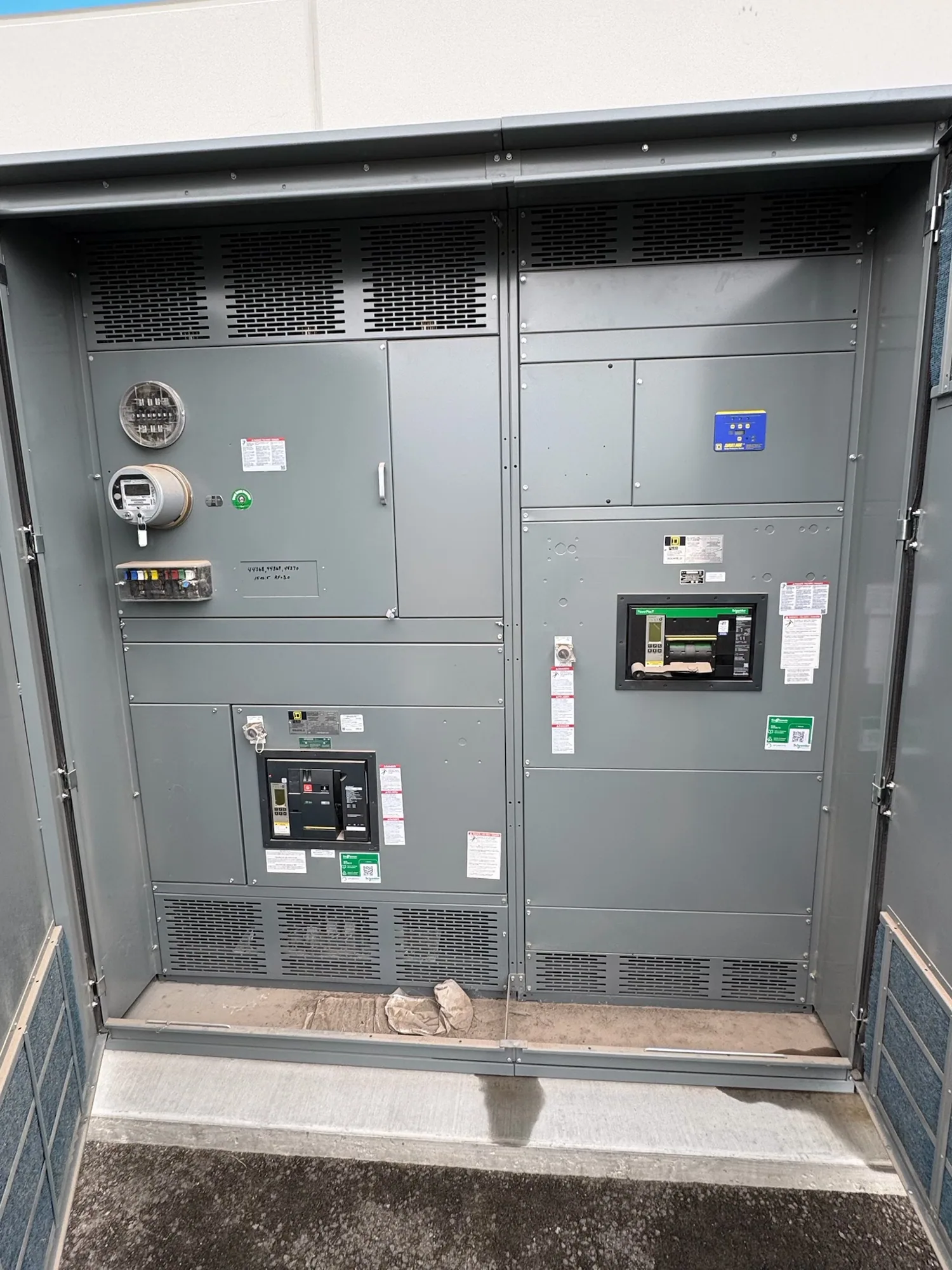
Fit the equipment to the production system
Automotive manufacturing facilities can combine production lines, motor-driven equipment, material handling, building services, and future process changes. A metal-clad switchgear project should begin with the electrical system it must serve—not with a generic lineup assumption. Identify the source, voltage class, operating arrangement, downstream feeders, and loads that are essential to production. The responsible project engineer should establish how the equipment fits the facility’s one-line diagram and operating plan.
Metal-clad switchgear is medium-voltage equipment; the specific design and construction requirements must be stated and verified for the proposed assembly. For an automotive project, useful early questions include which process areas need separate feeders, which loads may start or operate together, and what production consequences follow an outage. These answers inform arrangement and interfaces, but they do not replace a project-specific protection, coordination, or equipment design review.
Plan feeder segregation around production
Separating feeders by production area, process, or operational priority may help clarify switching and maintenance boundaries. For example, a project team might assess whether line equipment, utilities, and future expansion should be served through distinct feeder groups. The actual arrangement depends on the electrical design, available sources, fault and protection study, and facility procedures. Avoid assuming that compartmentalization alone guarantees continuity or makes any particular maintenance task safe.
Discuss staged outages before finalizing the lineup. Determine which circuits can be taken out of service together, what operating state the plant can tolerate, and whether planned work must coincide with production shutdowns. Removable devices and compartmentalized construction may be relevant to the specified equipment, but their practical value depends on the actual device, access, interlocks, maintenance plan, and qualified personnel procedures. Ask the manufacturer to identify the proposed interfaces and operating features for review by the project engineer.
Define motor-load and protection information
Motor-related loads deserve a clear, coordinated input schedule. Provide available motor and feeder data, expected operating patterns, starting or acceleration requirements when known, and any project assumptions about simultaneous operation. The engineer can use this information to evaluate the system and specify protective-device functions and settings. Do not infer protective performance from a general product description; the selected devices, ratings, settings, and coordination must be confirmed for the actual system.
Document the interfaces needed for monitoring, control, alarms, and facility communications. Identify which signals must connect to plant systems, what control power or auxiliary arrangements are specified, and who is responsible for defining and validating those interfaces. A clear boundary between switchgear supply, system engineering, controls integration, installation, and commissioning reduces ambiguity. Requirements should be reviewed with the relevant design professionals and confirmed against the manufacturer’s offered configuration.
Resolve continuous-current ratings in context
Continuous-current selection starts with the expected normal load on each bus section and feeder, not simply the sum of equipment nameplates. The project engineer should establish demand assumptions, operating scenarios, load growth, and any intended spare capacity. Bus, breaker, and other device current ratings must suit the specified arrangement and duties. Confirm how the proposed ratings apply to each section and device instead of treating one lineup value as proof that every circuit is appropriately sized.
Ask which environmental and installation conditions affect the design. Ambient temperature, enclosure arrangement, ventilation, elevation, grouping, and other project-specific factors may need engineering review where applicable. Do not assume a rating remains unchanged under every condition or that a general derating rule fits the assembly. Provide the site and installation information available, then request confirmation of applicable continuous-current ratings and any design limitations for the specific equipment being quoted.
Account for expansion without overbuilding
Planned production growth can influence spare feeder positions, bus arrangement, physical space, and the ability to extend the distribution system. Distinguish committed loads from possible future loads and describe the timing and uncertainty of each. An empty position or reserved capacity should not be presumed available unless it is included in the specified design. Have the engineer assess future scenarios alongside present operating needs so that expansion provisions are deliberate and compatible with the selected lineup.
Also establish site constraints early: room dimensions, access and handling routes, cable entry preferences, termination needs, and interfaces with existing equipment. Confirm what drawings, connection details, and coordination information the project requires and when they are needed. These inputs help the manufacturer evaluate a custom-to-specification proposal without implying that site engineering or installation is part of equipment supply. Any delivery schedule and equipment availability must be confirmed for the actual order.
Prepare a useful automotive switchgear RFQ
A focused request for quotation should include the one-line diagram, system voltage, source and bus arrangement, preliminary load and feeder schedule, and known protection requirements. Add the operating sequence, outage constraints, motor-load information, anticipated expansion, environmental conditions, room and cable-entry constraints, and required control or monitoring interfaces. Identify requested drawings, documentation, testing, listing, and standards explicitly so each can be reviewed against the proposed design rather than assumed.
State the required delivery location, project milestones, and any approval or submittal process, while asking the manufacturer to confirm availability and achievable dates. South Carolina Switchgear Builders manufactures new switchgear and supplies equipment for projects in South Carolina and nationwide. The company can review a defined specification for a custom proposal; engineering approval, installation, field testing, and maintenance remain separate project responsibilities unless specifically established in the contract.
Coordinate before releasing the order
Before purchase, reconcile the quotation with the latest one-line, load schedule, protection requirements, physical constraints, and control interfaces. Resolve exceptions in writing, confirm the exact equipment configuration and applicable ratings, and assign responsibility for each open engineering or site item. For automotive production, the best specification is one that ties feeder boundaries and outage planning to the facility’s operating realities while leaving no uncertainty about who supplies, integrates, installs, and verifies each part of the system.