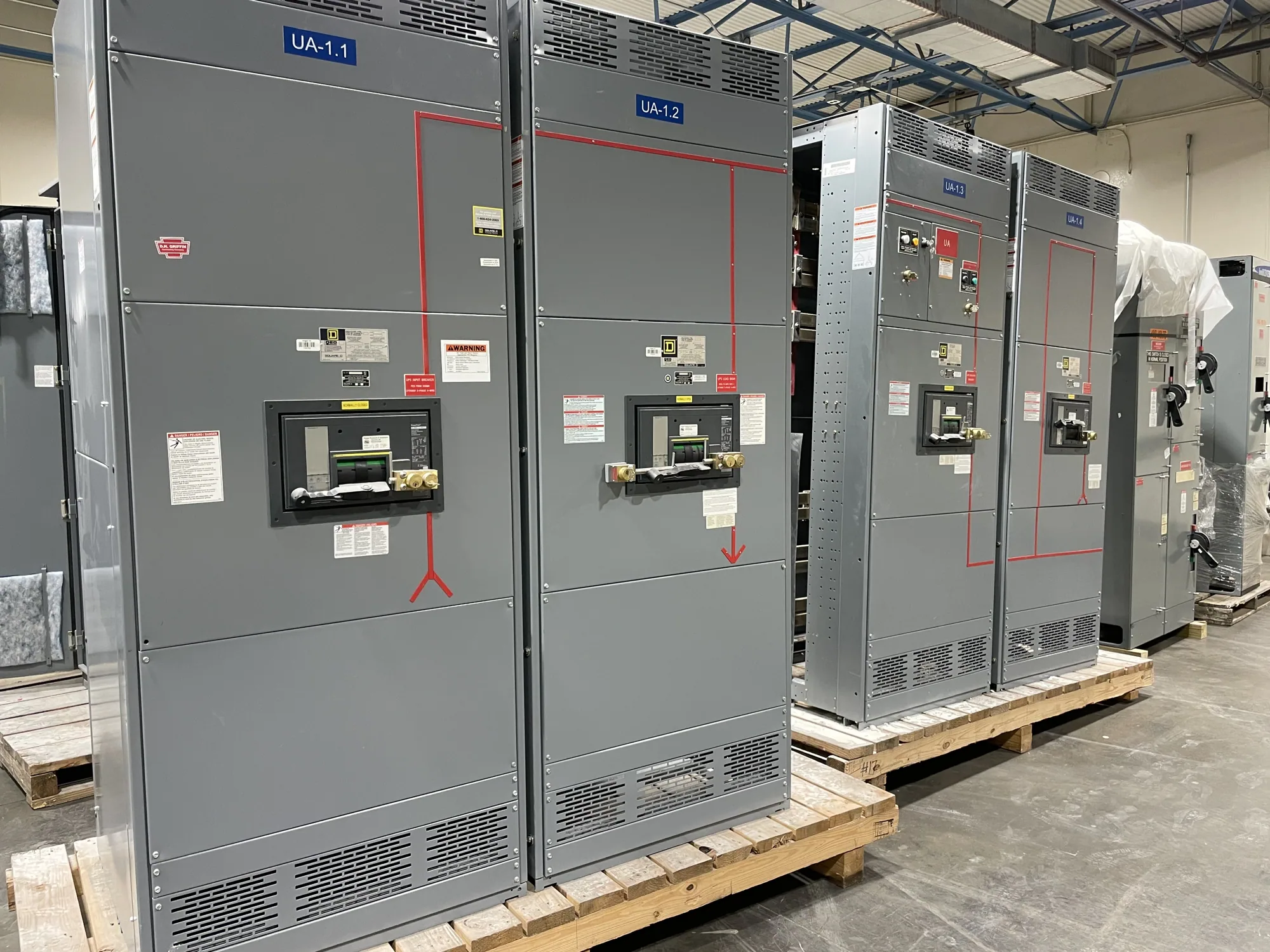
Start with the system the switchgear will serve
Medium-voltage switchgear connects and protects sources, buses, and feeders in distribution systems where equipment must be selected for the electrical conditions it will encounter. A voltage specification should begin with the actual system—not a familiar label or a voltage copied from another project. The system’s nominal voltage, grounding arrangement, operating configuration, and expected conditions all inform the equipment selection that the project engineer must confirm.
Nominal system voltage describes the system’s designated operating level, while an equipment voltage rating identifies the voltage class for which the assembly is designed. Those terms are related but not interchangeable. The selected equipment must be appropriate for the system under the applicable design basis and standards. A voltage class alone does not establish suitability: the project specification must also address insulation, switching and protective functions, and other electrical ratings.
Relate nominal voltage to equipment maximum voltage
When reviewing a specification, distinguish nominal system voltage from the maximum voltage associated with the equipment’s designated class. The responsible engineer should establish which system conditions govern and verify that the proposed equipment rating is suitable under the applicable standard. Do not assume the terms “nominal,” “rated,” and “maximum” describe the same value, or that a familiar equipment class automatically fits every system bearing a similar nominal voltage.
Provide the manufacturer with the project’s stated nominal voltage and the required equipment voltage class, if already determined. Ask for the proposed rating and its basis to be identified in the submittal, rather than relying on an informal product description. If the project documents use inconsistent terminology or values, resolve that discrepancy with the electrical engineer before equipment configuration is finalized. The rating decision belongs within the project’s engineering review, not an assumption made from a general product category.
Specify insulation for actual service conditions
Voltage class and insulation coordination are connected, but a voltage class by itself is not a complete insulation specification. The project engineer should determine the applicable insulation requirements from the system design, governing standards, installation conditions, and expected electrical stresses. The specification should identify required insulation characteristics and any relevant design basis that the manufacturer must address. These requirements need confirmation for the particular assembly and cannot be inferred from a generic rating label.
System configuration also matters. Source arrangement, bus connections, grounding method, and feeder duties can affect how the switchgear is applied and how protection is coordinated. Describe the intended configuration and identify whether sources operate separately, in parallel, or through a transfer arrangement, where applicable. The responsible engineer should assess system behavior and protective-relay interfaces; a switchgear voltage rating does not, on its own, establish relay settings, coordination, or suitability for every operating mode.
Consider the complete source and feeder application
For incoming source and outgoing feeder sections, specify how each section functions and what the project expects it to connect, interrupt, isolate, or protect. Confirm the required equipment voltage class against the system design, then coordinate other applicable ratings and features independently. The continuous-current rating, interrupting requirements, insulation, control power, and protective devices are separate specification topics that must be evaluated for the actual application rather than inferred from voltage.
Isolation and switching needs should be described in functional terms, with the project engineer defining the required arrangement and operating procedures. Identify whether the design includes multiple sources, bus sections, metering, or particular relay interfaces. These details help the manufacturer review the requested configuration against the specification. They do not replace engineering approval, and they should not be treated as evidence that any particular assembly has a specific rating, listing, or standard compliance unless that is verified for the supplied design.
Use a scenario to expose missing design information
Consider a chemical processing facility planning a new medium-voltage feeder lineup. The nominal voltage, grounding method, source fault conditions, environmental requirements, and applicable standards are unknown in this illustrative scenario; no values should be presumed. Before selecting equipment, the facility’s qualified electrical engineer would define the system basis, determine the required voltage class and insulation criteria, and review protection and operating arrangements for the actual installation.
The useful trade-off is not simply choosing a higher or lower label. The selected class must suit the documented system and applicable design requirements, while the overall assembly must satisfy the project’s other electrical and physical needs. A qualified engineer should resolve uncertain system data, calculations, and standards applicability. The manufacturer can then evaluate the requested equipment against the resulting specification, flag questions, and confirm which design-dependent features are available for the proposed build.
Prepare a clear, reviewable specification package
For a productive quote and submittal review, provide the nominal system voltage, requested equipment voltage class, system frequency if specified, grounding arrangement, one-line diagram, source and feeder configuration, and applicable project standards. Include available fault-study information, required ratings, control and relay interface requirements, metering needs, installation environment, and any space or connection constraints. Mark unknown items explicitly and identify who will resolve them; omitted values should not be filled in by assumption.
- State the system nominal voltage and the required equipment voltage rating, using the project’s defined terminology.
- Provide the design basis for insulation and identify standards or specifications the engineer requires the assembly to meet.
- Document source, bus, and feeder arrangements, along with relevant protection, control, and isolation functions.
- Request confirmation of the proposed configuration, applicable ratings, listing or testing status, and any exclusions for the specific design.
Coordinate engineering review before release
Review the manufacturer’s proposal and submittals against the approved one-line diagram and specification. Check that voltage terminology, equipment class, insulation requirements, configuration, and interfaces are consistent, and route technical exceptions to the responsible engineer. Confirm design-dependent listing, testing, ratings, and standards applicability against the actual supplied equipment; these should not be presumed for every assembly. South Carolina Switchgear Builders manufactures new equipment to specification, is US-built with all-American components, and ships nationwide. Availability and lead time depend on the order and must be confirmed.
Provide complete project documents early enough for engineering questions to be resolved before the design is released for production. Coordinate equipment boundaries with the project team, including which relays, field connections, cables, and external devices are included or supplied separately. Installation, testing, and maintenance should be performed by qualified personnel under applicable safety procedures. A carefully documented voltage basis gives the project team a sound starting point for reviewing the complete switchgear design.