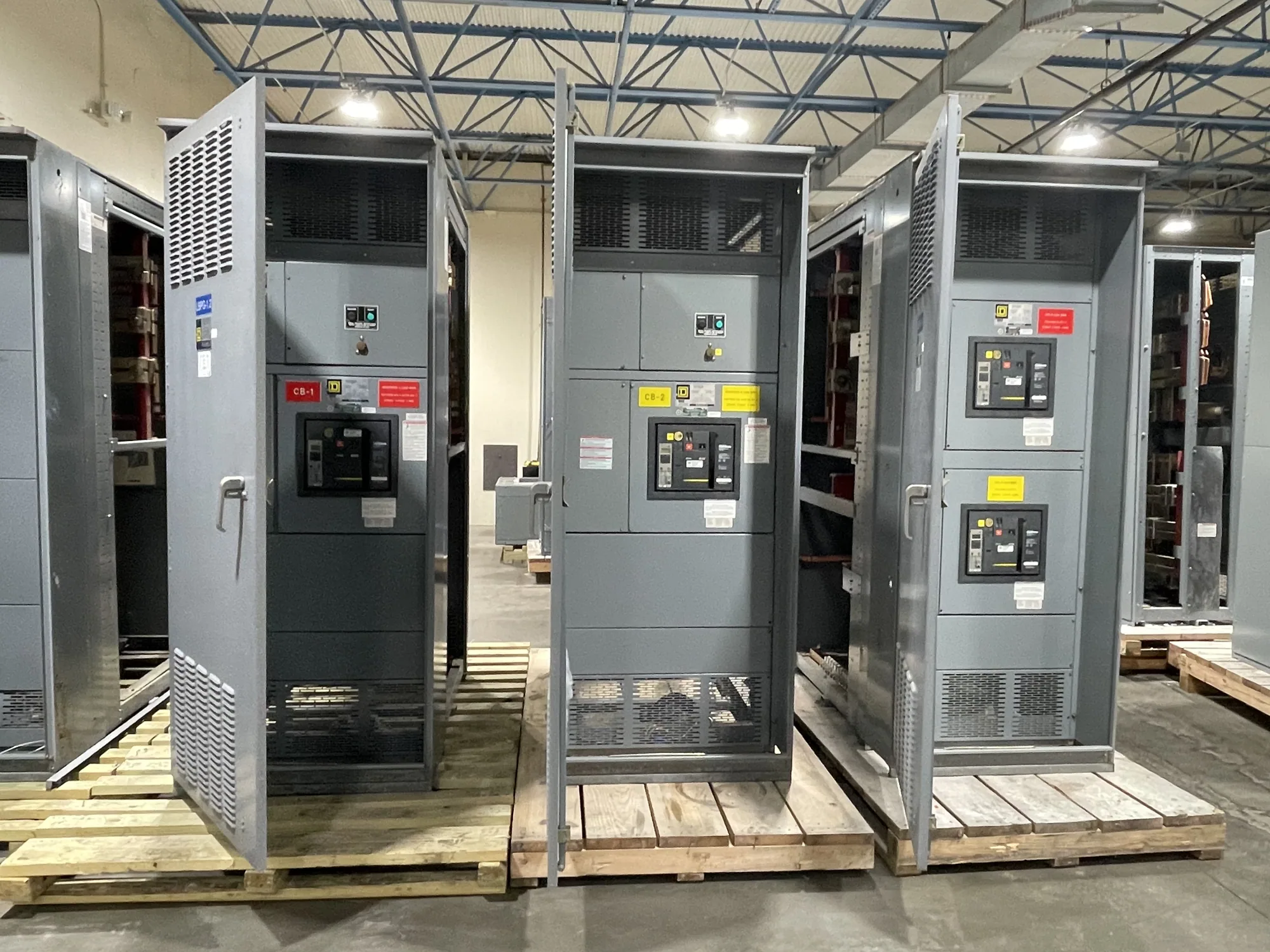
Start with the equipment and project scope — Low-Voltage Switchgear: Codes and Standards
“Codes and standards” is not one universal checklist for every low-voltage distribution assembly. Requirements depend on the equipment type, intended use, installation location, project documents and the authorities reviewing the work. Begin by defining exactly what is being specified: a low-voltage switchgear assembly, its protective devices, and the interfaces with upstream and downstream equipment. Avoid treating switchgear, switchboards and panelboards as interchangeable terms.
For eligible low-voltage switchboards, UL 891 may be relevant, but applicability and any assembly listing must be confirmed for the specific design. It should not be assumed to apply to every switchgear assembly, nor to medium-voltage equipment. Identify the governing equipment standard and edition with the project engineer and manufacturer, and document the basis. The applicable installation code, adopted edition and local amendments are separate project questions for the responsible design team and authority having jurisdiction (AHJ).
Separate equipment requirements from installation rules
Equipment standards address the construction and evaluation of particular product categories; installation codes govern how equipment is selected, located, connected and protected as part of a facility. Utility rules may shape service arrangements, metering or points of connection, while the AHJ reviews the installation under its authority. These layers interact, but one does not automatically answer every question raised by another. Confirm which documents govern each part of the project rather than relying on a generic compliance statement.
Ask the design team to identify the editions and project specifications that apply, including any owner or insurer criteria. Then clarify who will resolve conflicts or interpretations. Utility requirements should be obtained from the relevant utility for the actual service and project; they should not be presumed from another facility or jurisdiction. Manufacturer documentation can support equipment selection, but it does not replace engineering decisions, installation approval or AHJ review.
Coordinate ratings with the system study
Standards selection is only one part of a sound specification. The assembly’s voltage class, continuous-current needs, protective-device arrangement, short-circuit withstand capability and interrupting ratings must be coordinated with the actual electrical system and available fault-current information. Do not select these values from a catalog label or assume that a device rating alone establishes the suitability of the complete assembly. The responsible engineer should calculate and verify the applicable system conditions and rating requirements.
State the source and date of the available fault-current study, relevant transformer and feeder information, and any known future operating conditions. If data are preliminary or missing, label them as such and identify the party responsible for confirming them. Equipment ratings and protective-device selections are design-dependent; the manufacturer needs the confirmed specification to evaluate the proposed configuration. Changes to the source, transformers or distribution layout can affect the engineering basis and may require review before release.
Make access and space part of compliance planning
Maintainability and room layout deserve attention alongside electrical ratings. The project team should confirm equipment dimensions, front and rear access needs, working clearances, egress, ventilation, cable entry, conduit routing and any required separation from other systems. These conditions depend on the equipment design, installation code, room arrangement and AHJ interpretation. A preliminary footprint is not a substitute for coordinated drawings or an approved installation plan.
Discuss how devices will be operated, inspected and replaced, and whether the proposed lineup supports the facility’s operating practices. Space constraints can influence section arrangement, cable provisions and access choices, but they should not be resolved by compromising required clearances or maintainability. Have qualified project personnel review the room and equipment drawings together. Installation, testing and maintenance must be performed by qualified personnel following applicable safety procedures; no equipment should be treated as safe to work on while energized.
Illustrative scenario: automotive manufacturing
Consider a hypothetical automotive manufacturing project adding a production line. The facility, service voltage, available fault current, load profile, utility arrangement and AHJ requirements are all unknown; no ratings or conclusions can be responsibly assigned from the scenario alone. The project engineer would first establish the system data and governing documents, then determine the appropriate equipment category, ratings, protection approach and installation requirements for the actual conditions.
Production continuity may make access, isolation planning and future expansion important design questions, but those priorities do not establish a particular code rule or equipment configuration. The team should evaluate them against the process layout, operating procedures and approved electrical design. Confirm the governing standard and edition for the proposed assembly, and ask whether any owner-specific requirements affect drawings, labeling, testing documentation or review. Treat each answer as project-specific until verified.
Prepare a specification package that can be reviewed
A useful inquiry includes the one-line diagram, equipment location and room drawings, system voltage, service and source details, load and feeder requirements, available fault-current study, protective-device preferences and known future provisions. Identify the required equipment type, intended application, project specification sections, applicable standard editions and any owner or utility documents. Mark unknown items clearly instead of filling gaps with assumptions; note who will provide each missing value and when it is needed.
Also state cable entry and termination expectations, access constraints, control or metering needs, environmental conditions, required submittals, review milestones and the planned installation schedule. Ask the project engineer to identify the governing installation code and AHJ, and request confirmation of any proposed listing or standard applicability for the exact assembly. UL 891 should be specified only where it applies to an eligible switchboard design, with the particular assembly’s listing status verified. Any ratings, testing, availability and delivery dates require confirmation against the actual specification.
Coordinate decisions before equipment release
Before approving a purchase, align the design documents, equipment proposal, utility information and AHJ review path. Resolve discrepancies in ratings, standard editions, spaces, protective-device details and scope responsibility in writing. South Carolina Switchgear Builders manufactures new, custom-to-specification low-voltage equipment, with US-built equipment and all-American components; configuration, applicable documentation and availability depend on the order and must be confirmed. Short lead times are offered, but the actual schedule must be established for the project.
Provide the latest approved drawings and clearly identify any changes after review, since revised system data or layout can affect the proposed equipment. Confirm submittal expectations and approval responsibilities before manufacturing release, then coordinate delivery and installation planning with the project team. A complete, project-specific specification gives the engineer, manufacturer, installer and AHJ a common basis for review without presuming that one standard or statement settles every requirement.