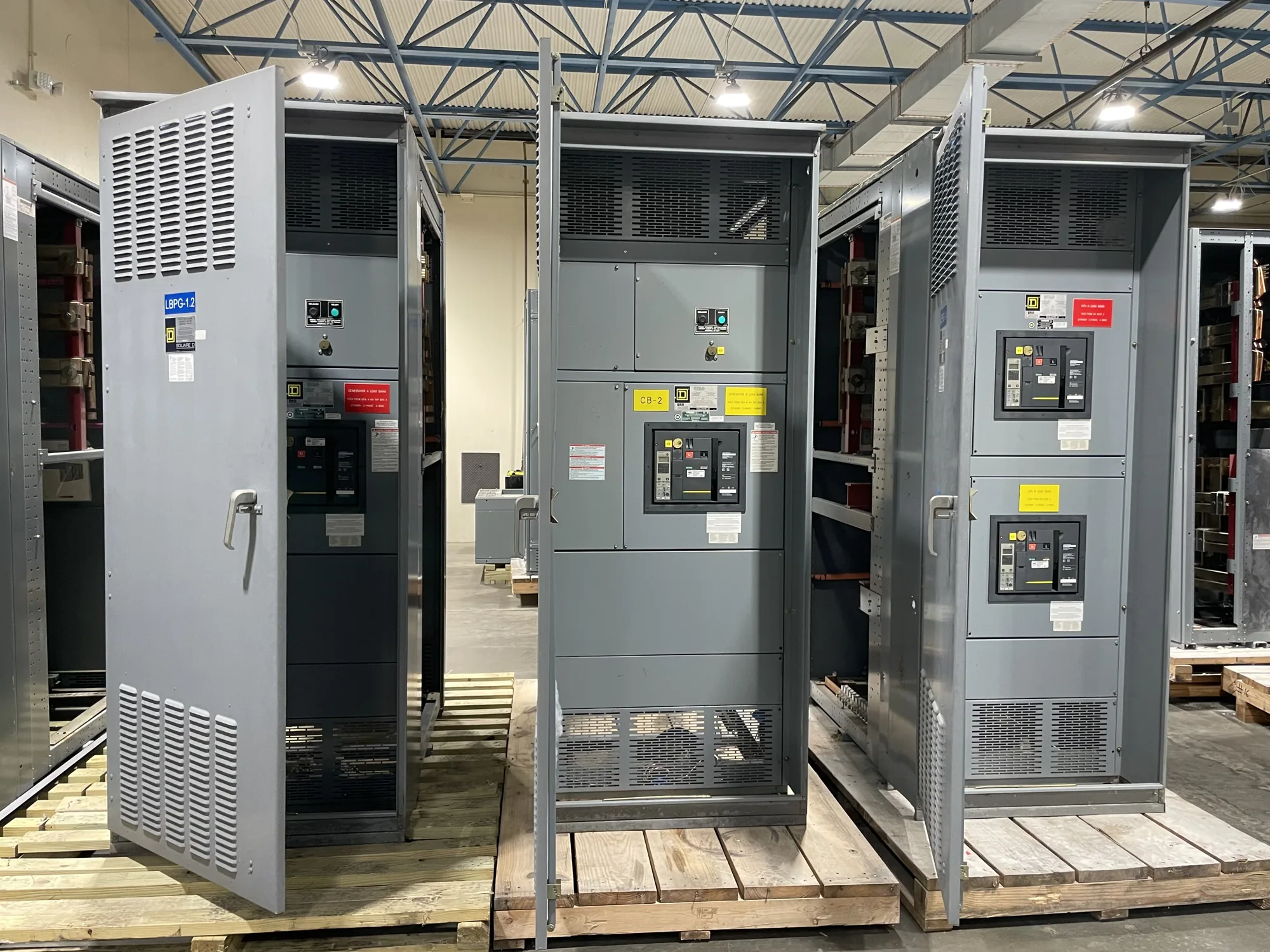
Plan around the campus distribution layout — Outdoor Switchgear for Commercial Campuses
A commercial campus may include several buildings, changing tenants, central mechanical systems, and feeders routed across a large site. In a hypothetical expansion, a new outdoor distribution point might serve added buildings while existing facilities remain in operation. The equipment’s role, source, outgoing circuits, and relationship to other distribution equipment should be defined before choosing an enclosure or requesting a quotation.
Start with a one-line diagram or preliminary distribution plan showing the source, proposed switchgear location, feeder destinations, and any planned tie or alternate-source arrangement. Identify which loads are essential, how future building connections might be added, and whether metering or isolation is needed at the distribution point. Those decisions influence the lineup arrangement and interfaces; they should be confirmed by the project’s electrical engineer.
Match the outdoor enclosure to site conditions
Outdoor placement makes the site part of the equipment discussion. Document exposure to rain, windblown dust, direct sun, standing water, irrigation, corrosive agents, and landscaping. Describe the mounting location and any nearby walls, traffic routes, or mechanical equipment. The appropriate enclosure construction and environmental provisions depend on those actual conditions and the specified equipment, so ask the manufacturer and engineer to confirm a suitable design rather than assuming one enclosure fits every campus.
Moisture management also involves the installation, not just the cabinet. Review drainage, conduit entries, cable routing, foundation elevation, and the risk of water collecting around the equipment. Consider how the proposed base and entry locations coordinate with civil and electrical drawings. Foundation dimensions, anchorage, and cable access must match the selected lineup and project details; provide drawings or site constraints early enough to resolve conflicts before fabrication and construction.
Preserve access for operation and maintenance
Campus sites can become crowded as buildings, parking, and landscaping evolve. Reserve working and access space in the site plan, and consider how qualified personnel will approach the equipment, open its doors, and handle components using the procedures applicable to the installation. Check for obstructions such as fences, curbs, utility routes, and future construction. The project team should verify required clearances against the actual equipment and applicable rules.
Access needs affect service growth as well as routine work. If additional feeders may be required later, identify the anticipated circuit count and how future work could be isolated without disrupting unrelated buildings. Ask whether the proposed arrangement supports the intended phasing and whether spare provisions are appropriate. A spare space or future connection is not automatically usable capacity; electrical ratings, physical layout, protection, and the project’s operating plan all need review.
Coordinate metering, isolation, and construction phases
For a multi-tenant campus, the metering scope can depend on how the owner allocates energy costs and monitors buildings or major mechanical loads. State which circuits require measurement, where metering should occur, and whether the project expects utility or owner equipment interfaces. Metering components, instrument requirements, and communications details should be confirmed for the specific design. Provide known interface requirements rather than relying on assumptions about what a standard lineup includes.
Construction phasing deserves the same attention. Explain whether the new equipment will serve an expansion, replace an existing distribution point, or be installed while nearby buildings remain occupied. Identify outage windows, temporary arrangements, cutover boundaries, and interfaces that affect the equipment design. The manufacturer can coordinate the supplied equipment to the approved scope, but project engineering, site preparation, installation, testing, and commissioning must be assigned to the responsible project professionals and qualified personnel.
Resolve continuous current ratings from project data
Do not select a continuous current rating from building area or a broad label such as “campus.” Provide the calculated and expected load information, source characteristics, feeder quantities, and planned operating conditions for engineering review. Explain whether loads are continuous, intermittent, or expected to change as tenants or mechanical systems are added. The project engineer must establish applicable design requirements and verify that the proposed bus and devices suit the intended duty.
Bus and device ratings are related but not interchangeable shorthand. The rating required for the incoming section, bus, and individual outgoing devices depends on the actual circuit arrangement and specification. Ambient temperature, enclosure conditions, loading, and other design constraints may affect selection or require confirmation of derating provisions. Ask for the proposed ratings and any assumptions to be stated against the project documents; no rating or performance result should be inferred before that review.
Prepare a useful request for quotation
A focused RFQ helps the manufacturer assess fit and identify open questions. Include the one-line diagram, voltage class, source and feeder information, preliminary load or rating requirements, circuit schedule, metering scope, and desired isolation arrangement. Add site plans, environmental conditions, foundation and conduit details, access constraints, and construction phases. Identify applicable project specifications and required submittals, while flagging items still awaiting the engineer’s decision.
South Carolina Switchgear Builders manufactures new switchgear and switchboards to specification, with US-built equipment, all-American components, and nationwide shipping. Equipment configuration, availability, delivery timing, ratings, testing, and any applicable listing must be confirmed for the specific order. Manufacturer supply is distinct from engineering design and field installation. With a coordinated scope and clear site information, the project team can evaluate the proposed equipment, resolve interfaces, and plan procurement around the campus construction schedule.