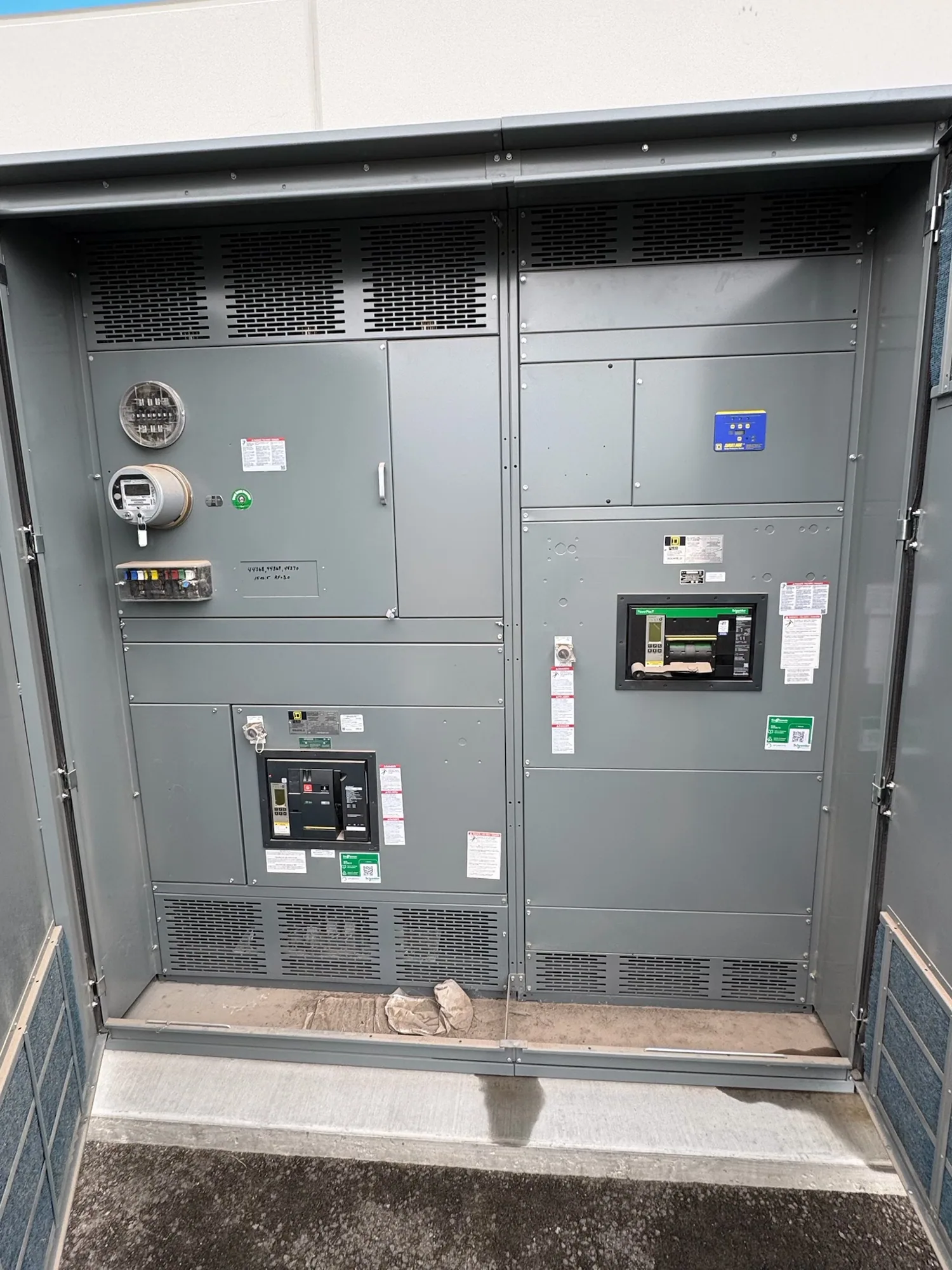
Where outdoor distribution fits in water and wastewater systems
A water or wastewater project may include well or lift-station pumps, treatment processes, blowers, chemical-feed equipment, controls and remote structures. When the electrical distribution equipment must be installed outdoors, the specification needs to address the site environment and operating needs as carefully as the electrical arrangement. New outdoor switchgear can be part of a project’s distribution scope, but the appropriate configuration depends on the engineer’s one-line diagram, loads and site conditions.
Start by identifying what the equipment will supply and how operators expect the facility to function. A pumping station with large motors presents different coordination questions from a treatment site with multiple process loads and control interfaces. Note whether distribution serves a single building, several outdoor loads or a remote location, and clarify which equipment is inside the switchgear scope. This context helps the manufacturer review the requested arrangement without assuming responsibility for the overall plant design.
Enclosure, moisture and site exposure
Outdoor exposure is not a single condition. Provide the expected rain, humidity, temperature range, washdown practices, airborne contaminants and any known corrosive exposure for the installation area. If chemicals, salt, industrial emissions or persistent moisture may affect the equipment, describe the exposure and ask the project engineer to define the required enclosure and material provisions. Do not assume a general outdoor designation addresses every site hazard or operating condition.
Moisture management should be considered alongside access and maintenance. Ask how the proposed enclosure arrangement supports inspection and servicing, whether condensation control is specified, and what clearances are needed for doors, cable entry and removal of components. The foundation, drainage, conduit routing and placement relative to process equipment should be coordinated before the equipment layout is finalized. These are project-specific interfaces; the civil, electrical and equipment documents should identify who is responsible for each.
Motor loads and operational interfaces
Pumps, blowers and other motor loads can affect the distribution design and the way equipment is arranged. Provide motor nameplate information, starting method, operating sequence and any known requirements for variable-frequency drives or reduced-voltage starting. The responsible engineer can evaluate starting and operating conditions, protection, coordination and available system capacity. Do not select switchgear solely from a total horsepower figure or assume the manufacturer can determine plant-wide motor performance without the needed system information.
Controls and communications also merit explicit definition. Identify control power requirements, metering, alarms, remote status points and interfaces with plant automation, if these are part of the requested assembly. Clarify whether control equipment is supplied separately or included in the switchgear scope, and provide drawings or interface schedules where available. For existing facilities, describe tie-in points, planned outages and any constraints on access or sequencing so the project team can coordinate delivery and installation planning.
Voltage and system configuration questions
State the nominal system voltage and provide the one-line diagram rather than relying on a brief label such as “480-volt service.” The equipment voltage class, maximum system voltage, insulation requirements, grounding arrangement, frequency and available fault-current information all need review against the actual design. A 480 V class is low voltage; 5 kV and 15 kV classes are medium voltage. Those categories do not determine the full equipment specification by themselves.
Ask the project engineer to resolve the source configuration, number of incoming and outgoing circuits, bus arrangement, protective devices, metering and any required separation or transfer functions. Include utility or generator interfaces when applicable, but confirm the governing requirements with the responsible parties rather than assuming a particular utility standard. The specified ratings, testing, listing applicability and standards must be checked for the particular assembly; they should not be inferred from a product category or an earlier project.
Build a useful purchasing scope
For a quotation, assemble the project location, requested quantity, one-line diagram, load schedule, voltage and system details, environmental conditions, layout constraints and target delivery window. Include the applicable equipment specification, cable-entry preferences, control interfaces and any defined documentation or testing requirements. Mark unresolved items as open questions. A clear distinction between mandatory requirements and preferred options helps the manufacturer identify what needs confirmation before a configuration can be proposed.
Also identify project milestones and coordination contacts. Confirm when approved drawings are needed, who reviews them, how foundation and conduit information will be exchanged, and whether the schedule depends on a shutdown or construction sequence. Availability and actual lead times depend on the order and must be confirmed. South Carolina Switchgear Builders manufactures new equipment to specification, with US-built equipment and all-American components, and ships nationwide; project configuration and delivery details require review for the specific order.
Coordinate supply with engineering and field work
Manufacturer supply is one part of a facility project. The owner’s engineer and other responsible design professionals establish the system requirements; qualified personnel handle installation, testing and maintenance under applicable safety procedures. Confirm the division of work for foundations, conduits, field wiring, controls integration and commissioning before purchase. The equipment documents should make interfaces clear, while the project team verifies that the site is ready to receive and install the assembly.
Before releasing an order, reconcile the quotation and drawings with the latest project documents. Check circuit quantities, ratings, enclosure requirements, access, control interfaces and any exceptions or assumptions. Resolve discrepancies through the designated engineering and purchasing contacts, then confirm availability and schedule with the manufacturer. This disciplined review gives a water or wastewater team a practical basis for procuring new outdoor switchgear that fits the specified application and can be coordinated with the broader facility work.