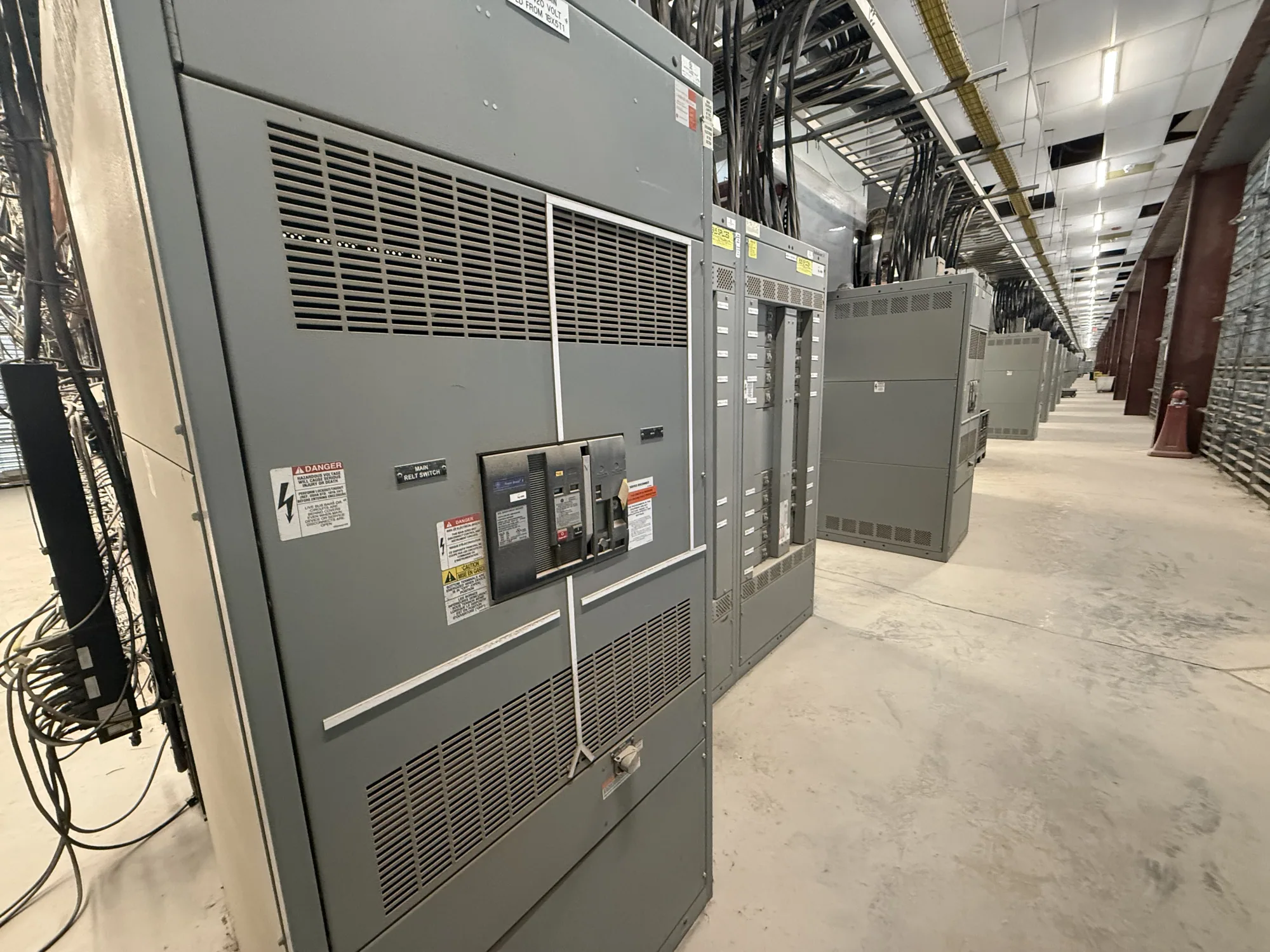
Can switchgear be ordered with future expansion in mind?
Yes. New switchgear can be specified around a facility’s expected growth, and the design may include provisions intended to make later changes more practical. Those provisions are not a blanket promise that equipment can be expanded in any way. The responsible engineer and manufacturer must confirm how future loads, available space, electrical ratings, and the selected equipment design work together.
Begin by describing what may change: added production lines, building areas, mechanical equipment, or a larger service requirement. Distinguish firm plans from possibilities, and give approximate timing and load information when available. A useful expansion plan addresses both the initial installation and the likely later work, while recognizing that future utility conditions, codes, and project requirements may differ.
Spare sections, ways, and room to work
Physical space is one of the most visible planning choices. A design may reserve room for future sections or include unused circuit positions, but spare space does not itself establish that new equipment can be added safely or that the original assembly supports the intended modification. Confirm what the proposed arrangement actually reserves, how additions would connect, and whether the manufacturer can support that configuration.
Coordinate the switchgear footprint with the electrical room, access route, doors, clearances, and the space needed for qualified personnel to install and maintain equipment under applicable safety procedures. Consider how future sections could be moved into the room and joined to the existing lineup. Room dimensions and access constraints can limit an expansion even when the original gear includes spare ways. Provide drawings and dimensions for review rather than relying on a rough equipment footprint.
Capacity and electrical ratings are not interchangeable
Future load growth raises questions beyond the number of available circuits. The engineer should evaluate the required continuous-current rating of the bus and relevant components against the anticipated operating load and design conditions. A larger bus rating may be appropriate for a defined growth plan, but selecting a higher rating alone does not establish that every part of the system can serve future demand. Feeder conductors, upstream sources, protective devices, and connected equipment also matter.
Fault duty needs separate attention. Future changes to the electrical system or supply can affect the available fault current, so the responsible engineer must establish the applicable requirements and verify the equipment design for the project. Do not assume that unused circuit positions, a larger current rating, or a physically compatible section resolves fault-duty needs. Voltage class, ratings, protection, and the actual assembly configuration should be reviewed together against the project specification.
Compatibility, design limits, and trade-offs
Future additions may depend on the original lineup’s manufacturer, design, bus arrangement, connection points, and available product options. Even equipment that appears similar may not be suitable for direct integration. Ask whether the planned provision is a reserved space, an unused circuit position, or a defined future section arrangement, and document the limits of that provision. Confirm what information and engineering review would be required before ordering any later additions.
Planning extra capacity or space can increase the initial equipment scope, room size, and coordination effort. Conversely, minimizing the initial design may leave fewer practical options if growth arrives sooner or in a different form than expected. For example, a facility anticipating another process line might reserve room and identify a future feeder location, while leaving the eventual load and protection details for later engineering. That is a planning scenario, not assurance that the later installation will be compatible or feasible.
Information to provide for a useful review
Share the current one-line diagram, known source information, voltage class, load schedule, and the anticipated additions with their estimated demand where available. Identify which forecasts are confirmed and which are preliminary. Include required ratings, project specifications, equipment-room plans, access details, and any constraints on footprint or installation sequence. If a load estimate is not yet established, say so rather than treating a placeholder as a final design value.
Ask the project engineer to define the expansion objective: what circuits or sections may be needed, what electrical capacity should be considered, and which system assumptions must be rechecked later. Ask the manufacturer to explain the proposed provisions and any limitations, including whether the specific configuration can be modified or extended. Availability, ratings, listing applicability, testing, and delivery timing depend on the actual order and equipment specification and should be confirmed rather than presumed.
Make expansion a documented design requirement
Put future-growth assumptions in the RFQ and design documents, not only in informal discussions. Request a clear description of included spare positions, reserved spaces, and ratings, along with exclusions and items requiring later verification. A low-voltage switchgear selection, for example, should be evaluated within its stated voltage class and project requirements; the label “future-ready” is not a substitute for defined design details.
Before purchase, have the responsible engineer review the expected load, bus and component ratings, fault-duty basis, room layout, and compatibility assumptions. Then coordinate the manufacturer’s proposed configuration with the project schedule and installation plan. South Carolina Switchgear Builders manufactures new switchgear to specification in the United States and ships nationwide; actual configuration and lead time depend on the order and must be confirmed. Clear, documented assumptions give the project team a more credible basis for planning later growth.