Start with the isolation purpose
Owners should first ask what isolation is expected to accomplish in each operating condition. Is the goal to separate a feeder for maintenance, isolate a transformer or motor, establish a defined boundary during equipment work, or support a particular switching arrangement? The answer affects the equipment configuration, operating procedure, interlocking, and documentation. A general request for “isolation” is not enough to define a design.
Ask the project engineer to identify the circuit, source, and possible backfeed paths involved. Multiple sources, ties, generators, transformers, or connected loads may change the boundary that must be addressed. Confirm which equipment is included in the scope and how interfaces with adjacent gear are handled. The manufacturer can configure equipment to a confirmed specification, but the responsible engineer must define the system requirements and approve the application.
Identify the equipment and its isolation features
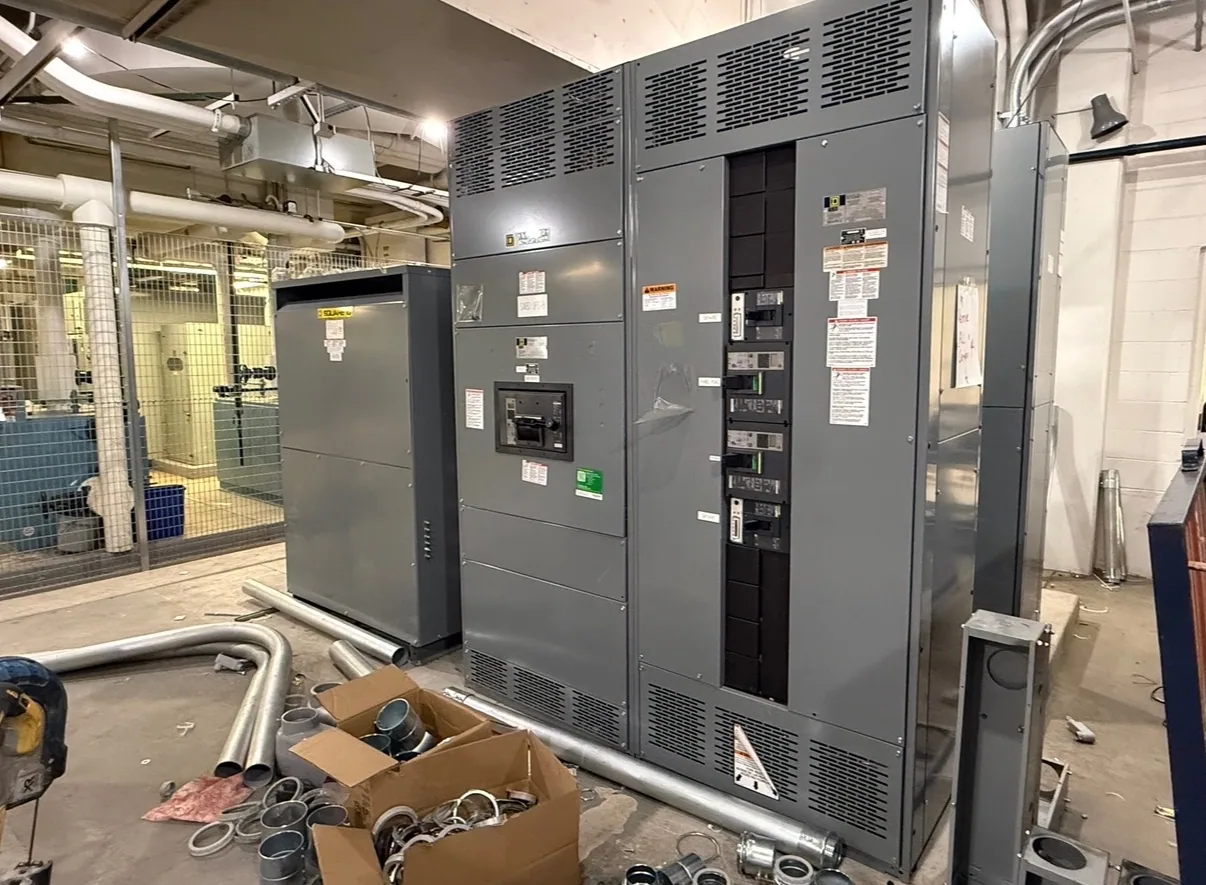
Ask which medium-voltage switchgear arrangement is proposed and what device or feature provides the intended separation. Do not assume that a breaker, disconnect, removable element, or visible position indicator means the same thing across all designs. Request the applicable diagrams, device descriptions, and operating information for the specific assembly. Confirm what the equipment indicates, what it does not indicate, and how its design supports the intended isolation boundary.
Also ask whether the specified equipment is metal-clad, metal-enclosed, or another arrangement, and what that distinction means for the project. Those terms are not interchangeable labels for every construction detail. Ask which compartments contain the relevant conductors and devices, what barriers or shutters are included, and how access is controlled. A construction category alone does not establish that every isolation need is met; review the actual design and project requirements.
Clarify procedures, interlocks, and responsibility
Ask who will develop and approve operating procedures, and which documents operators will use. Equipment instructions support operation of the supplied design but do not replace site-specific procedures, training, hazard assessment, or the employer’s safety program. Do not treat an equipment feature as permission to perform work. Switching, testing, and maintenance must be assigned to qualified personnel following applicable safety procedures.
Discuss interlocks explicitly: what actions are prevented, what conditions they depend on, and whether any approved operating sequence or exception applies. Request written descriptions rather than relying on assumptions about a handle, key, indicator, or control circuit. Confirm how loss of control power or an abnormal indication is addressed by the project’s procedures. These questions help distinguish a design safeguard from a complete safe-work process, which includes planning and verification beyond the equipment itself.
Define how isolation will be verified
Ask what verification steps the responsible engineer and site safety program require before work begins, and what equipment provisions support those steps. Position indication and control-system status may provide useful information, but owners should ask whether either is intended to prove the required condition. The answer must come from the equipment documentation and approved procedures, not from a general assumption about indicator lights or remote displays.
Clarify how the project addresses absence-of-voltage verification, grounding, and other required safeguards at the work location. The precise method, test points, devices, and sequence are application- and procedure-dependent; they should be established by qualified personnel. Ask who supplies any required accessories or provisions, whether they are included in the manufacturer’s scope, and how the approved procedure will be documented for operations and maintenance staff.
Consider a feeder-maintenance scenario
For example, an owner planning maintenance on a medium-voltage feeder should ask how that feeder is separated from every relevant source, what prevents unintended operation, and how the intended condition is confirmed at the work boundary. If a bus tie or alternate supply exists, the project team should explain how it affects the isolation plan. This is an illustration, not a field instruction or a substitute for the approved switching and safety procedure.
A common misunderstanding is that opening one device automatically makes every connected conductor safe to access. Another is that “metal-clad” by itself answers questions about operating sequence, backfeed, indication, or verification. Ask the engineer to map the specific equipment arrangement to the intended task, then have the manufacturer confirm that the proposed assembly and accessories match the approved drawings and specification.
Give the project team useful information
When requesting a quotation or design review, provide the one-line diagram, system voltage class, source and tie arrangement, feeder destinations, intended operating modes, and applicable project specifications. Identify required isolation functions, interlocks, control schemes, metering, protective relays, and any known space or interface constraints. Mark assumptions and unresolved decisions so they can be reviewed instead of silently embedded in the equipment design.
Ask who owns each open item: the engineer of record, owner, installer, operator, or manufacturer. Confirm which drawings, equipment documents, and procedure inputs will be supplied at each project stage. Relay selection and coordination affect system protection, but a relay does not by itself establish an isolation boundary. Have the responsible protection engineer confirm relay functions and settings in the context of the full system.
Confirm the design before procurement
Before ordering, ask the manufacturer to confirm the proposed equipment type, isolation-related devices and accessories, interlocking details, documentation, and interfaces against the final specification. Discuss any requested listing, ratings, testing, or standards individually; applicability must be verified for the actual assembly rather than presumed from a product category. Availability and delivery timing also depend on the order and should be confirmed for the approved configuration.
A clear isolation discussion connects the owner’s maintenance and operating needs to an engineered design and an approved site procedure. Put the questions, assumptions, and decisions in writing, and resolve them before drawings are released for production. That coordination gives the project team a common basis for procurement, installation planning, training, and future operation without confusing an equipment feature with a complete safety process.