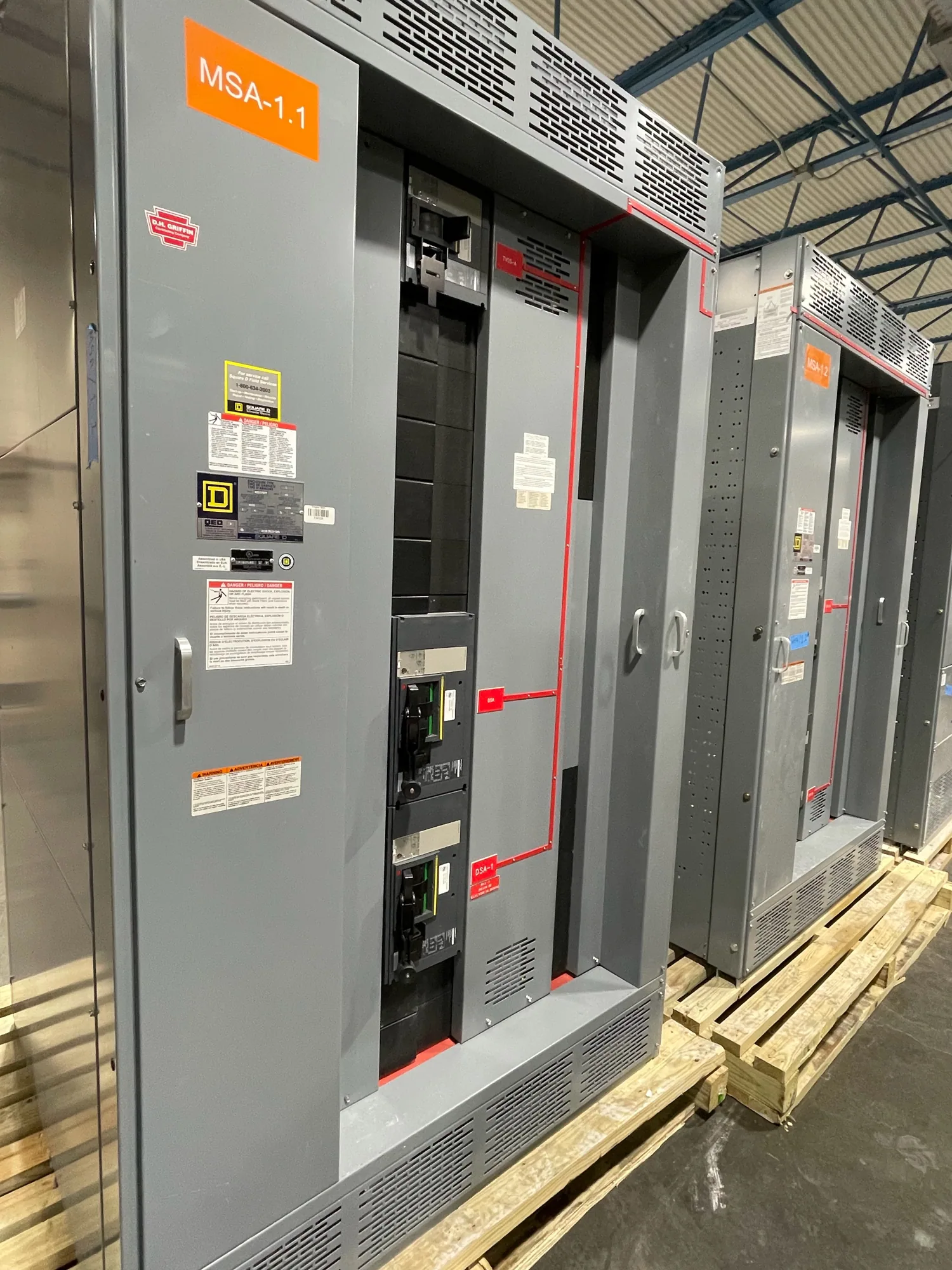
Start with a defined equipment scope
A switchgear RFQ should state what new equipment the project requires and where it fits in the electrical distribution system. Identify whether the request is for low-voltage switchboards, such as a 480 V class assembly, or medium-voltage switchgear, such as a 5 kV or 15 kV class assembly. Describe the intended application and whether the request covers one lineup, multiple lineups, or replacement equipment. Avoid relying on a project nickname or a drawing title as the only scope description.
Include the quantity, preferred arrangement, and known boundaries of supply. Clarify whether the manufacturer is being asked to provide only the assembly or also specified accessories, drawings, documentation, or other items. If equipment interfaces with existing gear, identify what remains in place and provide available interface information. Mark uncertainties openly rather than treating assumptions as confirmed requirements; unresolved scope can affect engineering, price, and schedule.
Provide electrical and system information
Share the one-line diagram and applicable specifications, along with the system voltage, frequency, phase, and grounding arrangement where established. Identify incoming and outgoing sources, feeder quantities, load descriptions, and any transfer, tie, metering, or control functions required. State the available fault-current information and required short-circuit ratings, including the source or study basis if known. The responsible project engineer must confirm system conditions and the ratings appropriate to the installation.
List required device types and characteristics only to the level the project has defined. For example, identify breaker or protective-device preferences, trip or relay functions, metering needs, control power, and communications interfaces when they are part of the design. Distinguish mandatory requirements from preferences, and attach relevant diagrams or schedules. A manufacturer can review the specified configuration, but should not be expected to infer a complete protection scheme from a brief equipment label.
Describe physical and site constraints
Give the available equipment-space dimensions, access route limitations, intended indoor or outdoor location, and any known environmental conditions that affect enclosure selection. State cable entry direction, termination space needs, conduit or bus connections, and the side from which equipment must be serviced if these details are established. Include floor loading or anchoring requirements when provided by the project team. Drawings, photographs, and room plans can clarify constraints, but should be labeled with their date and status.
Explain how the new assembly must interface with adjacent equipment, foundations, cables, or building systems. If dimensions or existing ratings are uncertain, identify who will verify them and when. A compact arrangement may reduce floor-space demands but can complicate access, cable termination, or future expansion. The RFQ should invite the manufacturer to identify design assumptions and exceptions rather than silently substituting a layout that may not suit the site.
Specify documentation, testing, and acceptance
List the submittals and deliverables the project expects, such as outline drawings, connection information, schematics, bills of material, or operation and maintenance documentation. Provide the required review sequence, file formats if material, and the people responsible for returning comments. State whether drawings are needed for approval before production and what constitutes approval. These details help coordinate engineering reviews without implying that every requested document is included in every standard scope.
Describe acceptance and testing requirements explicitly, including any project-specific inspection or factory testing requested. Identify witness or hold points, required records, and the applicable specification language. Do not treat a general reference to a standard or a requested listing as proof that a proposed assembly meets it; applicability, test scope, and listing status must be verified for the specific design. For eligible low-voltage switchboards, ask whether UL 891 applies and whether the offered assembly can be provided with the required listing. Do not apply that switchboard standard to medium-voltage switchgear.
Make commercial and schedule assumptions visible
Provide the requested quote due date, project name or identifier, delivery destination, and the schedule milestones that matter, such as submittal review, required-on-site date, or planned installation window. Ask the manufacturer to identify the quoted lead time and the assumptions behind it; availability and actual timing depend on the order and must be confirmed. Include shipping terms or delivery responsibilities if defined, and state whether unloading, rigging, or site coordination is outside the requested scope.
Commercial clarity also means naming the requested quote validity period, payment or purchasing requirements, and any requested options as separate line items where appropriate. Ask vendors to call out exclusions, exceptions, and pending information. A low initial quote may not represent the same scope if accessories, documentation, testing, or delivery assumptions differ. New equipment can be custom to specification; confirm configuration, availability, and delivery dates against the final requirements rather than assuming standardization.
Use a scenario to expose gaps before issue
Consider a project requesting a 480 V class assembly for a facility addition. A one-line diagram may show feeder count and source arrangement, but leave the available fault current, cable entry, room access, or metering requirements unresolved. The RFQ should flag each open item, identify whether it is mandatory for pricing, and ask the manufacturer to state any assumptions. The engineer can then confirm system ratings and layout before the proposal becomes a purchasing basis.
This approach prevents common misunderstandings: voltage alone does not define the assembly, a short-circuit rating should not be guessed, and a requested delivery date is not a confirmed commitment. Ask how deviations will be presented, what information is needed to firm up the design, and which submittals or acceptance steps are included. Qualified project personnel must verify engineering and site requirements; installation, testing, and maintenance belong to qualified personnel following applicable safety procedures.
Final RFQ review before requesting a quote
Before sending the package, check that it identifies the equipment class and quantity, electrical system data, ratings, functional requirements, site interfaces, documentation, acceptance expectations, delivery destination, and schedule. Attach current drawings and specifications, mark revisions, and separate firm requirements from questions still awaiting an answer. Ask bidders to list exceptions and clarify missing inputs in their responses. This gives reviewers a practical basis for evaluating scope rather than comparing headline prices alone.
When information is incomplete, state what is known and request a written list of the details needed to proceed. Confirm who will answer engineering questions, review submittals, and approve changes, so unresolved decisions have an owner. A complete RFQ does not eliminate design review; it organizes that work and makes assumptions visible early. Once the project team confirms the technical basis and commercial scope, it can request a proposal for new switchgear that is specific to the project and ready for informed evaluation.