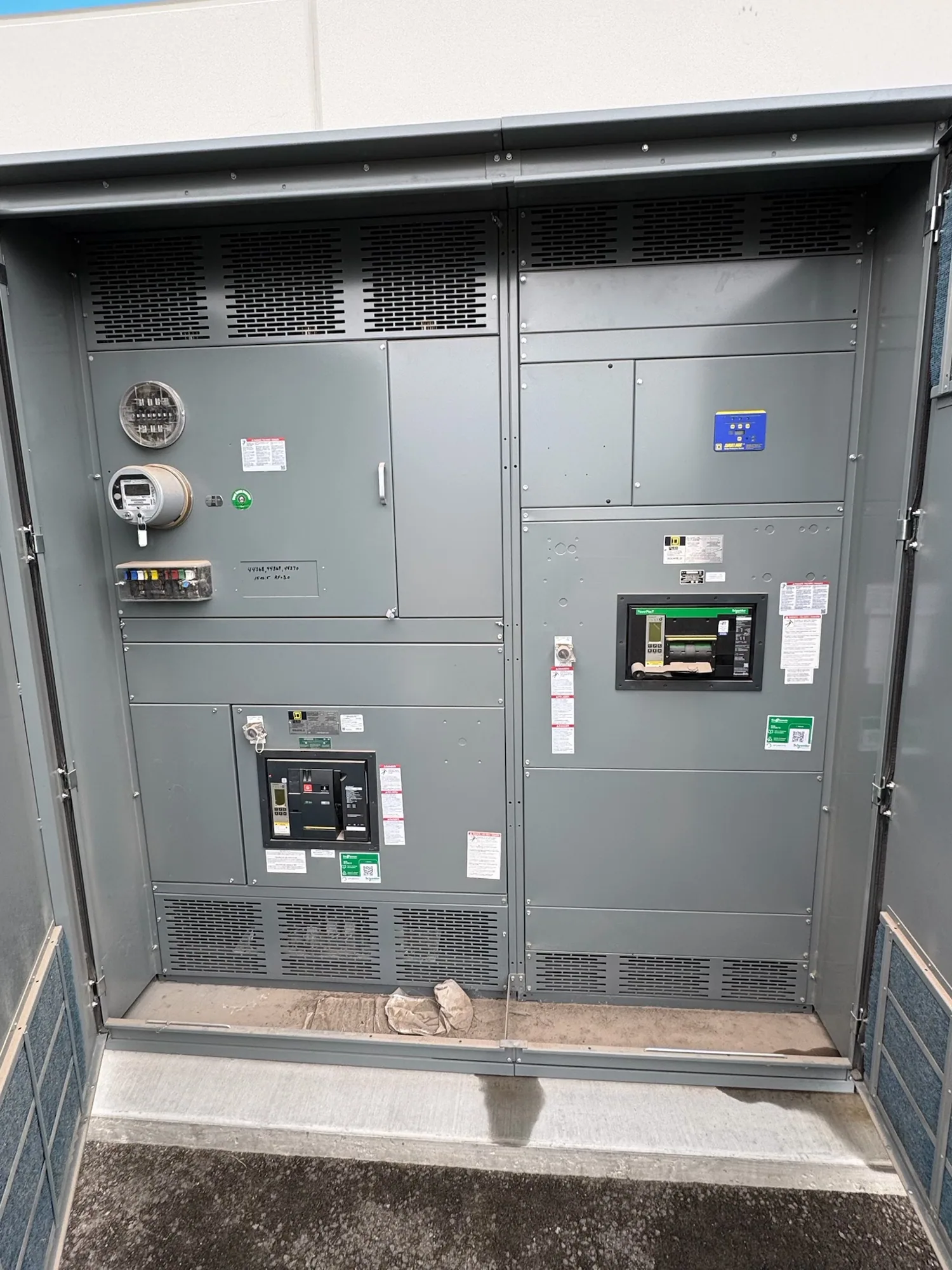
What continuous current means
Continuous current is the electrical current that a circuit or piece of equipment carries on an ongoing basis during normal operation, rather than only for a brief event. In equipment specifications, a continuous-current rating identifies the current an assembly or component is intended to carry under stated conditions. It is not a prediction that the load will always draw that amount, nor does it by itself establish the capacity of an entire distribution system.
The rating must be read in the context of the applicable product, its design, and its specified operating conditions. For switchgear, relevant parts can include bus conductors, circuit breakers, connections, and other current-carrying components. Their roles and ratings are related, but a single number should not be assumed to describe every component or resolve every application question. The responsible project engineer should confirm the governing criteria for the specific design.
Why the distinction matters in low-voltage switchgear
For a low-voltage switchgear project, the expected ongoing load helps inform equipment selection. The engineer considers what current the distribution equipment must carry during ordinary operation, how that load is expected to change, and which circuits or sections serve it. A switchboard or switchgear assembly must be specified as a coordinated system; selecting around one component’s nameplate value alone may overlook other design constraints.
Load calculations, demand assumptions, protective-device selection, and equipment ratings answer different questions. A continuous-current rating is not the same thing as a short-circuit rating, an interrupting rating, or a momentary withstand capability. Those characteristics address distinct operating or fault conditions. Verify each required rating against the project specification and actual equipment design rather than treating “current rating” as a single, interchangeable measure.
Conditions that can affect an application
Ratings apply under defined conditions. Ambient temperature, enclosure arrangement, ventilation, installation location, conductor and connection design, and the way equipment is grouped can matter to the final application. The responsible engineer and equipment supplier should identify whether project conditions differ from those assumed for the proposed assembly and determine whether design adjustments or derating considerations apply.
Derating describes a reduction in allowable operating capacity when specified conditions call for it; it does not mean every installation automatically requires the same reduction. Avoid applying a generic multiplier without checking the relevant equipment documentation, governing requirements, and project conditions. Likewise, an advertised or nominal current rating does not establish that a particular assembly is suitable for a particular site. Confirm ratings, listing applicability, and other requirements for the actual configuration.
A conceptual example and common mix-ups
Suppose a facility is planning new low-voltage distribution for equipment expected to operate for extended periods. The engineer estimates the normal load from the planned equipment and operating schedule, then defines the required assembly and component ratings for that application. This is a conceptual example, not a design recommendation: no load value, margin, or equipment rating can be selected without project data and applicable engineering review.
A common misinterpretation is to treat the continuous-current rating as the maximum current a system can carry under every circumstance. Another is to assume that a breaker’s rating alone determines the assembly’s suitability. The design must account for the applicable continuous-load criteria and how the complete equipment is configured. Continuous current also does not describe fault current, which involves separate protective and withstand considerations.
Information to prepare for a specification
Before requesting new equipment, assemble the available load information, expected operating patterns, system voltage, distribution arrangement, and project drawings or one-line diagram. Identify the loads served, planned expansion, installation environment, and any constraints on footprint, access, or connections. Where information is preliminary, label assumptions clearly so the engineer and manufacturer can distinguish confirmed requirements from items still needing review.
Ask which continuous-current ratings apply to the assembly and to its relevant components, what operating conditions those ratings assume, and whether the installation could require a project-specific adjustment. Also clarify how ratings coordinate with protective devices and other required equipment characteristics. These questions help reveal whether a proposed design addresses the actual application rather than merely matching a headline rating.
From definition to project coordination
This glossary definition explains the term; it does not replace a project specification. A specification guide addresses the process of documenting the required continuous-current rating and associated conditions for procurement. For a new low-voltage switchgear assembly, the project team should resolve design assumptions, required ratings, and applicable listing or testing expectations against the actual design before approval.
South Carolina Switchgear Builders manufactures new switchgear and switchboards in the United States, with custom-to-specification equipment and nationwide shipping. Availability and lead times depend on the order and must be confirmed. Provide the project’s electrical requirements and supporting documents so the engineering and procurement discussion can address the intended operating conditions. Installation, testing, and maintenance should be performed by qualified personnel following applicable safety procedures.