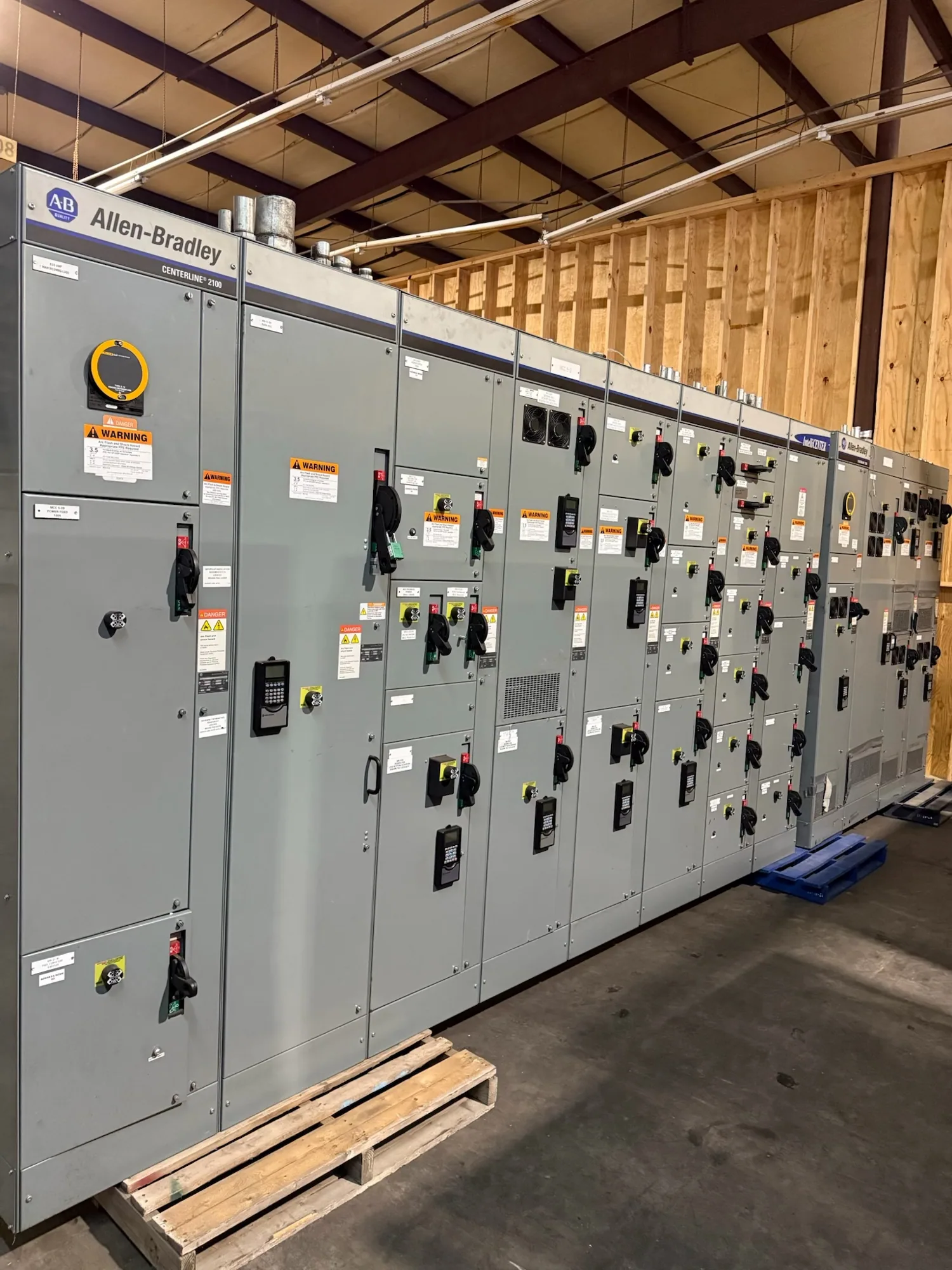
Start with the facility’s operating picture — Continuous Current Ratings for Aerospace Manufacturing
Aerospace manufacturing facilities can combine precision production equipment, inspection and test systems, environmental controls, and process-support loads. Their electrical demand is not necessarily constant or synchronized. A useful continuous-current assessment begins by describing how equipment operates during representative production conditions, including shifts, concurrent processes, standby states, and expected expansion.
Continuous current rating is one part of equipment selection, not a substitute for a load study or a complete electrical design. The responsible project engineer should establish the expected current through each relevant assembly and circuit, then identify the conditions under which that current must be carried. New switchgear or switchboards should be specified against that documented design basis.
Build ratings from measured or engineered loads
Use available load measurements when they represent the intended operating pattern, and identify their duration, operating state, and measurement location. Where equipment is new or facility changes are planned, use documented manufacturer data and engineering calculations rather than assuming that nameplate values all occur together. Record normal, maximum expected, and anticipated future operating cases separately.
Compare the resulting requirements with the continuous current ratings of the relevant bus, breakers, switches, and other specified devices. The assembly rating alone does not establish that every component or connected circuit is suitable for a particular load. The project engineer and equipment supplier should verify that the proposed configuration matches the actual current path and design conditions.
Account for temperature and installation conditions
Ratings can depend on the equipment design and conditions of use. Ambient temperature, enclosure arrangement, ventilation, conductor configuration, and nearby heat-producing equipment may affect the evaluation. These are specification questions, not assumptions to resolve by applying a generic margin without engineering review. Provide the intended installation environment and ask which conditions are reflected in the proposed rating.
Quality-sensitive production makes operating stability important, but a current rating by itself does not guarantee process quality or uninterrupted operation. Facility teams should identify loads that must remain available, acceptable interruption boundaries, and any planned redundancy or transfer scheme. The engineer can then evaluate those requirements alongside current capacity, system protection, and the consequences of a process interruption.
Coordinate current capacity with protection
Continuous current selection must be considered with short-circuit ratings and protective-device coordination, which address different system duties. The engineer should review available fault current, protective-device settings and curves, conductor protection, and the intended coordination objectives for the complete system. A higher continuous-current rating does not, on its own, establish adequate fault performance or selective coordination.
For phased production changes, document which loads will be added, removed, or relocated and when. Confirm whether the original design basis accounts for future demand or whether a later capacity review will be required. Any changes to protective settings, equipment configuration, or connected loads should receive qualified engineering review before implementation, using the applicable safety procedures.
Choose equipment around the actual system
Low-voltage switchgear may be one interface in a facility distribution plan, but it is not automatically the right solution for every aerospace project. The selection depends on the system architecture, voltage class, load profile, protection approach, physical constraints, and project requirements. A switchboard or other distribution arrangement may be appropriate in a different application; the engineer should define the needed equipment and its boundaries.
When requesting new equipment, provide one-line diagrams, voltage and phase information, available fault-current data when established, load schedules, operating scenarios, environmental conditions, and any known expansion phases. Identify required continuous current by section or circuit where applicable. Also state the intended installation arrangement, interface points, and which assumptions still need confirmation so the supplier can clarify design options.
Align stakeholders before procurement
Owner, facility engineering, production, maintenance, safety, and procurement teams may have different priorities. Review the load assumptions with the people who understand actual production sequences and process criticality. Have the responsible engineer confirm applicable standards, ratings, protection requirements, and any listing requirements for the specific equipment design. Standards applicability and assembly details must be verified against the project specification.
For a manufacturer quotation, define scope clearly: equipment type, electrical data, required features, documentation, connection details, and project milestones. South Carolina Switchgear Builders manufactures new equipment to specification, including US-built options with all-American components. Configuration, availability, and actual lead time depend on the order and must be confirmed; nationwide shipping can be coordinated with the project schedule.
Use a project-ready checklist
Before requesting pricing, assemble the current load basis, measured or engineered demand cases, installation conditions, protection and fault-study inputs, future phases, and open engineering questions. Confirm who approves the one-line diagram and equipment submittals, and establish how revisions will be controlled. This makes it easier to evaluate whether a proposed continuous-current rating fits the real operating duty rather than an isolated nameplate figure.
Ask the supplier to identify the configuration and assumptions used in its proposal, and have the project engineer review them against the complete system design. Confirm applicable ratings, standards, testing expectations, delivery timing, and interfaces before release. With an agreed design basis and clear stakeholder review, the team can procure new distribution equipment suited to documented aerospace manufacturing loads and planned facility changes.