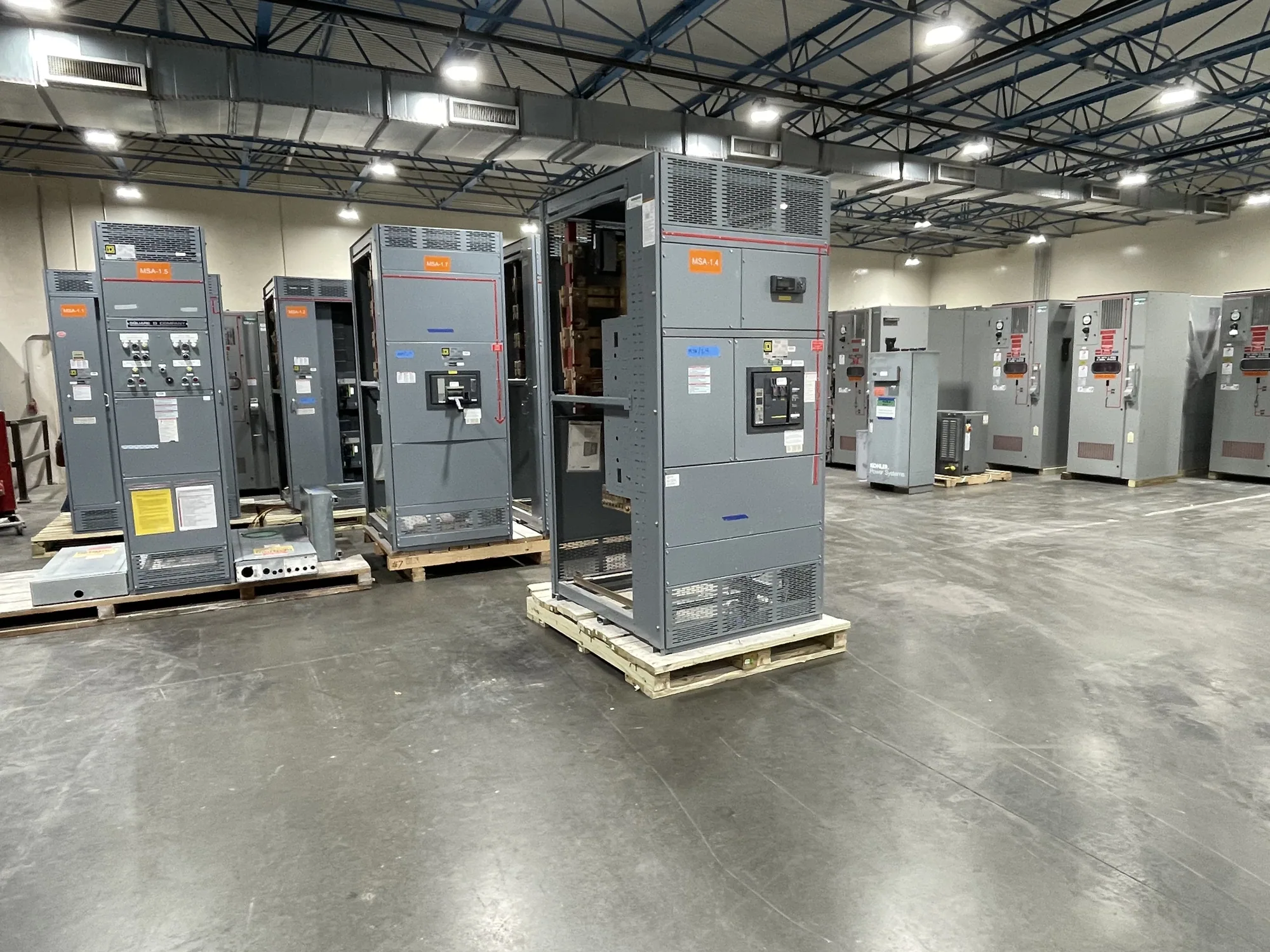
Define the project before selecting equipment — Switchgear Planning for Summerville, South Carolina
For a commercial or industrial project in Summerville, South Carolina, switchgear planning starts with the distribution scope—not a city name or a presumed standard design. Establish whether the work serves a new building, an expansion, a production line, or a phased campus, and identify which electrical rooms and loads belong in this package. The site and project details determine what can be specified and supplied.
Separate the known conditions from items still awaiting engineering or utility confirmation. A preliminary equipment discussion can help organize choices, but it cannot establish final ratings, available fault current, utility requirements, listing, or delivery dates without the project specification and design inputs. South Carolina Switchgear Builders manufactures and supplies new equipment, custom to specification, with nationwide shipping; order availability and lead times must be confirmed for the actual scope.
Map phases, loads and future feeders
Phasing can affect lineup arrangement, feeder quantities, spare provisions, bus capacity, and the sequence in which equipment is installed or energized. Ask the project engineer to distinguish initial loads from planned later loads and to explain which future connections are sufficiently defined to include now. Reserving physical space may be useful, but space alone does not establish adequate electrical capacity or a future-compatible design.
Provide a current one-line diagram, load information, expected operating conditions, and a clear description of planned additions. Identify critical processes and any constraints on production downtime during cutover or expansion. For a manufacturing facility, process equipment and motor loads may influence coordination and distribution choices; the responsible engineer should determine the applicable design assumptions rather than relying on generic industrial conventions.
Confirm voltage class and equipment scope
Clarify whether the package is a low-voltage switchboard or switchgear, or medium-voltage switchgear, and state the specified voltage class. A 480 V class system is low voltage; 5 kV and 15 kV classes are medium voltage. These categories are not interchangeable, and the equipment description should match the one-line and project requirements. If the project includes more than one class or equipment type, list each separately.
For low-voltage switchboards, ask whether UL 891 applies to the intended design and whether the specific assembly can be provided with the required listing. Applicability and listing are design-dependent and must be verified; UL 891 should not be treated as a blanket claim for all equipment. Ratings, construction, protective devices, metering, and other features likewise need to be checked against the actual specification before they are treated as included.
Resolve utility and site interfaces
Document the planned service point, ownership boundaries, metering arrangement, and utility-provided information available to the design team. The utility interface can shape equipment requirements, but no utility-specific condition should be assumed from the project’s location alone. The project engineer and utility should confirm applicable requirements, available fault-current information, and any review or approval steps that affect the equipment design.
Site access is equally practical. Record the electrical-room location, doorway and corridor dimensions, unloading area, route to the final position, and any restrictions on delivery vehicles or handling equipment. Confirm who coordinates receiving and whether construction sequencing allows the equipment to be moved into place when it arrives. These details can reveal access constraints early; they do not by themselves confirm shipping configuration, delivery timing, or installation feasibility.
Balance phasing, space and schedule
A phased project may benefit from equipment arrangements that support planned work stages, but dividing supply into packages can add interface points and coordination tasks. Compare the cost and schedule implications of one coordinated package with those of separate phases, while accounting for electrical continuity, room readiness, and the sequence of construction. The project team should identify which decisions must be fixed early and which can remain open until later design milestones.
Environmental conditions should also be assessed for the actual installation space. Share known temperature, moisture, dust, corrosive exposure, ventilation, and indoor or outdoor conditions with the responsible engineer. Do not presume an enclosure or environmental suitability based on a general description of the site. Confirm the required construction and any project-specific performance criteria against the equipment design before release for manufacture.
Prepare a useful equipment inquiry
For a focused review, assemble the project location, equipment type and voltage class, one-line diagram, load and feeder schedule, requested ratings, and required protective or metering features. Include the anticipated phases, target dates, utility information, environmental assessment, electrical-room dimensions, and delivery access details. Mark unresolved values clearly instead of presenting estimates as approved requirements; the equipment configuration depends on the final, coordinated specification.
Also identify the project’s purchasing and engineering contacts, submittal expectations, and any required review milestones. South Carolina Switchgear Builders can assess a new-equipment request against the information provided and confirm scope, availability, applicable design details, and lead time for the order. Actual service coverage for the specific Summerville-area project should be confirmed rather than assumed.
Coordinate from design through delivery
Before purchase, reconcile the equipment proposal with the current one-line, approved ratings, utility interface, room layout, phasing plan, and delivery route. Ask the project team to resolve discrepancies in writing and confirm which documents govern the final build. Availability and delivery dates depend on the order and must be confirmed; neither a preliminary discussion nor a target schedule guarantees a shipment date.
After the equipment scope is established, coordinate submittal review, site readiness, receiving, and installation responsibilities with the relevant project parties. Installation, testing, and maintenance belong to qualified personnel following applicable safety procedures; energized work should not be used as a planning shortcut. With clear inputs and confirmed interfaces, a Summerville project team can evaluate new distribution equipment on its actual technical and logistical needs, without relying on assumptions about the location.