Plan around the facility’s production and support loads
Aerospace manufacturing facilities can combine precision production equipment, inspection and test systems, environmental controls, and building services. Each load group may have different operating schedules and electrical characteristics. A distribution plan should start with the actual facility and process requirements—not assumptions based on the industry label alone.
For an illustrative project, consider production cells alongside test equipment and process support loads. The central question is how the distribution system can serve these functions while allowing planned work, equipment changes, or expansion to be coordinated. The responsible electrical engineer should establish the system arrangement, load data, operating modes, and applicable project requirements.
Choose voltage class and equipment scope deliberately
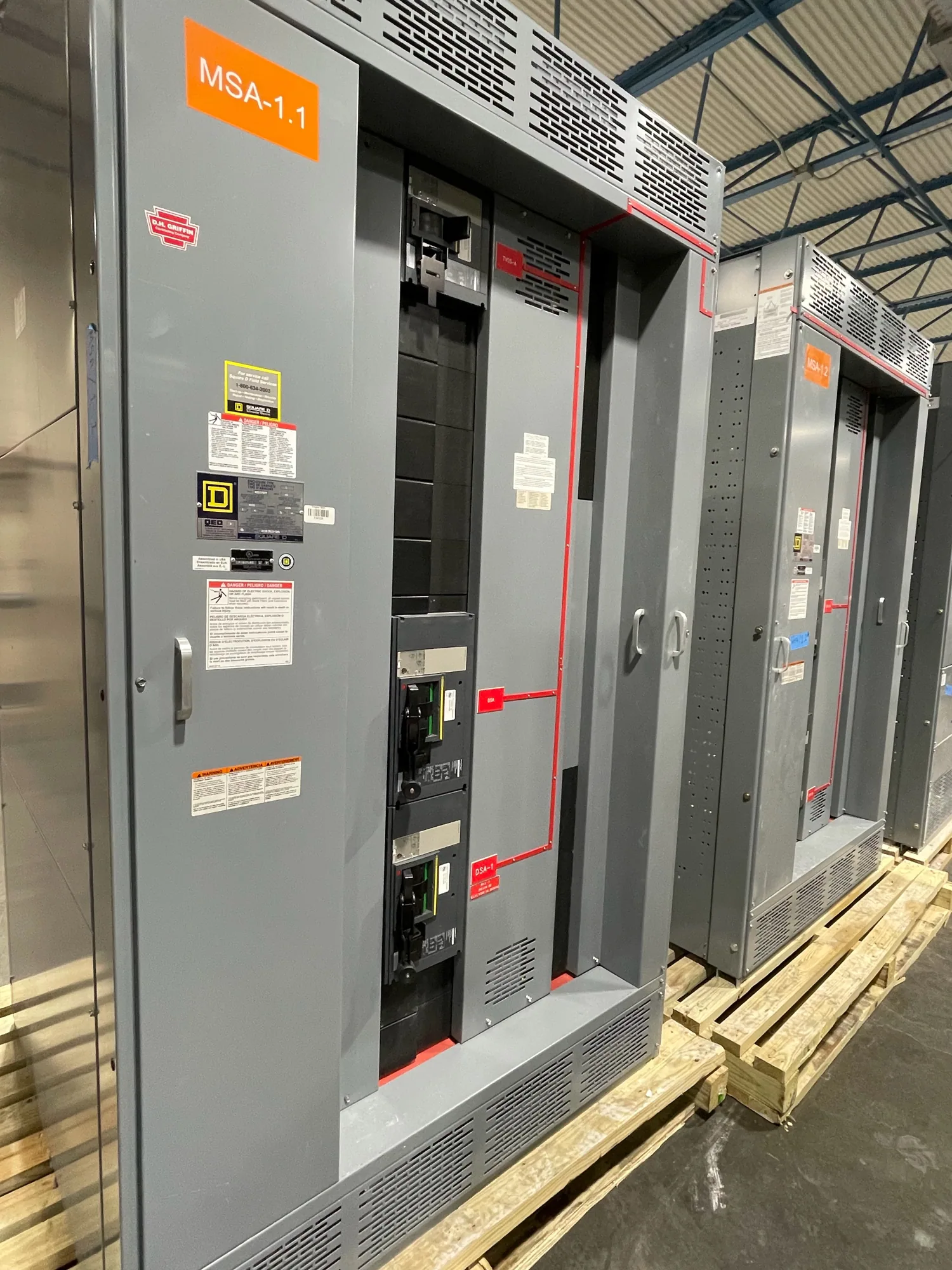
Low-voltage switchgear may be appropriate for portions of a facility’s distribution, including systems specified in the 480 V class. Medium-voltage switchgear, such as 5 kV or 15 kV class equipment, may be considered elsewhere in a project. These are different voltage classes and equipment applications; the correct choice depends on the engineered system, utility interface, distribution architecture, and project specification.
Clarify whether the purchase covers a complete assembly, particular sections, or a defined replacement or expansion scope. Confirm incoming and outgoing arrangements, feeder count, metering and control needs, enclosure and access requirements, and interfaces with upstream and downstream equipment. Whether a low-voltage switchboard rather than switchgear suits a specific application should also be determined from the project design and specification.
Coordinate protection for quality-sensitive operations
Unexpected interruptions can disrupt production sequences, test activity, or supporting processes. Protection coordination is therefore a project-engineering concern: the responsible engineer evaluates protective-device characteristics and system data to determine how faults should be detected and isolated. Equipment selection alone does not establish coordination, and no particular operating outcome should be assumed without a project-specific study.
Provide the engineer with available source information, system configuration, protective-device data, anticipated operating modes, and the loads considered critical to the process. Ask how planned maintenance or a phased addition affects the distribution arrangement and coordination study. The equipment supplier needs the resulting requirements clearly documented so the proposed configuration can be reviewed against the intended application.
Understand continuous current ratings and conditions
Continuous current is a key specification, but it is not a substitute for a complete equipment review. Compare expected normal load current with the specified bus and device current ratings, while considering the system design and how loads operate together. Avoid selecting a rating from a single nameplate total or an assumed industry norm; demand, diversity, and future growth must be addressed by the project team.
Operating temperature and other installation conditions may affect rating suitability. Ask the engineer to identify applicable ambient and enclosure conditions, loading assumptions, and any required rating adjustments or derating. Confirm that bus ratings and individual device ratings are stated distinctly and match the intended duty. Final ratings and configuration must be checked against the actual specification and supplied equipment.
Make phased changes part of the specification
Production areas may be expanded or modified in stages, but future flexibility has to be defined rather than presumed. Identify anticipated additions, likely feeder needs, physical space constraints, and the relationship between initial and later work. The engineer can assess which provisions belong in the initial design and which should remain options for a separately engineered future phase.
Discuss outage windows, access, equipment interfaces, and responsibility for field installation and commissioning planning among the owner, engineer, contractor, and supplier. Any installation, inspection, testing, or maintenance must be performed by qualified personnel under applicable safety procedures. Confirm that the proposed equipment boundaries and documentation support the project’s coordination plan without assuming that a particular phasing approach will suit every facility.
Prepare useful project and purchasing information
Before requesting a proposal, assemble the one-line diagram, system voltage, available fault-current information, load schedule, and known source and feeder requirements. Include the desired equipment type and scope, bus and device ratings, protective-device requirements, metering, control interfaces, enclosure details, and environmental conditions. Flag unresolved engineering decisions instead of allowing assumptions to become purchase requirements.
Owners can describe operating priorities and planned facility changes; engineers can provide design criteria and confirm ratings, coordination, and applicable standards; purchasing teams can document quantities, required submittals, delivery constraints, and decision milestones. South Carolina Switchgear Builders manufactures new equipment to specification, with US-built, all-American components and nationwide shipping. Configuration, listing applicability, availability, and delivery dates require confirmation for the actual order.
Confirm the design before ordering
A focused specification helps align production needs with equipment scope, electrical ratings, and project responsibilities. Review the proposed configuration with the responsible engineer and confirm that each requirement is explicit, including any conditions affecting continuous current or future phases. When technical inputs are incomplete, identify them early so they can be resolved before equipment details are finalized.
For an aerospace manufacturing project, the best next step is a coordinated review of facility loads, system studies, operating priorities, and purchasing requirements. That gives the manufacturer a defined basis for a proposal and gives the project team a practical way to verify that the new equipment matches the engineered application.