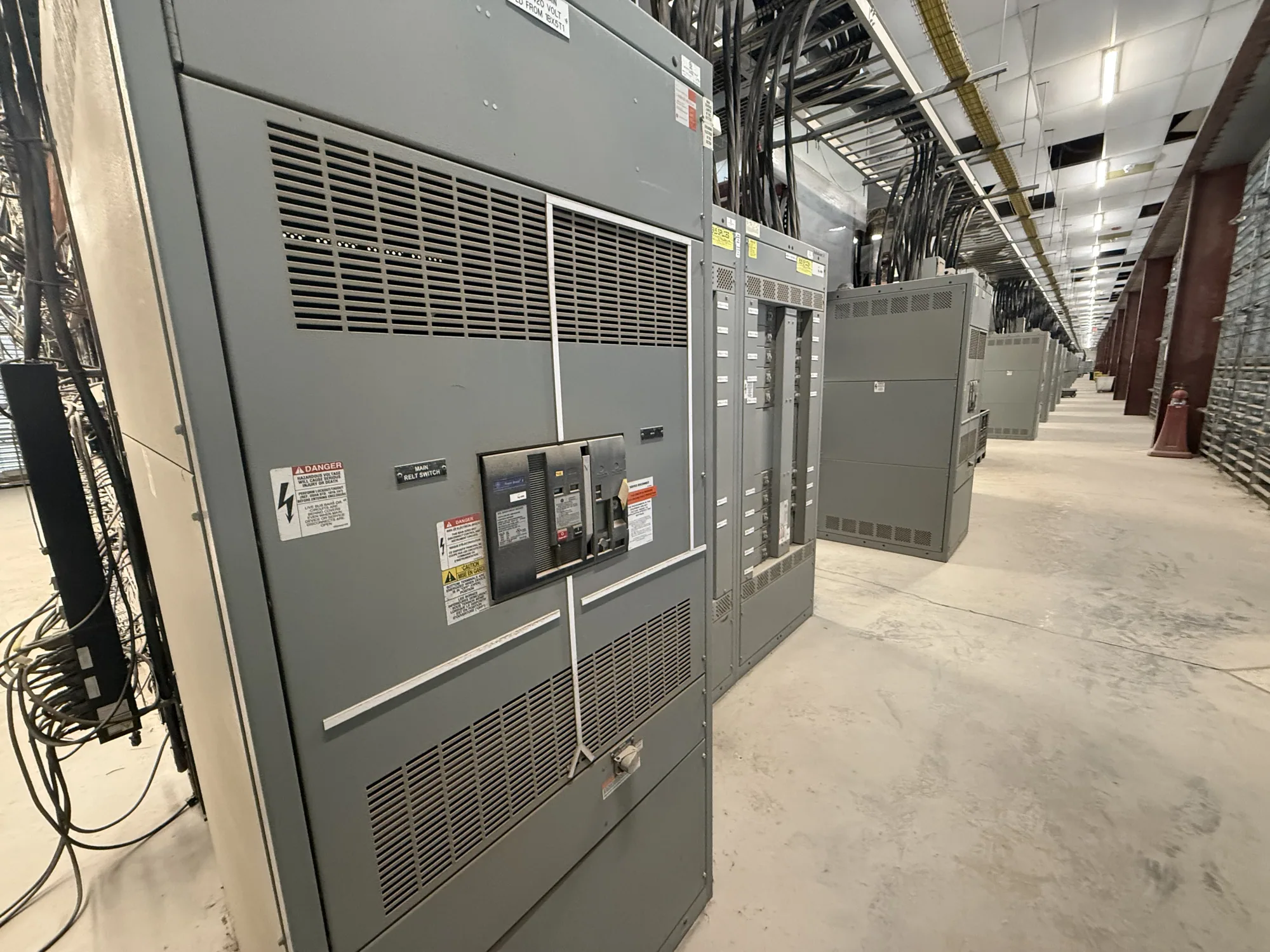
Start with the data center’s electrical scope
Data center distribution must support more than computing equipment. The electrical plan may include high-density IT loads, cooling systems, power conversion, lighting, controls, and building services, each with different operating patterns and priorities. Before selecting switchgear, define which parts of the facility the equipment will serve and how those loads are organized across rooms, halls, or phases.
Redundancy strategies and backup sources shape the distribution design. A project may need to coordinate utility service, generators, uninterruptible power systems, transfer equipment, and downstream distribution, but the arrangement is project-specific. Identify the intended normal and alternate operating paths, which loads must remain supported during an outage, and how operators are expected to isolate equipment for planned work.
Coordinate sources and distribution boundaries
Switchgear selection starts with a one-line diagram that shows sources, buses, protective devices, and major downstream connections. The responsible engineer should establish how sources are switched or paralleled, whether bus sections can be operated independently, and what interlocking or control functions are required. These decisions affect the lineup’s arrangement and connections, not just its nameplate description.
Clarify where the equipment boundary falls relative to transformers, generators, UPS systems, and distribution panels. Confirm who supplies each component and who owns interface details such as cable entry, control wiring, metering signals, and communication points. Early agreement among the owner, engineer, equipment manufacturer, and installing contractor can reduce late changes to drawings and avoid assumptions about responsibilities.
Match voltage class and equipment to the system
Low-voltage switchgear may be appropriate for distribution at a 480 V class system, while medium-voltage switchgear may be considered where the project’s distribution architecture calls for a 5 kV or 15 kV class. These are distinct equipment classes, and the correct choice depends on the actual system design. Do not select from nominal voltage alone: the engineer must specify applicable system voltage and equipment requirements.
Ask the project engineer to confirm nominal system voltage, equipment maximum voltage, insulation requirements, grounding arrangement, frequency, and available fault-current conditions. The system configuration and protection scheme also matter. Any required ratings, clearances, internal arrangement, or applicable standards should be verified against the project specification and the proposed equipment. Requirements cannot be assumed from a facility’s industry or a voltage label alone.
Plan capacity in phases without losing clarity
Data center capacity can be developed in stages, so the equipment plan should distinguish initial requirements from future provisions. Identify present loads, planned additions, expected commissioning sequence, and any reserved spaces or connection points. The engineer should determine whether expansion is best handled through additional sections, separate lineups, or another arrangement that fits the site and operating plan.
Phasing creates tradeoffs. Installing capacity early may affect footprint, capital planning, and the amount of equipment initially used; adding equipment later may require construction coordination and a careful review of interfaces. Define which future provisions are firm design requirements and which are planning assumptions. Confirm that any reserved space, bus arrangement, or future connection is actually included in the specified design.
Consider monitoring and maintainability
Monitoring needs should follow operating decisions. Specify which electrical quantities, device states, alarms, or communications points the facility team needs, and identify the intended monitoring or control system. Confirm signal protocols, metering scope, control power, and responsibility for configuration. A general request for “monitoring” is not enough to establish what equipment must provide or how information will be used.
Maintainability also depends on the site layout and operating procedures. Review access for qualified personnel, working clearances determined by the project, cable routing, equipment separation, and the ability to isolate sections as intended. Ask how inspection and maintenance tasks fit the redundancy strategy. Installation, testing, and maintenance should be performed by qualified personnel using applicable project and safety procedures.
Prepare a complete equipment specification
For a useful quotation, provide the current one-line diagram, electrical specifications, voltage class, source details, load and capacity schedule, and required lineup configuration. Include available fault-current information and protection requirements established by the responsible engineer. Note cable entry and termination preferences, site constraints, environmental conditions, control and metering needs, and any required interfaces with adjacent equipment.
Separate mandatory requirements from preferences, and flag open engineering decisions rather than treating them as settled. Identify the project phase, review milestones, requested documentation, and purchasing contacts. South Carolina Switchgear Builders manufactures new switchgear and switchboards to specification, with US-built equipment and all-American components. Configuration, availability, applicable listing, testing, ratings, and delivery timing must be confirmed for the particular order.
Coordinate review, procurement, and delivery
Before release, align the owner’s requirements, engineer’s drawings, purchasing documents, and installation plan. Establish who reviews submittals, resolves deviations, approves control interfaces, and confirms final connection details. If the project is phased, state which equipment belongs to each release and what must be preserved for later work. Clear decisions help the manufacturer develop an offer that can be evaluated against the project specification.
Availability and lead time depend on the order and should be confirmed during procurement; do not assume a standard configuration or delivery date. Nationwide shipping is available, with shipment planning coordinated around the approved equipment and project schedule. A complete, coordinated specification gives the project team a sound basis to compare configurations and move from electrical design to an equipment order.