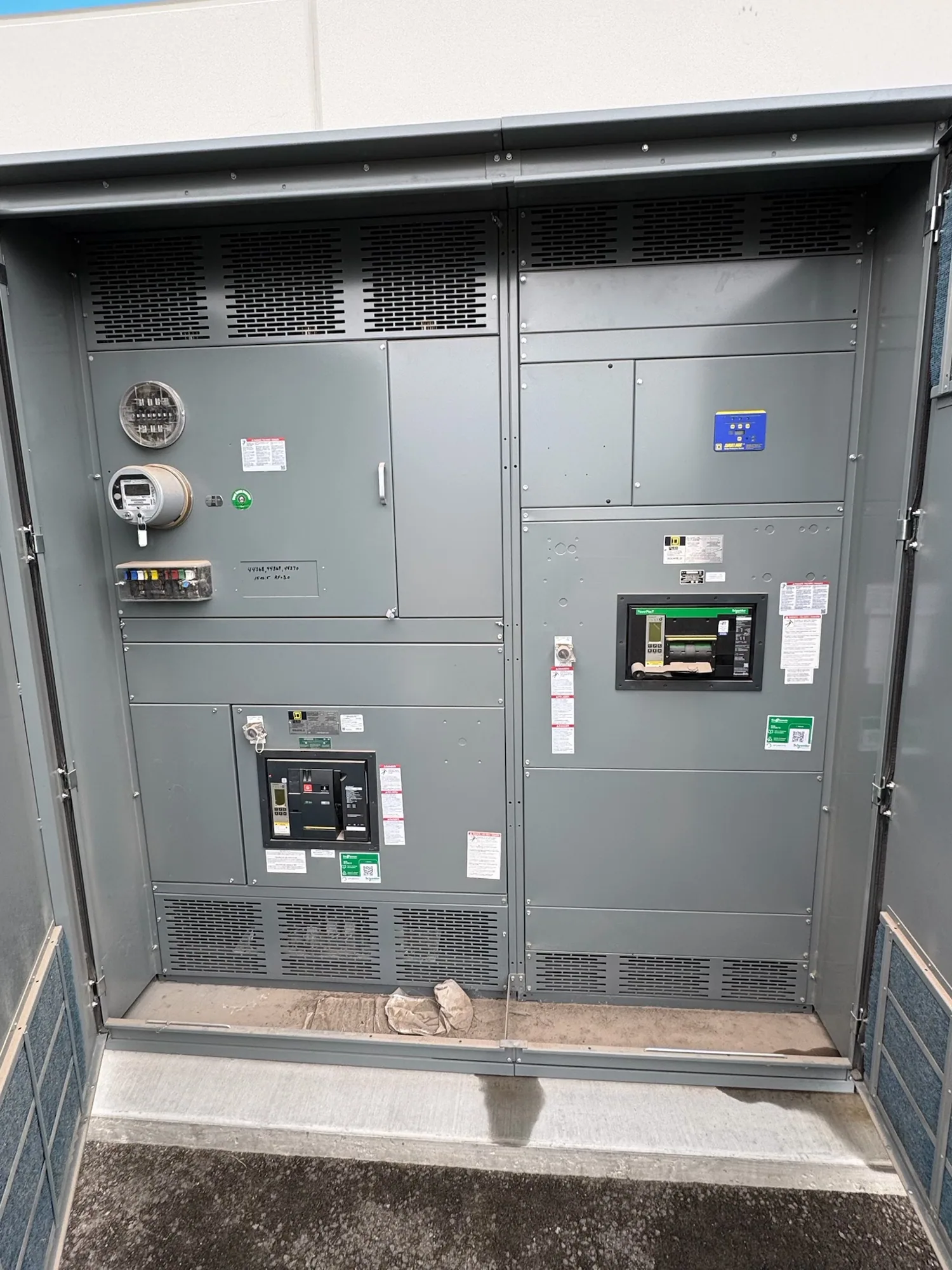
Start with the project, not the location label — Switchgear Planning for North Charleston, South Carolina
North Charleston projects may involve warehouse and logistics operations, industrial distribution, or other commercial loads, but a city name alone cannot determine the right equipment. Begin with the electrical design and the facility’s operating needs: what the equipment will supply, how the service is arranged, what loads are planned, and whether the project is new construction, expansion, or replacement. A responsible project engineer should define the system requirements before equipment is selected.
South Carolina Switchgear Builders manufactures new switchgear and switchboards to specification, with US-built equipment, all-American components, and nationwide shipping. Configuration, availability, listing, ratings, testing, and delivery dates depend on the specific order and must be confirmed. Treat the location as a prompt to investigate site conditions and logistics—not as proof of a particular utility requirement, exposure level, or installation constraint.
Confirm actual coastal and site exposures
Coastal influence can make environmental review especially relevant, but conditions vary from parcel to parcel. Ask the project team to document the equipment location and evaluate expected temperature, humidity, salt exposure, altitude, water exposure, and corrosion concerns where applicable. Review site-specific flood information and the equipment elevation or placement assumptions with the responsible design professionals. Do not substitute a regional label for actual engineering criteria.
These findings can affect enclosure selection, materials, protective measures, equipment placement, and maintenance planning. They may also influence whether equipment belongs indoors or outdoors. Request that the project specification state the environmental assumptions clearly, including any required enclosure characteristics or corrosion-related provisions. The manufacturer can then review the requested design against the supplied requirements; the project engineer should confirm that the proposed configuration fits the site and applicable project documents.
Choose indoor or outdoor equipment deliberately
Outdoor switchgear may be worth evaluating when the electrical layout, building arrangement, or access plan favors an exterior installation. It is not automatically the best choice for every North Charleston site. Compare the proposed location’s water exposure, environmental conditions, available footprint, access for installation, and ongoing maintenance needs. Also consider how operators and qualified service personnel will reach the equipment without interfering with traffic, loading areas, or other facility operations.
An indoor arrangement may provide a different path for managing environmental exposure, but it depends on available building space and the overall electrical design. For either approach, provide the manufacturer with the intended location, relevant site-condition requirements, and any dimensional or access constraints. Confirm equipment ratings and configuration against the project’s one-line diagram and specifications rather than assuming that a product category alone establishes suitability.
Evaluate a logistics-facility scenario
For a hypothetical warehouse or logistics facility, continuity of operations and phased construction may shape the equipment scope. Identify which loads are essential, whether future expansion is anticipated, and how the electrical design addresses shutdowns or staged cutovers. The equipment proposal should follow the engineer’s defined distribution arrangement; it should not assume that a particular bus, feeder count, or redundancy strategy is required without project documentation.
Discuss outage windows and delivery access early. A large equipment shipment may need coordination with site receiving, available laydown space, construction sequencing, and the route from unloading to the final location. If an existing system must remain in service during construction, the project team should define its outage and transition plan. Installation, testing, and maintenance should be performed by qualified personnel following applicable safety procedures; never plan work on energized equipment.
Make the equipment specification reviewable
A useful request for quotation includes the one-line diagram, equipment schedule, applicable specifications, and the requested voltage class and ratings. Identify whether the scope is switchgear or a switchboard, along with the intended application and any required configuration. For low-voltage switchboards, ask whether UL 891 applies to the eligible proposed design and verify the assembly’s listing for that specific configuration. UL 891 should not be treated as a general requirement for medium-voltage switchgear.
Include environmental criteria, indoor or outdoor intent, footprint limits, cable or conduit entry assumptions, and required accessories where they are defined. Flag any details still under engineering review instead of presenting uncertain values as final. The manufacturer can identify questions or exceptions for resolution, while the responsible engineer confirms the final design basis, ratings, and applicable standards. This exchange helps avoid a proposal built around assumptions that conflict with the project documents.
Coordinate manufacturing and delivery expectations
Provide the project schedule, requested delivery window, ship-to location, receiving contact, and any restrictions on truck access or unloading. State whether delivery must align with a particular construction phase, and share changes promptly as the schedule develops. Short lead times may be available, but actual lead time and delivery timing depend on the equipment scope, component availability, and order details; confirm them for the specific proposal rather than relying on a general expectation.
Before release, review the proposal against the latest drawings and specifications, resolve open technical questions, and confirm what is included in the equipment scope. Check shipping and receiving arrangements independently with the project team. Accurate, timely information gives the manufacturer a sound basis to build new equipment to specification and coordinate nationwide shipment without implying a guaranteed delivery date.
Prepare a focused North Charleston RFQ
For a productive first request, assemble the project location, equipment type, electrical drawings, applicable specifications, site-condition criteria, preferred installation location, and target schedule. Add any known flood or corrosion evaluations, access limitations, phased-work requirements, and receiving constraints. Clearly distinguish confirmed design requirements from items awaiting engineering review. This is especially useful when evaluating outdoor switchgear or coordinating equipment for a logistics-oriented facility.
South Carolina Switchgear Builders can review the supplied scope for new, custom-to-specification equipment and confirm project-specific availability and timing. Share complete documentation and identify the person responsible for technical decisions so questions can be resolved efficiently. With the site conditions, electrical requirements, and delivery plan addressed together, the project team can compare options on their actual merits and move toward an equipment specification suited to the facility.