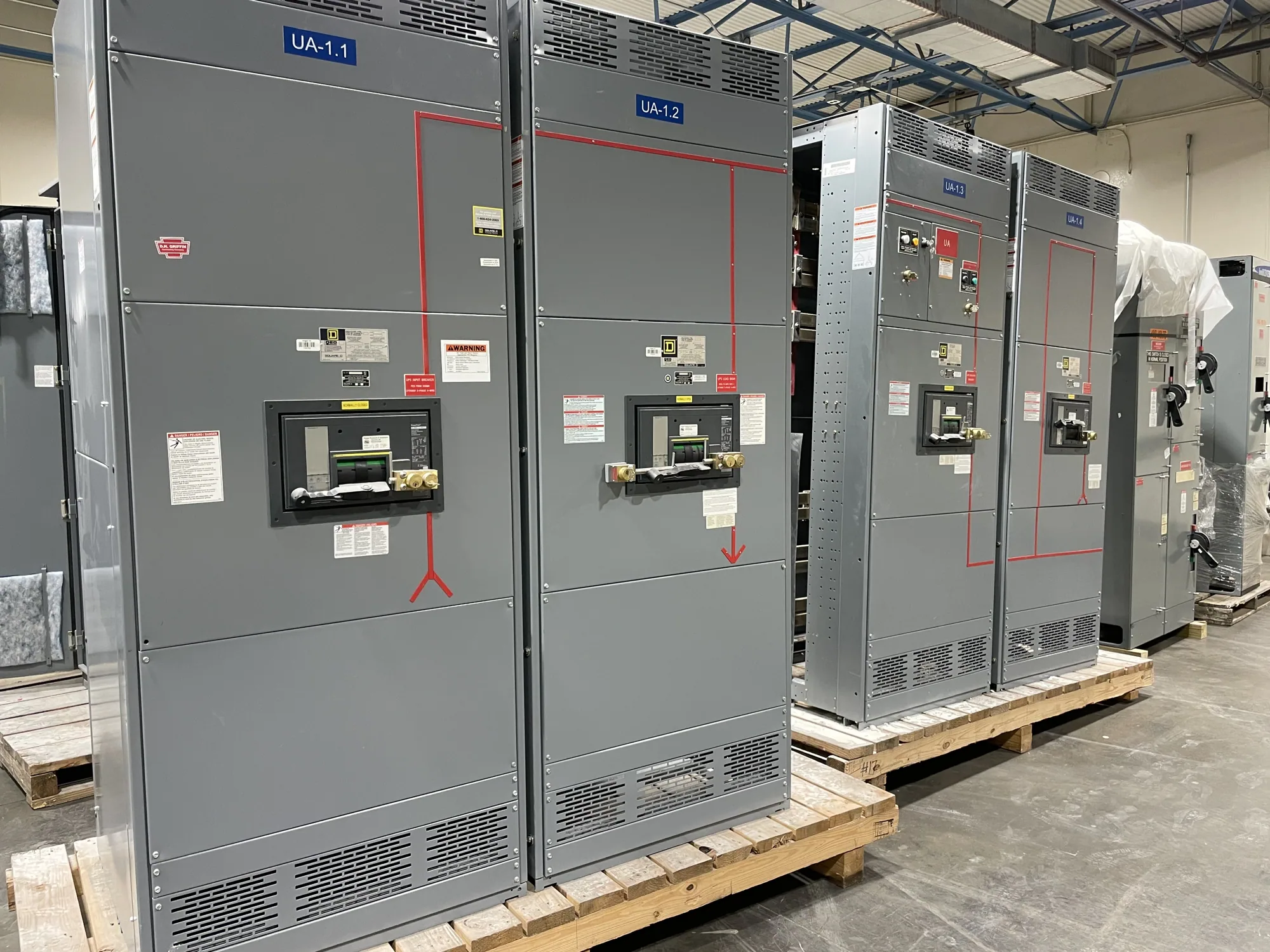
Coordination across a changing facility
Warehouse and logistics power systems serve more than lighting and general-purpose loads. A distribution facility may include conveyors, sortation equipment, refrigeration, battery charging, dock systems, offices, and automation that changes over time. Selective coordination is a protection-design objective: under specified fault conditions, the protective device closest to the fault is intended to operate while upstream devices remain closed where the design permits.
That objective matters for continuity, but it is not a promise that every fault will be isolated to one branch or that service will never be interrupted. The responsible engineer must evaluate the actual system, devices, operating conditions, and applicable project requirements. For buyers planning new switchgear or switchboards, the coordination study and equipment specification should be developed together rather than treated as separate purchasing tasks.
Use the operating plan to shape the design
Start with the facility’s present operating profile and credible future phases. Identify which loads must remain available when a branch fault occurs, which processes can tolerate interruption, and whether separate distribution sections are planned for conveyors, charging, building services, or automation. These priorities help the engineer establish system boundaries and assess where protective-device coordination is important.
Expansion assumptions need particular care. A future conveyor line or charging area can change feeder loading, fault-current conditions, and device selections. Provide the planned phases, anticipated load types, and any known operating schedules, but distinguish approved scope from conceptual growth. The engineer can then test appropriate scenarios without treating uncertain future demand as a confirmed rating or assuming that spare capacity guarantees coordination.
Understand protective-device behavior
Selective coordination is assessed by comparing protective-device operating characteristics, commonly through time-current information and study methods appropriate to the system. The engineer evaluates how downstream and upstream devices respond over the relevant range of fault conditions. Device settings, trip characteristics, available fault current, conductor and equipment limits, and the specified coordination objective can all affect the result.
Tradeoffs may arise between coordination, fault-clearing time, equipment protection, and other project constraints. A setting that improves discrimination in one part of the system may affect clearing behavior elsewhere. The design team should document the criteria used, assumptions about the source and system configuration, and any conditions where coordination is limited. Do not infer that a particular device arrangement or switchgear model alone establishes selective coordination.
Account for charging and staged additions
Charging demand should be described using the project’s actual equipment plans and operating assumptions. The engineer may need to distinguish simultaneous from managed charging, identify charging-area phases, and consider how loads interact with other warehouse operations. These inputs inform feeder planning and study cases; they do not independently determine a protective-device rating. Confirm assumptions with the owner and relevant electrical design professionals before they become procurement requirements.
For staged construction, ask how additions will connect to the existing or initial distribution design and what review is required before each phase. Future work may alter system conditions, device settings, or the coordination study. A practical specification identifies what information must be revisited, who approves changes, and how equipment interfaces are preserved. Qualified personnel must perform installation, testing, and maintenance under applicable safety procedures.
Coordinate the equipment interface
Medium-voltage switchgear may be an interface in a facility’s distribution scheme, but it is not automatically required for every warehouse project. Its role depends on the specified service arrangement and engineered system. If medium-voltage equipment is under consideration, provide the project requirements and interface data for review; confirm the applicable voltage class, ratings, configuration, and any standards or listing requirements against the specific design.
For any new switchgear or switchboard, align the purchasing specification with the engineer’s one-line diagram, study assumptions, and required device information. Ask the manufacturer to identify which characteristics and options can be supplied for the proposed configuration and which details require engineering confirmation. A product selection cannot substitute for a project-specific coordination analysis, and assembly listing or standards applicability must be verified for the exact equipment offered.
Prepare a useful project information package
Before requesting a quotation, assemble the current one-line diagram, equipment schedules, project voltage class, source information available to the design team, load descriptions, and the intended phases. Include the coordination objective, applicable project standards, required documentation, and the responsible engineer’s contact for technical questions. Mark unresolved items clearly so preliminary assumptions are not mistaken for approved design inputs.
Also identify site and delivery constraints that affect equipment planning, such as the project schedule, access limitations, receiving arrangements, and coordination with other contractors. Share enclosure and environmental requirements where relevant, along with known space or interface constraints. Availability and actual lead times depend on the order and must be confirmed. Clear, complete information helps the manufacturer evaluate a new, custom-to-specification equipment request without implying that an unverified configuration will meet the project needs.
Review decisions before each procurement phase
Bring the owner, electrical engineer, equipment supplier, and relevant installation stakeholders into review at the appropriate points. Confirm that the approved study assumptions match the equipment schedule and that proposed changes to loads, phasing, or device selections are routed back to the engineer. Before release, resolve open technical questions, document accepted exceptions, and confirm project-specific ratings, delivery expectations, and required submittals.
This disciplined process supports a distribution plan that can be evaluated as warehouse operations evolve. The next step is to provide the project’s current engineering documents and defined operating assumptions for review, then confirm the equipment scope and procurement details against the approved design.