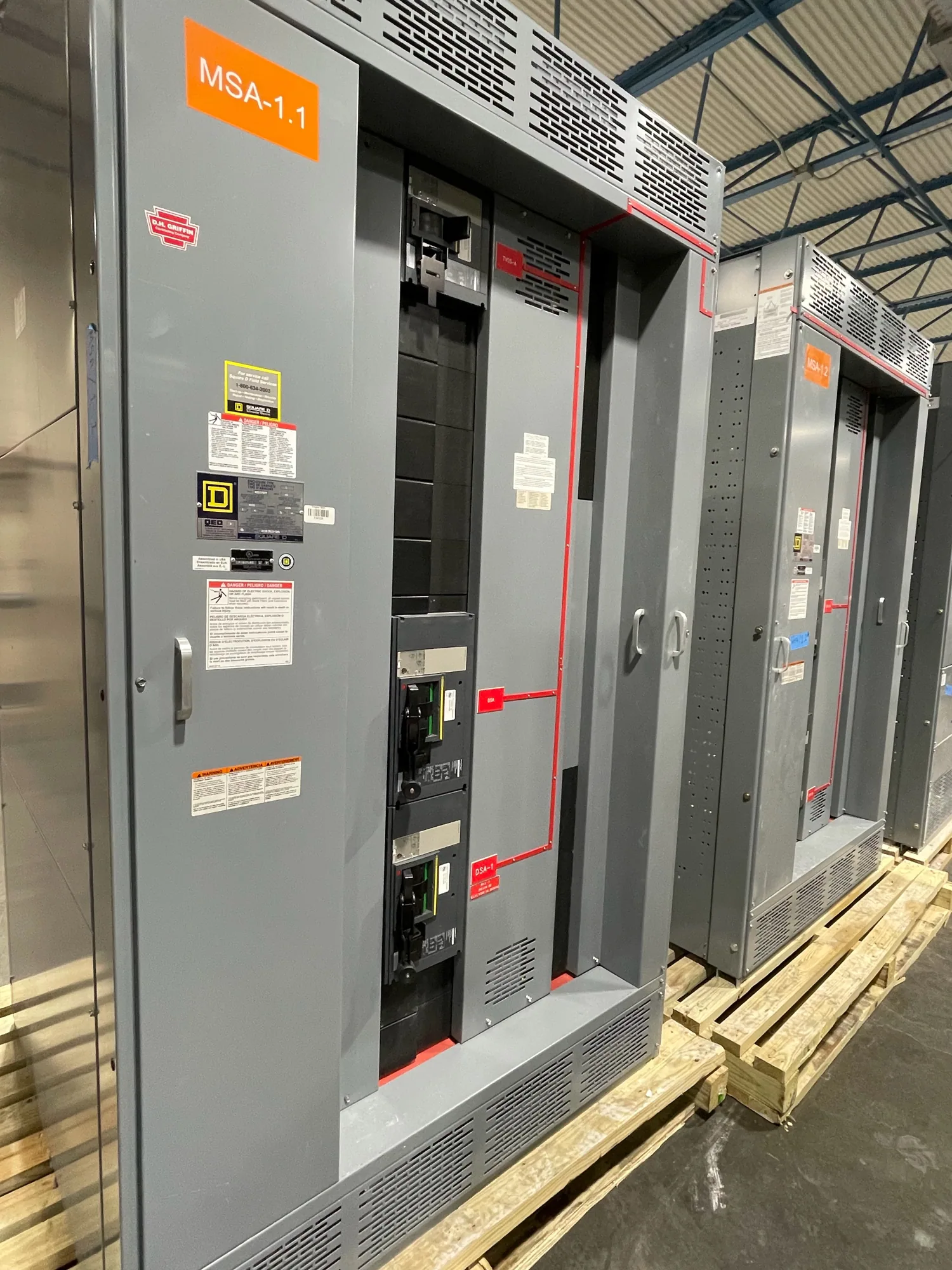
Define the project before selecting equipment — Switchgear Planning for Hilton Head Island, South Carolina
For a proposed Hilton Head Island project, begin with the electrical scope rather than assuming a standard package will fit. Identify whether the work involves a new service, a building expansion, replacement as part of a planned upgrade, or a distribution change. Confirm the equipment type, voltage class, indoor or outdoor placement, and the project’s division of responsibility. These details shape the design and quote; the location alone does not establish a suitable configuration.
Hospitality properties can have changing occupancy and operating schedules, but a design should use documented project loads, not a broad assumption about tourism or seasonal demand. Gather current and planned load information, including major mechanical systems, kitchen equipment, elevators, lighting, and other significant loads where applicable. Ask the responsible electrical engineer to identify expected operating scenarios, demand assumptions, and future capacity needs. Distinguish measured conditions from planned additions so the equipment basis is clear.
Build the electrical basis of design
Provide the latest one-line diagram and specify the source, system voltage, phase, frequency, available fault-current information, and grounding arrangement as established by the project team. Include the required main and feeder devices, protective functions, metering, control circuits, and intended connections to downstream equipment. If some information remains preliminary, flag it rather than treating it as final. The manufacturer can evaluate a proposed configuration against the submitted requirements, while the project engineer remains responsible for confirming system assumptions.
Coordinate equipment ratings and protective-device requirements with the actual system study and specification. Breaker types, bus arrangement, compartment layout, termination provisions, and access clearances can affect both the footprint and the installation interfaces. Do not infer ratings or compliance from a nominal voltage or from another project. Listing, testing, standards, and ratings depend on the specified assembly and must be confirmed for the particular design and supplied equipment.
Evaluate site exposure and placement
Hilton Head Island is a project location, not a substitute for a site assessment. Document whether the equipment will be indoors or outdoors and describe the actual surrounding conditions. If salt exposure is a concern at the site, share the basis for that assessment and ask what construction or material choices are available for the specified application. Avoid selecting an enclosure or finish solely from a general coastal label; exposure, placement, maintenance expectations, and the equipment specification all matter.
Flood planning should likewise be based on project-specific information. Provide the design team’s elevation criteria, anticipated water exposure, drainage and access constraints, and any requirements affecting equipment location. Confirm whether the selected arrangement and installation details address those conditions; do not assume standard equipment is suitable for a flood-prone location. Also consider heat, moisture, ventilation, and working clearances where applicable. Site conditions may influence enclosure, layout, accessories, and installation planning, subject to engineering review.
Coordinate equipment interfaces and logistics
Before finalizing a layout, coordinate incoming and outgoing cable routes, conduit entry, bus connections, grounding, control wiring, and the space needed to install and maintain the assembly. Confirm room dimensions, door openings, access paths, and any restrictions on lifting or staging. For outdoor equipment, establish the intended mounting surface and the route from the delivery point to the final location. These practical details can affect section arrangement and should be resolved before fabrication documents are approved.
Delivery planning deserves particular attention when access, staging, or construction sequencing is constrained. Provide the project address, receiving contact, site access rules, unloading capabilities, and requested delivery window for evaluation. Delivery dates and availability depend on the order and must be confirmed; do not treat a preliminary schedule as a commitment. South Carolina Switchgear Builders supplies new equipment, builds to specification, and ships nationwide. Actual order details, lead time, and shipping arrangements require confirmation.
Balance capacity, footprint, and future needs
Extra capacity can support planned expansion, but it may increase equipment size, cost, and coordination demands. A compact arrangement may suit space constraints while leaving less room for later changes. Ask the project engineer to document which future loads are credible and whether spare provisions, additional sections, or other accommodations are justified. Compare those choices against available room, cable routing, maintenance access, and the project budget instead of adding unspecified capacity by default.
Clarify whether the scope calls for low-voltage switchboards or another switchgear configuration. Product categories and applicable standards are not interchangeable: UL 891 applies to eligible low-voltage switchboards, and any listing must be verified for the specific assembly. Medium-voltage applications require their own applicable specification and review. If the project documents do not clearly identify the equipment type or voltage class, resolve that question with the engineer before requesting a firm design or quote.
Prepare a useful project inquiry
A focused inquiry should include the one-line diagram, equipment schedule, written specifications, load basis, required ratings, and preferred arrangement. Add site plans or room dimensions, exposure and flood assessments, cable-entry preferences, applicable project requirements, and known delivery constraints. Identify open decisions and the person responsible for resolving each one. This helps distinguish confirmed requirements from assumptions and allows a manufacturer to assess whether the requested new equipment can be configured to the project scope.
For a Hilton Head Island project, also state the actual site location and ask for confirmation of order availability, lead time, shipping plan, and any service coverage relevant to the work. Review proposed submittals with the responsible engineer and coordinate installation, testing, and maintenance through qualified personnel following applicable safety procedures. With documented loads, site conditions, interfaces, and schedule expectations, the project team can evaluate equipment choices on their merits and move toward a specification suited to the actual installation.