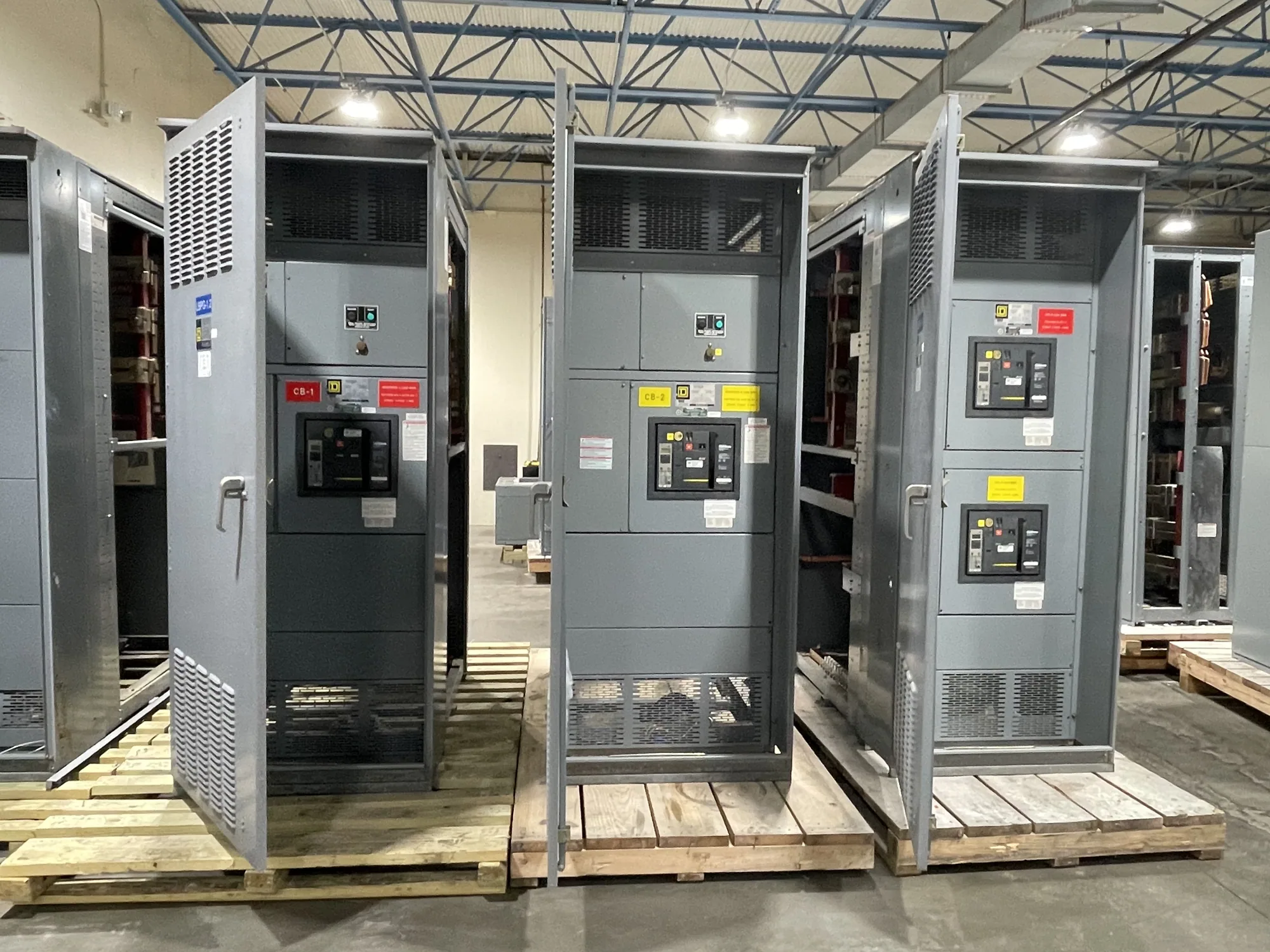
Start with the operating plan, not a catalog description
For a Myrtle Beach project, the right starting point is the facility’s electrical scope and operating calendar. A hotel, resort, restaurant, or mixed-use property may experience changing occupancy and equipment demand across the year, but the design should use documented load information rather than assume a particular seasonal pattern. Identify the loads the new assembly must serve, how they operate, and what capacity or future provisions the project engineer requires.
Clarify whether the purchase is a new switchboard or switchgear assembly, and define its role in the distribution system. Provide the system voltage class, source arrangement, one-line diagram, fault-current information, and required ratings when available. The project’s electrical engineer should establish or verify those values. If information is still developing, label assumptions and open items clearly so they can be resolved before the manufacturer finalizes a design.
Account for seasonal operations and installation windows
Seasonal scheduling affects more than the date equipment arrives. A project team may need to coordinate shutdowns, inspections, construction access, commissioning, and cutover around an operating property’s busiest periods. Discuss those constraints early with the construction manager and qualified electrical contractor. Ask what work must happen before delivery, what must be completed on site, and which approvals or inspections could affect the sequence.
Give the manufacturer a realistic required-on-site date, the destination and receiving constraints, and the project milestones that depend on the assembly. Availability and actual lead times depend on the order and must be confirmed; do not treat a preliminary schedule as a delivery commitment. Allow the project team to review submittals and resolve comments before fabrication, and coordinate shipping, unloading, indoor storage, and installation readiness with the site team.
Translate coastal exposure into site requirements
Coastal location alone does not determine an enclosure or equipment configuration. The responsible engineer should document the actual installation environment, including whether the gear will be indoors or outdoors, exposure to salt air or wind-driven rain, expected temperature and humidity ranges, elevation, water intrusion concerns, available clearances, and maintenance access. These conditions are site-specific; identify which apply instead of relying on a general “coastal” label.
For outdoor equipment, explain the mounting location, foundation or support details, cable entry direction, drainage conditions, nearby obstructions, and access needed for operation and servicing. Ask which enclosure features and environmental provisions are available for the specified design, and confirm their suitability against the project requirements. Do not assume an outdoor designation alone addresses corrosion, flooding, condensation, or every exposure; the specification must define the conditions the assembly is expected to meet.
Choose the equipment type and configuration carefully
Switchboards and switchgear are not interchangeable labels for every application. Confirm the intended equipment category, voltage class, distribution function, and interface with upstream and downstream devices. A 480 V class assembly is low voltage; 5 kV and 15 kV class equipment are medium voltage. Provide the project’s actual system data rather than infer ratings from the building type. The manufacturer can review the requested configuration against the supplied specification.
For an outdoor installation, compare an outdoor switchgear arrangement with a suitable indoor location, if the project allows one. Consider footprint, access, cable routing, enclosure requirements, construction sequence, and ongoing maintenance—not just the initial location. For eligible low-voltage switchboards, ask whether UL 891 applies to the specific design and whether the requested assembly listing can be verified. That standard does not apply to medium-voltage switchgear, and no listing should be presumed without confirmation.
Use a hospitality scenario to test the specification
Imagine a hypothetical resort renovation where new distribution equipment must support a defined set of building loads while construction proceeds beside occupied areas. The project team could compare an exterior equipment location with an available electrical room, then review weather exposure, noise or access constraints, cable routes, and the planned outage window. These questions help reveal whether the site plan and electrical specification agree before equipment details are settled.
Next, have the engineer establish the design load basis, required switching and protective-device arrangement, available fault-current duty, metering or control needs, and any spare capacity or future connections. Confirm which existing drawings and field conditions are verified. If the design depends on load growth or phased construction, state the assumptions and interfaces explicitly. This scenario is a planning exercise, not a claim about a particular Myrtle Beach property or installation.
Prepare a complete request for quotation
A useful RFQ includes the one-line diagram, equipment schedule, technical specification, voltage and system data, requested ratings, enclosure and environmental conditions, cable-entry details, dimensions or space limits, and required accessories. Include the desired submittal and delivery milestones, shipping destination, site receiving hours, unloading capability, and any restrictions on vehicle or equipment access. Identify the engineer and contractor responsible for technical questions and installation coordination.
List deviations or unresolved decisions separately, and ask the manufacturer to identify information needed to confirm the proposed design, availability, listing applicability, testing, and delivery timing. South Carolina Switchgear Builders manufactures new equipment in the United States using all-American components, offers custom-to-specification configurations, and ships nationwide. Actual availability and lead times depend on the order and require confirmation. A clear RFQ gives the project team a practical basis for reviewing scope, schedule, and equipment fit before placing an order.
Coordinate delivery through qualified installation
Before release, align approved submittals with the construction schedule and verify that the receiving area, route, foundation, electrical room, and installation crew will be ready. Resolve who will inspect incoming equipment, protect it during storage, and report shipping concerns. Confirm the latest drawings and connection requirements with the responsible parties; changes to site conditions or project scope should be reviewed before they become field assumptions.
Installation, inspection, testing, and maintenance should be performed by qualified personnel under applicable safety procedures and the project’s approved plans. The manufacturer’s role is to build and supply the specified new equipment, while the project team coordinates site readiness and electrical work. With accurate system data, clearly stated coastal conditions, and a schedule grounded in operational needs, buyers can move from early planning to a more complete equipment request.