Why short-circuit ratings matter in healthcare facilities
Hospitals and other healthcare facilities may serve clinical spaces, life-safety functions, critical equipment, and support operations from electrical systems with distinct operating priorities. Their distribution designs can include utility sources, generators, automatic transfer equipment, and alternate configurations. The project engineer determines the system architecture and applicable requirements; equipment ratings must fit that engineered design, not a generic assumption about what every hospital needs.
A short-circuit rating addresses an equipment assembly’s ability to withstand or interrupt fault current under defined conditions. The relevant value and rating terminology depend on the equipment and its position in the system. Choosing a number in isolation is not enough: the responsible engineer must evaluate available fault current at each point, system configuration, protective devices, and the specific equipment ratings and documentation.
Start with available fault-current information
Available fault current is not necessarily the same throughout a facility. It depends on the upstream source and electrical path, and may differ between normal and alternate-source configurations. The utility and project engineer provide or establish the information needed for the design. A supplier should receive the current one-line diagram and documented fault-current assumptions for each equipment location being quoted.
For a healthcare project, clarify which sources and operating modes the analysis covers. Ask whether generator operation, source paralleling, tie-breaker positions, or other planned configurations affect the value at the proposed equipment. These are engineering questions, not supplier assumptions. If the data are preliminary, identify them as such and agree who will confirm or revise the equipment requirements when the study advances.
Distinguish interrupting capacity from assembly withstand
Protective devices and complete assemblies have related but distinct rating considerations. A device’s interrupting capacity concerns its ability to interrupt fault current under its stated conditions. An assembly’s short-circuit current rating or withstand capability concerns the assembly’s ability to withstand fault effects, as defined for that design. The project specification and equipment submittal should make clear which ratings apply and how the combination is evaluated.
Do not assume that a device rating alone establishes the suitability of the complete switchgear or switchboard assembly. Configuration, protective-device selection, and other design details can affect the applicable rating. For low-voltage switchboards, UL 891 may apply to eligible assemblies, but applicability and any assembly listing must be verified for the exact proposed design. It does not apply as a blanket claim to all switchgear, and it is not a medium-voltage switchgear standard.
Coordinate protection and continuity objectives
Healthcare project requirements may include selective coordination for specified portions of an essential electrical system. The engineer determines where it is required and develops the protective-device settings and coordination approach using the project’s system data. Short-circuit ratings and coordination are connected design topics, but one does not automatically prove the other: an assembly must meet its rating requirements while the protection scheme is reviewed for its intended operation.
Continuity planning also involves more than selecting equipment ratings. The project team should consider source transitions, planned maintenance, system segmentation, and the consequences of an outage in affected areas. These operational priorities belong in the design basis and stakeholder review. They do not justify compromising electrical safety; installation, testing, and maintenance must be performed by qualified personnel following applicable safety procedures.
Apply requirements at each equipment interface
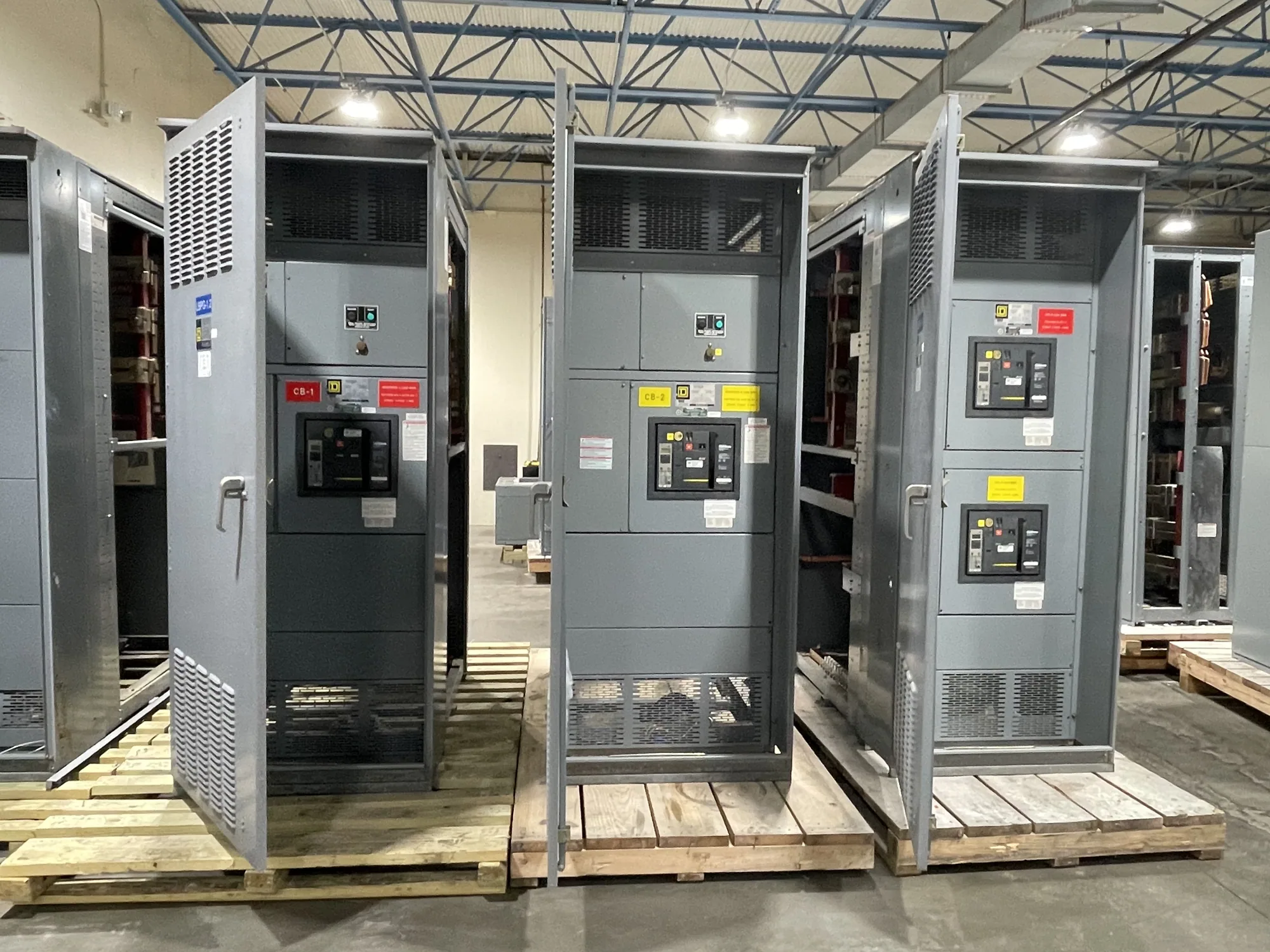
Low-voltage switchgear can be one interface in a facility’s distribution system, but it is not automatically the right product for every location. A 480 V class system is low voltage; a 5 kV or 15 kV class system is medium voltage. The engineer should identify the equipment type, voltage class, source and load connections, protective devices, and required ratings for each scope item rather than carrying one rating across unlike equipment.
Trade-offs may include equipment configuration, source arrangement, protective-device options, available space, and the level of documentation needed for review. Ask the responsible engineer to confirm whether a proposed configuration preserves the required rating and coordination intent. If design choices remain open, list them as alternatives with their assumptions so owners, engineers, contractors, and the manufacturer can evaluate the same basis.
Prepare a clear purchasing and review package
Before requesting a quotation for new equipment, provide the one-line diagram, equipment schedule, voltage class, fault-current study or confirmed values, source and tie arrangements, and required interrupting and assembly ratings. Include project specifications, applicable standards, environmental and installation constraints, protective-device requirements, and submittal expectations. Identify what is fixed, what is pending, and who has authority to approve technical deviations.
- Confirm fault-current values and configurations at each relevant equipment point.
- State required ratings and the documents the engineer will use to verify them.
- Identify coordination requirements, operating modes, and stakeholder reviewers.
- Request that assumptions, exclusions, and unresolved data be listed in the quotation and submittal.
South Carolina Switchgear Builders manufactures new equipment to specification, including low-voltage switchgear and switchboards where they fit the project scope. The team can review the information supplied for a proposed configuration. Availability and actual lead times depend on the order and must be confirmed; delivery dates, ratings, testing, listing, and standards applicability likewise require confirmation against the final specification and equipment.
Close the gap between design and delivery
When design data change, send the revision to the engineer and equipment supplier before procurement or approval proceeds on an outdated basis. Review submittals against the same one-line diagram, rating schedule, coordination study, and approved deviations. Confirm who will resolve discrepancies and document the final accepted configuration. This disciplined handoff helps keep equipment selection aligned with the engineered healthcare system while preserving a clear record for project coordination.
For a sound purchasing decision, treat short-circuit ratings as one part of a coordinated system requirement: establish the available fault current, identify the exact equipment and operating conditions, verify device and assembly ratings, and secure review from the responsible project professionals. That process supports informed specification and procurement without substituting a product quotation for the engineer’s design responsibility.