Start with the facility’s essential electrical system
Selective coordination planning in a hospital is a system-level engineering task, not a feature that can be settled by selecting one switchgear lineup. A facility may have normal and alternate power sources, essential electrical system branches, transfer equipment, distribution equipment, and loads with different continuity needs. The responsible engineer determines the applicable requirements and identifies which circuits and protective devices must coordinate.
Begin by mapping the intended power paths and the loads served along each path. Clinical functions, life-safety systems, critical support equipment, and general building loads do not necessarily share the same distribution arrangement or coordination objectives. Documenting the system boundaries helps owners, engineers, contractors, and equipment suppliers discuss the same circuit relationships without assuming every hospital has an identical design.
Understand what coordination means in practice
Protective devices have time-current characteristics: their response depends on the magnitude and duration of a fault, along with device settings and design. Selective coordination aims to have the protective device nearest a fault operate before upstream devices, where required by the project criteria. The engineering analysis must consider the complete protective-device chain and the available fault conditions, rather than treating coordination as a general product attribute.
There are tradeoffs to evaluate. Settings and device selection may affect how quickly a fault is cleared, the extent of service interruption, and the coordination achievable across the specified operating range. A setting that supports one coordination objective may affect another protection objective. The engineer should review applicable requirements, device characteristics, source conditions, and the consequences of interruption before finalizing the design.
Include all sources and operating configurations
Healthcare distribution may operate in more than one configuration, such as normal supply, alternate supply, or a changed arrangement during equipment maintenance. Each configuration can affect fault current and protective-device behavior. The project team should identify which sources, transfer arrangements, and switching states belong in the analysis and make clear which assumptions apply to each. Do not assume a result for one source arrangement automatically applies to another.
Continuity planning also requires safe, clearly assigned operating and maintenance procedures. Coordination does not eliminate the need for qualified personnel to install, test, operate, and maintain equipment under applicable safety procedures. Project documents should define responsibilities for reviewing settings and system changes. Any planned modification to sources, loads, protective devices, or distribution paths should be referred to the responsible engineer for evaluation.
Clarify equipment interfaces without overspecifying
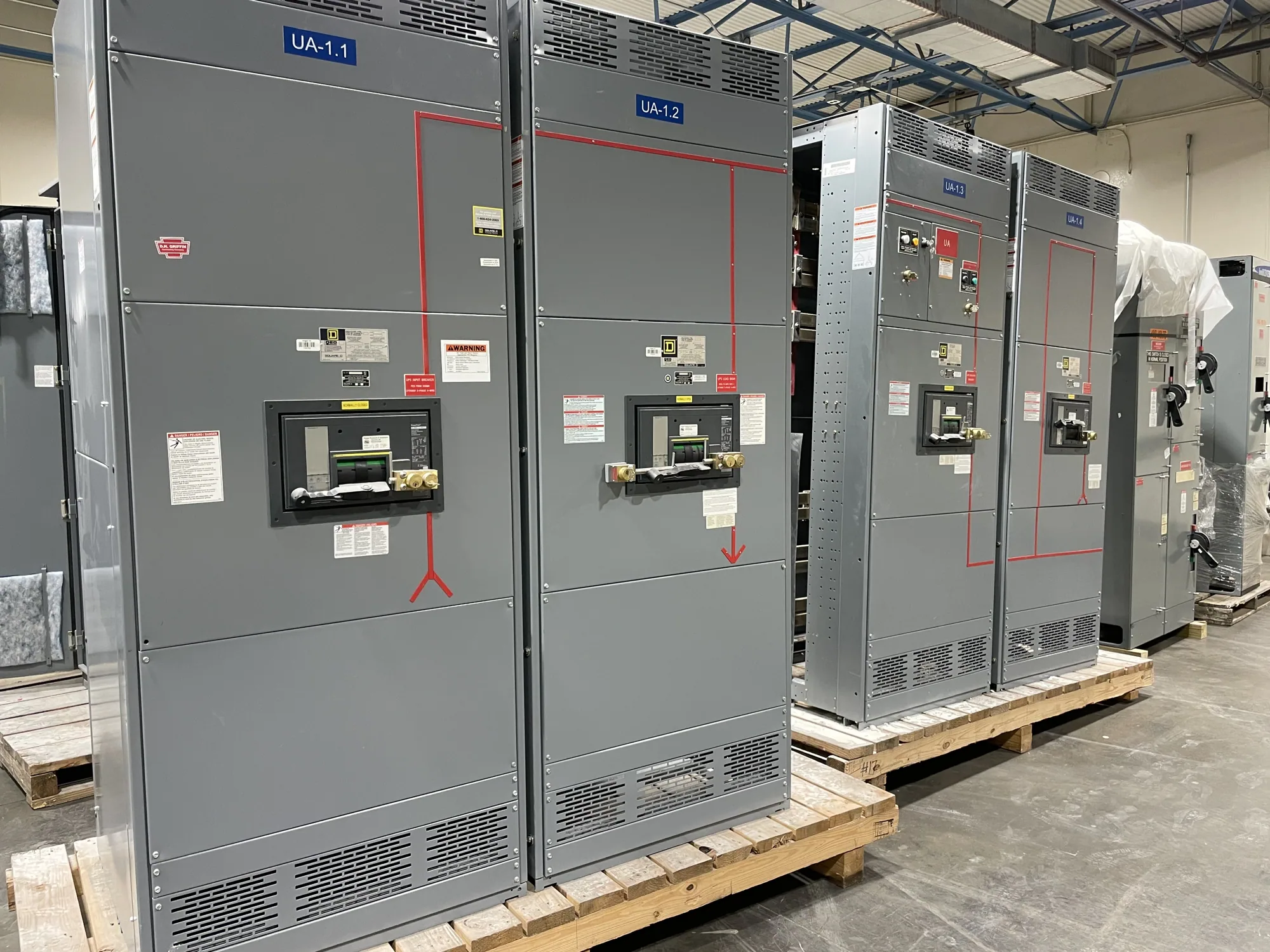
Low-voltage switchgear may be one interface in a healthcare project’s distribution system, but it is not automatically required for every facility or application. The specified equipment type depends on system design, electrical ratings, fault conditions, space, access, and the intended distribution function. Switchboards, switchgear, transfer equipment, and downstream panels have different roles; the project’s one-line diagram and equipment schedules should establish the required scope.
When requesting new equipment, provide the supplier with the applicable drawings and schedules, requested equipment function, system voltage and other confirmed ratings, source arrangement, protective-device requirements, and connection details. Identify the devices or interfaces that must be included in the coordination study, and state who supplies settings and final engineering direction. The supplier can then assess whether the requested assembly can be configured to the project specification, subject to design review.
Make the coordination study actionable
Ask the engineer to define study inputs, boundaries, assumptions, and deliverables before equipment selection is complete. Relevant inputs may include available fault-current information, source and transformer data, conductor information, protective-device models and settings, and operating configurations. The project team should confirm which information is available and who is responsible for supplying or validating it; missing or changing data can affect conclusions.
Review the study alongside equipment submittals and project documents, not as an isolated calculation. Confirm that device descriptions, trip functions, settings, and the one-line diagram agree. If the design changes during procurement or construction, route revisions through the responsible engineering review. Any testing or field verification should be planned and performed by qualified personnel using the project’s approved procedures.
Prepare a healthcare-specific purchasing checklist
Before requesting a quotation, assemble the current one-line diagram, equipment schedules, specifications, and a concise description of normal and alternate operating configurations. Identify essential-system boundaries and the coordination requirements that apply to the requested scope. Note known design assumptions, open engineering questions, required submittal information, and review milestones so that pricing and equipment configuration are based on a defined project.
Also identify the decision-makers: owner representatives, electrical engineer, contractor, commissioning or testing stakeholders where applicable, and the equipment supplier. Ask who approves substitutions, device settings, and design changes. Confirm applicable standards and project-specific requirements with the engineer rather than assuming a standard or listing applies to every assembly. For a new equipment order, availability and lead time depend on the confirmed design and order details and should be verified during procurement.
Coordinate decisions through final procurement
A sound selective-coordination plan connects clinical continuity priorities to an engineered distribution design, then carries that design into equipment documents and project review. Early agreement on system boundaries, source scenarios, protective-device data, and responsibilities can reduce avoidable specification gaps. It also gives the equipment supplier a clear basis for evaluating the requested new assembly without substituting a product assumption for engineering judgment.
Use the project’s engineering review to resolve unanswered questions before releasing equipment for manufacture. Confirm the final configuration, ratings, device requirements, documentation, and delivery expectations against the approved specification. When the design and purchasing information remain aligned, the team can make informed decisions about protective coordination and continuity while preserving the engineer’s responsibility for the facility-wide system.