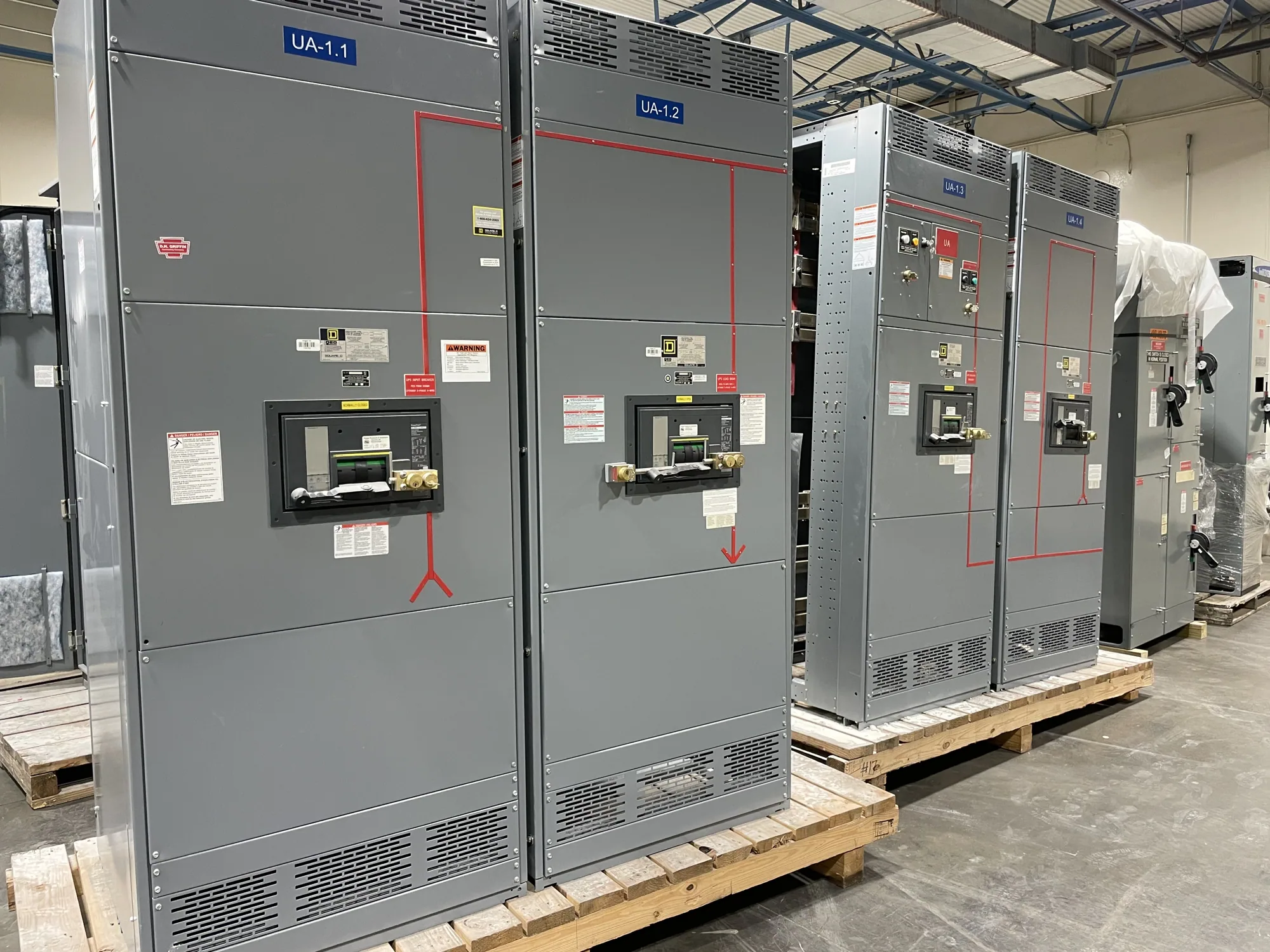
Start with the facility’s operating picture — Switchgear for Hospitality and Resorts
Hospitality properties bring together electrical demands that vary by space and schedule. Guest rooms, kitchens, laundry, pools, event areas, elevators, and building services may all depend on coordinated distribution. Mechanical equipment can include chillers, pumps, ventilation, and water-heating systems. For a resort, the relevant load profile may shift with occupancy, weather, events, and seasonal amenities rather than follow a single steady pattern.
Begin by defining which buildings and loads the equipment will serve, how they are supplied, and what operating conditions matter to the owner. A single property may have several service areas or electrical rooms, but their arrangement should be confirmed from project drawings, not assumed. New switchgear or switchboards must be specified for the actual system and intended installation.
Seasonal demand and realistic load assumptions
Peak demand deserves more than a guess based on the busiest week. Ask the electrical engineer to review available load data, planned additions, equipment schedules, diversity assumptions, and the relationship between occupancy and mechanical demand. A property with high summer cooling demand may have a different peak than one driven by winter heating, event operations, or year-round kitchen and laundry loads.
Separate existing connected loads from forecast additions, and identify equipment that can operate at the same time. Include large motors and other loads whose starting or operating characteristics affect design, as applicable to the system. The project team should determine the appropriate design margin and confirm how expected growth will be handled. Avoid selecting a current rating solely from a broad facility label such as “resort.”
Choose equipment for its role and location
Electrical switchboards may be appropriate for eligible low-voltage distribution applications, subject to the required configuration and specification. Switchgear arrangements depend on the system voltage class, protective-device requirements, operating scheme, and other project criteria. A product name alone does not establish suitability: the engineer should define the one-line arrangement, required ratings, enclosure, and interfaces before a manufacturer prepares a proposal.
Indoor electrical rooms and outdoor installations create different design questions. Confirm the actual ambient temperature, exposure to moisture or salt air, ventilation, dust, and other environmental conditions at the proposed location. Coastal exposure may warrant particular attention, but proximity to the coast alone does not define an enclosure or material requirement. The responsible engineer should specify conditions and protective measures; equipment details and suitability require confirmation against that specification.
Understand continuous-current ratings
Continuous-current selection involves the expected normal load and the ratings of the bus and devices in the assembly. These values are related, but they are not interchangeable. Ask the engineer to identify the required continuous current for each relevant section and device, and to state the assumptions used. The manufacturer can then review the requested configuration rather than infer requirements from the facility’s size or occupancy.
Operating temperature and installation conditions can affect allowable performance, depending on the equipment design and applicable requirements. Clarify whether the specified rating applies under the project’s stated conditions and whether any adjustment or derating must be addressed. Do not assume a catalog value automatically covers every enclosure, ambient condition, or assembly arrangement. Ratings and applicable standards must be verified for the actual supplied equipment.
Coordinate outages with guest operations
Replacement or expansion work can intersect with reservations, events, food service, life-safety systems, and building operations. Establish the required outage window early, then have qualified project personnel determine the sequence, temporary arrangements, approvals, and commissioning responsibilities. A manufacturer’s equipment scope should be coordinated with site access, connection points, existing conditions, and the responsibilities of the electrical contractor and engineer.
Schedule expectations should also be discussed early. South Carolina Switchgear Builders manufactures new equipment to specification, with US-built equipment and all-American components, and ships nationwide. Short lead times may be available, but timing depends on the order and must be confirmed. Equipment configuration, availability, delivery dates, testing, ratings, and any listing applicability must be verified for the specific design and order.
Prepare a useful equipment inquiry
For a productive review, provide the project location, equipment application, voltage class, one-line diagram, load and current requirements, preferred arrangement, and relevant drawings or specifications. Identify indoor or outdoor installation, environmental conditions, anticipated additions, and any required interfaces. State the desired outage or delivery window as a planning constraint, not an assumed commitment. Flag open engineering decisions so they can be resolved by the responsible parties.
Owners can clarify operating priorities and future plans; engineers can define system requirements and confirm ratings; purchasing teams can align scope, documentation, and schedule. Ask whether an eligible low-voltage switchboard design may be subject to UL 891, and verify applicability and assembly listing for the particular design rather than assuming it. With those inputs aligned, the manufacturer can assess a new equipment configuration against the project specification and help move planning toward a clearly defined order.