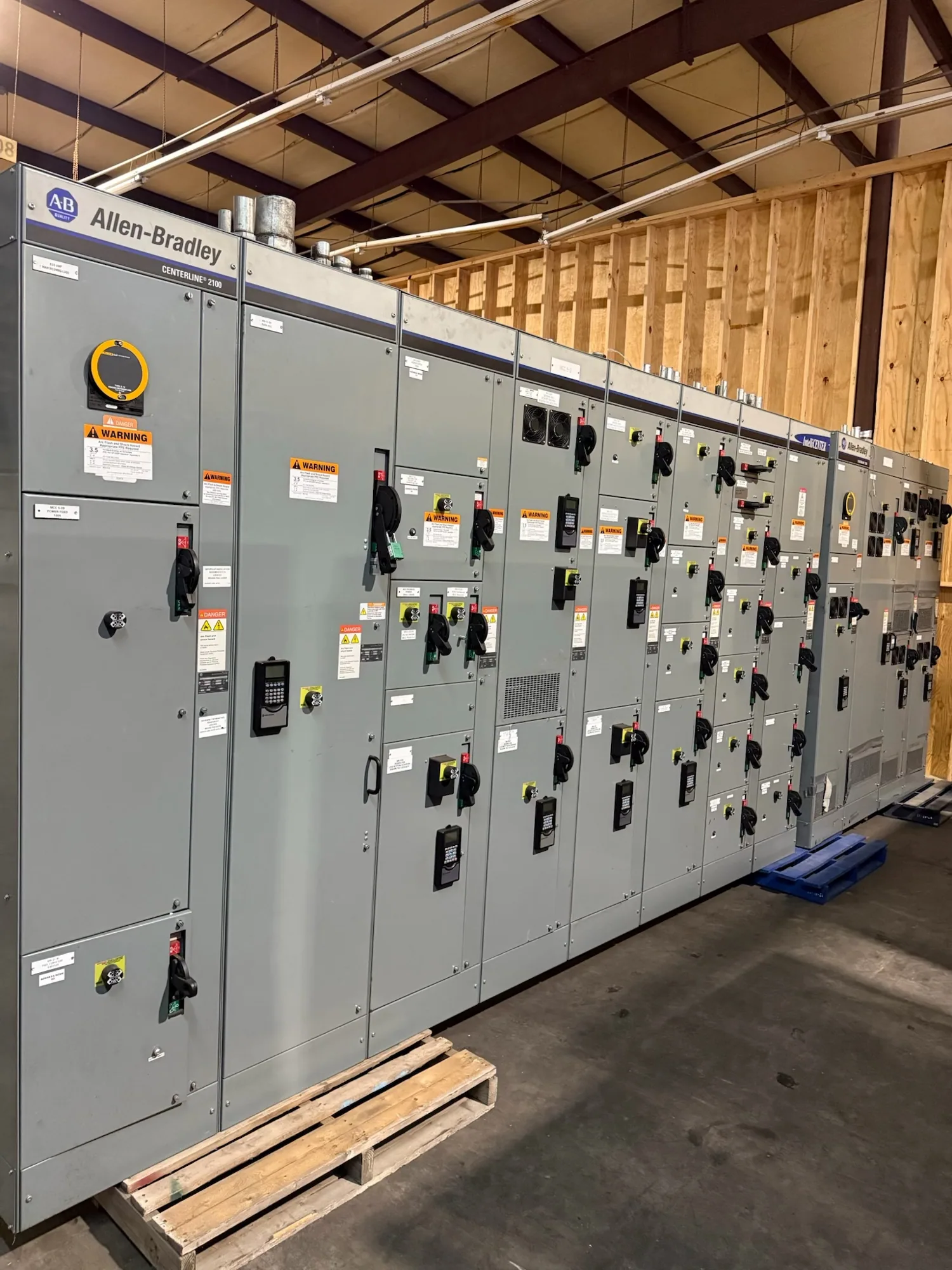
Start with the equipment and its documented basis
“Arc-resistant” is not a blanket assurance that every switchgear assembly will contain an internal arcing event in every installation. The term should be tied to an applicable standard, a defined equipment configuration, and documented testing that supports the specific design. A project specification therefore needs more than the desired label: it needs to identify the equipment class, required performance, and documentation the manufacturer must provide for review.
Begin by defining whether the project calls for low-voltage or medium-voltage equipment and describing the intended application. A 480 V class assembly is low voltage; 5 kV and 15 kV class equipment are medium voltage. Do not transfer a standard, rating, or test claim from one equipment class or product type to another. The responsible project engineer should establish which standards apply to the actual equipment and confirm their editions against project requirements.
Separate equipment standards from installation requirements
Equipment standards address the product and the basis on which its construction or performance is evaluated. Installation codes, utility rules, and requirements set by the authority having jurisdiction address different parts of the project. Their applicable editions and provisions depend on the project location, system design, adopted requirements, and review process; they should not be represented as one universal checklist for every installation.
Ask the project engineer to identify the governing documents and editions in the procurement specification, then ask the equipment supplier to respond against the relevant product requirements. The authority having jurisdiction and utility may have project-specific expectations that should be resolved during design rather than assumed from a general product description. An equipment statement alone does not establish that the complete installation meets every applicable code or approval condition.
Match the rating to the tested configuration
Arc-resistant performance, where supported by an applicable tested design, can depend on details such as the assembly arrangement, access conditions, and installation configuration. The exact limits must come from documentation for the proposed equipment. Do not assume that a rating remains applicable if doors, pressure-relief paths, barriers, enclosure arrangements, or surrounding clearances differ from the design basis. The responsible engineer and manufacturer should reconcile those details before the equipment specification is finalized.
Accessibility also needs precise language. Identify which sides may be accessible during the operating condition addressed by the project requirement, and whether the specification calls for a particular access classification or test basis. Avoid adding a generic “arc-resistant” line without defining what must be demonstrated. Request the applicable test documentation, configuration description, limitations, and any exclusions so reviewers can compare the proposed assembly with the project layout.
Evaluate trade-offs in the real installation
Equipment selection involves more than the arc-resistant designation. Engineers may need to consider footprint, cable entry, room layout, operating access, maintenance approach, ventilation, and coordination with upstream and downstream equipment. Those constraints can affect which tested configuration is practical. A design change made to solve a space or access issue should trigger a review of whether the documented performance basis still applies.
For example, an automotive manufacturing project might be evaluating new switchgear for a production area with changing equipment layouts. Voltage, available fault current, working clearances, room geometry, access expectations, and governing standard editions are unknown until the project team supplies them. The example is not a design recommendation: a qualified engineer must perform the required calculations, evaluate the installation, and confirm applicable standards and approval requirements.
Specify evidence, boundaries, and responsibilities
Write requirements so the supplier can identify the requested design and submit meaningful evidence. State the equipment class, system parameters, required performance basis, standard and edition when established by the project engineer, access conditions, and installation assumptions. Request drawings and technical documentation that show the proposed arrangement and identify any conditions or exclusions associated with the rating. Ask the supplier to flag conflicts or missing inputs rather than silently assuming values.
Also distinguish supplier documentation from project-level engineering and approval. The equipment manufacturer can provide information for its proposed assembly, but the design professional must assess system coordination and installation suitability, while the applicable authority determines its review. Listing or other compliance claims, if required, must be confirmed for the specific equipment and assembly. Do not infer that every product carries a particular listing or that a product designation alone satisfies a project code.
Prepare a useful project information package
- Identify the equipment type and voltage class, along with the project’s electrical one-line diagram and available system data.
- Provide the responsible engineer’s required standards and editions, installation codes, utility criteria, and authority review requirements.
- Describe the room arrangement, access conditions, cable entry, clearances, and any known physical constraints relevant to the proposed design.
- State the arc-resistant performance requirement and request its documented test basis, applicable configuration, limitations, and exclusions.
- List required drawings, submittal reviews, testing documentation, and coordination milestones, while marking unresolved values for engineering confirmation.
With those inputs, South Carolina Switchgear Builders can review a request for new, custom-to-specification equipment and clarify which project details require confirmation. The company builds in the United States, uses all-American components, and ships nationwide; availability and actual lead times depend on the order and must be confirmed. Before purchase, align the final equipment submittal with the engineer’s design, the specified standard editions, installation constraints, and the project’s approval process.