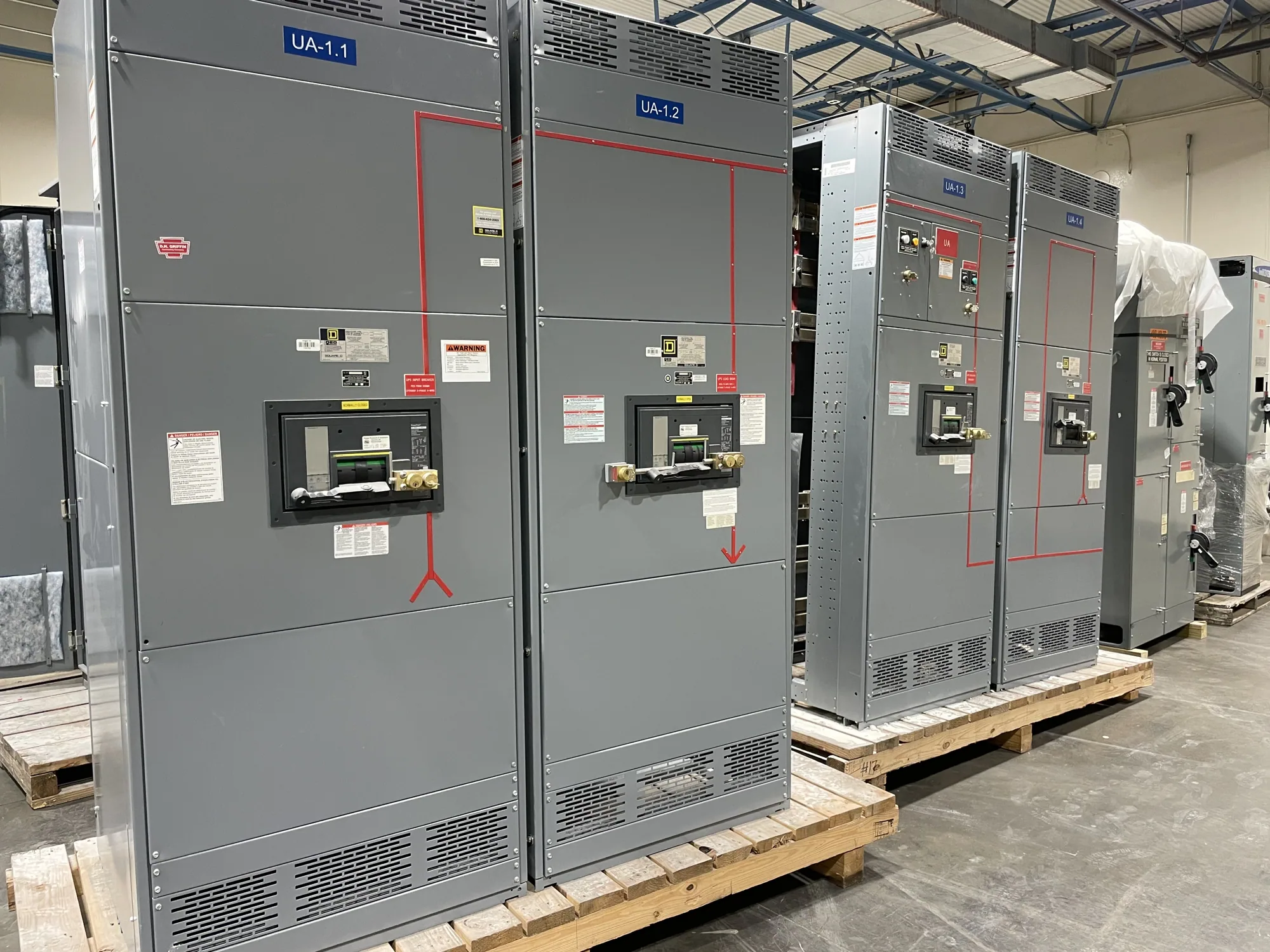
Read the current rating in the context of the assembly
Continuous current rating describes the current equipment is intended to carry under stated conditions; it is not, by itself, a complete measure of suitability. For arc-resistant switchgear, the project team must also identify the applicable arc-resistant design and its documented configuration. The arc-resistant designation does not establish a particular continuous current rating, nor does a current rating prove that an assembly has an applicable arc-resistant rating.
Review the equipment specification as a coordinated set of requirements: expected load, bus rating, switching and protective device ratings, operating environment, accessibility, and the precise equipment arrangement. Confirm that the specified arc-resistant construction applies to the proposed lineup and installation conditions. Design-dependent values, listing status, testing, and standards applicability should be verified against the actual equipment documentation rather than assumed from a general product description.
Separate load demand from equipment ratings
Start with the electrical load basis prepared by the responsible project engineer. It may include measured demand from an existing installation or an engineered estimate for a new facility, together with assumptions about future expansion, load diversity, operating schedules, and major equipment. These inputs inform selection; they do not replace code calculations or engineering judgment. A single observed peak should not automatically be treated as the complete long-term design basis.
Compare that load basis with the ratings of the bus and each relevant device. The lineup may include components with different current ratings, so the overall application must be checked as a coordinated design rather than by citing the largest number on one component. Ask which ratings apply to the main bus, feeder sections, and installed devices, and whether the proposed arrangement supports the intended loading under the stated conditions.
Account for installation and operating conditions
Temperature and other environmental conditions can affect how equipment is applied. Provide the expected ambient conditions, indoor or outdoor location, ventilation approach, elevation if relevant to the project criteria, and any unusual heat sources or enclosure constraints. The responsible engineer and manufacturer should confirm whether these conditions change applicable ratings or require a different configuration. Do not apply a generic derating factor without a documented basis for the specific equipment.
Installation details matter as well. Identify the lineup arrangement, room clearances, cable entry and termination approach, and whether equipment will be grouped or positioned in a way that affects airflow or access. For arc-resistant equipment, clarify the specified accessibility classification and installation configuration, then confirm that the applicable tested design supports those conditions. A change to the lineup, enclosure, or installation assumptions may require renewed review of the design documentation.
Balance capacity, flexibility, and tested design limits
Choosing a rating above the immediate calculated demand may provide room for planned growth, but a larger rating should not be selected without checking the complete specification. Bus, devices, protective coordination, available space, and the applicable arc-resistant configuration all require review. Conversely, designing too close to a forecast load can limit future flexibility. The project engineer should document the growth assumptions and explain how they influence equipment selection.
Do not treat a nominal current rating as permission to operate continuously at that value in every environment or configuration. Confirm the manufacturer’s stated conditions and any equipment-specific limitations. If the requested arc-resistant arrangement is not supported by the documented design, the team should resolve that mismatch before procurement rather than assume that a similar-looking lineup will provide the same performance.
Illustrative automotive manufacturing review
Consider an automotive manufacturing project with production lines, facility loads, and planned process equipment. No load values or operating conditions are assumed here. The engineer would establish the expected demand, identify simultaneous operating cases, account for planned expansion, and determine the required distribution arrangement. The project team would then check bus and device ratings against that basis and confirm the proposed arc-resistant configuration for the actual installation.
Questions may include whether production loads vary by shift, whether future machinery is part of the design basis, and whether room temperature or ventilation differs from the assumed conditions. The engineer should perform applicable calculations and review the relevant standards and project criteria. Manufacturer documentation can support that review, but it cannot replace project-specific engineering or establish an unverified rating.
Prepare a complete specification and submittal review
For a useful equipment proposal, provide the one-line diagram, system voltage and frequency, load basis, requested continuous current ratings, bus and device requirements, and relevant protective-device information. Include the arc-resistant performance requirement and accessibility classification, the intended lineup and installation arrangement, environmental conditions, cable details, and any planned expansion. Identify project standards, required documentation, and known constraints rather than leaving assumptions implicit.
- Ask which continuous current ratings apply to the bus and each specified device.
- Request confirmation of operating conditions, derating assumptions, and any exclusions.
- Verify that the proposed tested design supports the specified arc-resistant configuration and installation.
- Document deviations, unresolved values, and items requiring engineer approval.
During submittal review, compare the proposed equipment with the approved design basis and resolve discrepancies before release. South Carolina Switchgear Builders manufactures new switchgear to specification; availability and lead time depend on the order and must be confirmed. Clear project data helps the manufacturer and engineering team evaluate the requested arrangement, identify open questions, and coordinate a design that addresses both continuous current needs and documented arc-resistant requirements.