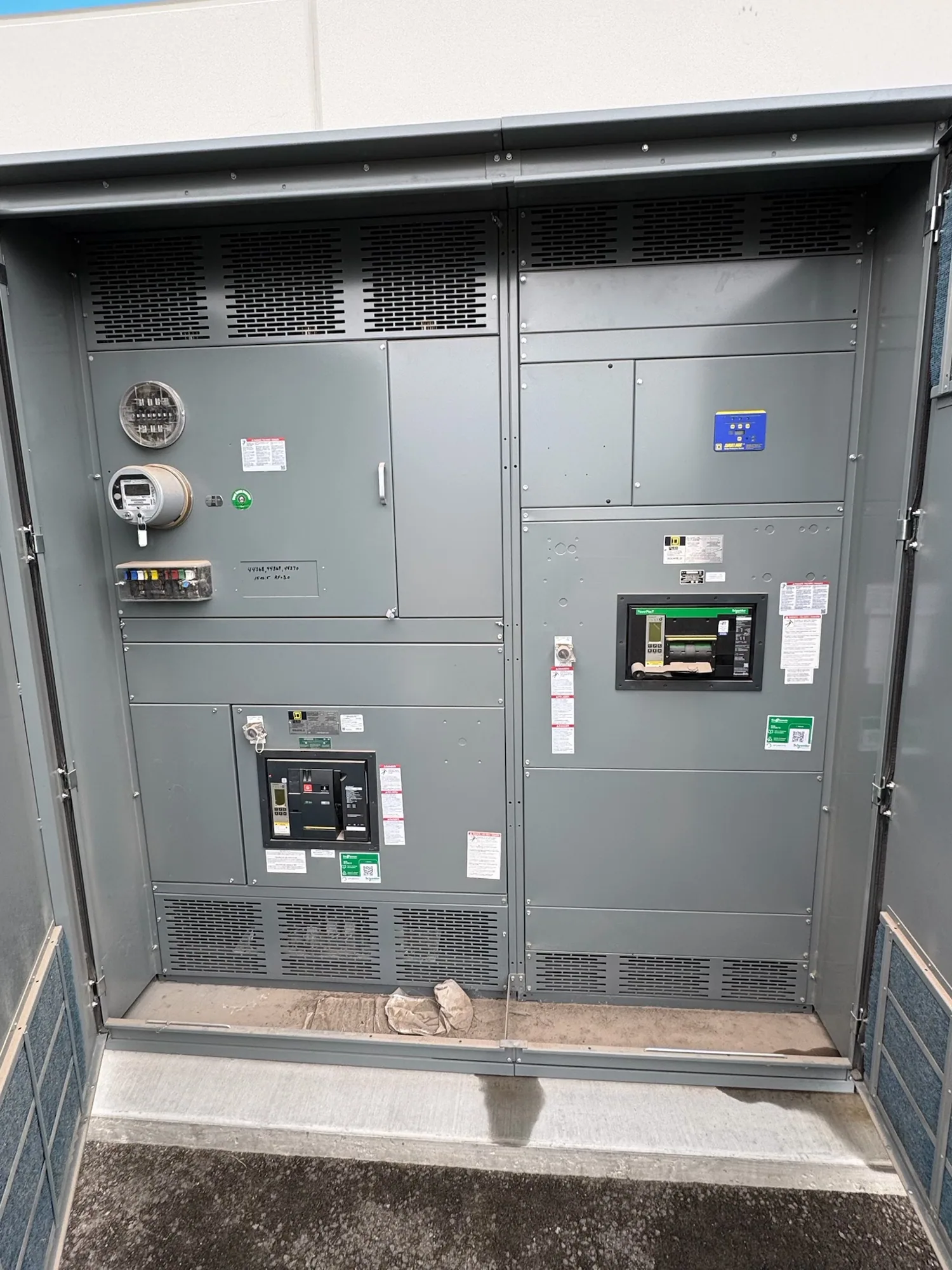
What an enclosure rating does—and does not—establish
An enclosure rating helps describe the protection an assembly is designed to provide under stated conditions. It is one part of specifying arc-resistant switchgear, not a substitute for the equipment’s arc-resistant design documentation. A project should identify both the required enclosure characteristics and the exact arc-resistant configuration being offered. The responsible engineer must confirm that the two requirements can be met together.
Do not assume that a familiar NEMA designation, enclosure material, or degree of environmental protection automatically applies to every arc-resistant lineup. The applicable rating, construction details, accessibility classification, and installation limits must be verified for the specific design. Likewise, an enclosure rating alone does not establish arc-resistance performance. Request equipment-specific documentation and review its stated scope, exclusions, and conditions.
Start with the actual environment
Describe where the equipment will be installed and the exposures it may encounter: indoor or outdoor placement, moisture, dust, washdown practices, corrosive agents, temperature conditions, and the surrounding space. These are prompts for the project team to evaluate, not assumptions about a particular facility. A food and beverage room, for example, might have routine cleaning near electrical equipment; the cleaning method, chemical exposure, and likelihood of direct spray would need to be established rather than guessed.
Translate those conditions into a documented enclosure requirement with the engineer responsible for the installation. A more protective enclosure may affect ventilation, heat management, access, dimensions, and maintenance. Environmental protection should be appropriate to the exposure—not selected as a proxy for arc resistance or chosen without regard to the tested assembly. Confirm whether the proposed construction and any accessories remain within the manufacturer’s documented design.
Keep accessibility and tested configuration aligned
Arc-resistant performance is tied to a defined design and installation configuration. Accessibility classifications, where specified and supported, describe the direction or conditions for which protection is evaluated; they do not mean every side, opening, or operating position receives identical protection. Ask which access classification applies, what areas are covered, and what operating and installation conditions the documentation requires.
Review the complete lineup arrangement, including barriers, doors, vents, cable entry, adjacent equipment, and the intended working clearances. Changes to openings, field modifications, added components, or a different lineup arrangement may affect the documented configuration. The project team should not treat an enclosure rating as permission to alter the assembly. Have the manufacturer and responsible engineer resolve proposed deviations before purchase and installation.
Balance exposure, access, and maintainability
Trade-offs are project-specific. Sealing against environmental exposure can influence heat dissipation and access for inspection; the lineup’s dimensions and service clearances can constrain room planning. Consider how qualified personnel will operate and maintain the equipment under the applicable safety procedures, without assuming that an enclosure or arc-resistant rating makes energized work acceptable. Installation, testing, and maintenance belong to qualified personnel following applicable procedures.
For an illustrative food and beverage facility, the values are unknown until the owner and engineer provide them: room conditions, cleaning chemicals, spray direction, temperature range, equipment location, and required access classification. The engineer can assess applicable calculations, environmental requirements, and standards for the actual application. Do not infer a rating from the industry label or select a rating based on a hypothetical washdown condition.
Specify the evidence needed for review
Ask for the proposed enclosure designation and the documents that identify the assembly configuration to which it applies. Request the arc-resistant design information, accessibility details, installation conditions, and any exclusions relevant to the quoted lineup. Clarify whether the enclosure rating applies to the complete assembly or particular components, and whether the specified cable-entry and accessory arrangements are included in the documented design.
For new equipment, the specification should also identify voltage class, system information, lineup arrangement, service conditions, indoor or outdoor application, cable entry, and required accessories. State the applicable project requirements without assuming that every rating, listing, test, or standard applies to every design. For low-voltage switchboards, UL 891 may apply to eligible assemblies, but applicability and listing must be verified for the specific design; it does not establish arc-resistant performance.
Prepare a complete project request
Provide drawings or a one-line diagram, available room dimensions, environmental details, access requirements, and the intended equipment arrangement. Identify uncertainties explicitly—for example, a cleaning exposure that the facility has not yet defined—so they can be resolved before the configuration is finalized. Include the required documentation and ask which proposed options or field interfaces fall outside the manufacturer’s documented design.
South Carolina Switchgear Builders manufactures new switchgear and switchboards to specification, with US-built equipment, all-American components, and nationwide shipping. Availability and actual lead times depend on the order and must be confirmed. A clear enclosure and arc-resistant requirement lets the manufacturer assess the requested configuration against the project information; the engineer and owner can then review the documentation, settle open conditions, and coordinate procurement with the installation plan.