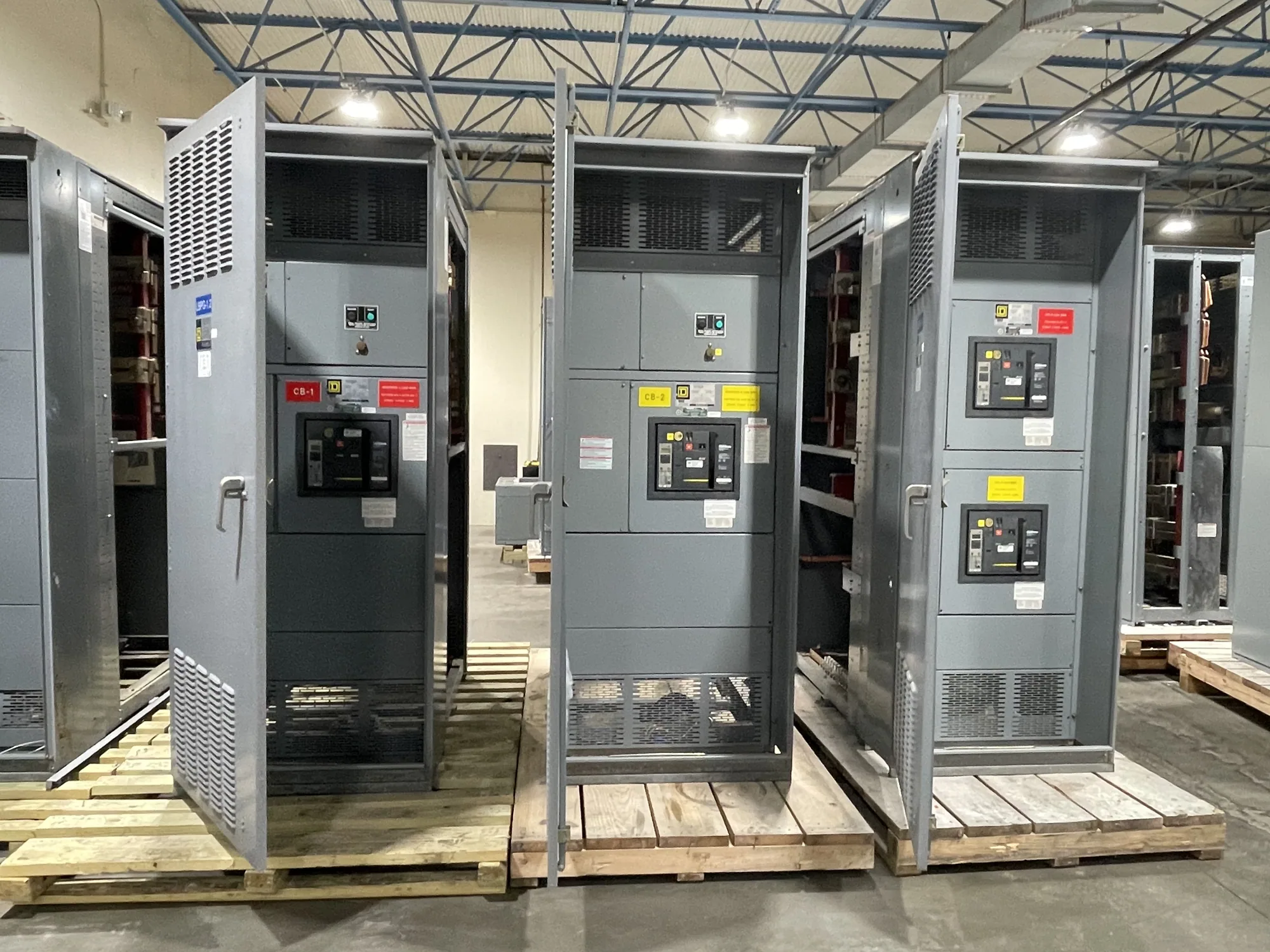
Start with the system the equipment must serve — Arc-Resistant Switchgear: Voltage Ratings
For arc-resistant switchgear, a voltage rating is not a stand-alone label or proof that a particular assembly suits a project. The specification should identify the actual system conditions and the equipment voltage class, then establish whether the proposed design and its documented arc-resistant features apply to that installation. The responsible project engineer should confirm the system basis and governing requirements.
Distinguish nominal system voltage from the equipment’s rated maximum voltage and insulation capabilities. These values describe related but different aspects of application; they should not be treated as interchangeable. Also document the system configuration, including grounding arrangement and relevant operating conditions, so the equipment supplier and engineer can assess the intended application without guessing at key design assumptions.
Connect the voltage class to documented design limits
Voltage class must match the system and the equipment’s applicable ratings. A 480 V class is low voltage, while 5 kV and 15 kV classes are medium voltage. Those examples identify classes, not a complete selection rule. Confirm the project’s actual nominal voltage, equipment maximum voltage, insulation requirements, and other applicable ratings against the equipment specification and the system study.
An arc-resistant designation concerns performance under specified conditions; it does not establish that every voltage configuration, lineup, or installation arrangement has the same capability. Ask which exact design documentation supports the stated rating, what configuration it covers, and what installation conditions or exclusions apply. Verify that the voltage class and arc-resistant design refer to the same equipment configuration—not separate features assumed to combine automatically.
Review insulation and system configuration together
Insulation requirements should be established for the project rather than inferred from a nominal voltage alone. The engineer should review applicable system conditions and requirements, while the supplier confirms the proposed equipment’s available insulation ratings and design details. Where the specification references a particular standard, confirm its applicability to this equipment and the proposed design; do not assume a standard or rating applies without equipment-specific verification.
Configuration also matters to the usefulness of an arc-resistant rating. Specify the intended lineup arrangement, accessibility classification if required, and installation orientation or other conditions identified by the design documentation. Confirm whether barriers, cable entry, room layout, adjacent equipment, or changes made during installation affect the documented limits. These questions need review against the actual design, not a broad product description.
Consider a chemical-processing project scenario
Consider a hypothetical chemical-processing facility planning replacement distribution equipment. Its nominal system voltage, grounding arrangement, available fault information, lineup layout, accessibility needs, and applicable standards are unknown here. No voltage rating or arc-resistant configuration can responsibly be selected from that limited description. The project engineer must establish the system basis and determine the required equipment ratings and application conditions.
Once the project information is available, compare proposed equipment documentation with the specified system and installation. Ask whether the arc-resistant design covers the requested voltage class, lineup arrangement, and accessibility. The engineer should review calculations and standards applicability; the manufacturer should confirm what its specific design documentation supports. Treat unresolved values and assumptions as open submittal questions, not as approved design inputs.
Build a useful specification and submittal package
Provide the nominal system voltage, required equipment maximum voltage, system configuration, grounding method, and available study information. Include the project’s stated insulation requirements, applicable standards, intended lineup arrangement, accessibility criteria, and known installation constraints. Identify what remains under engineering review. Clear distinctions between confirmed requirements, preliminary assumptions, and pending decisions help prevent a quotation or submittal from silently converting unknowns into fixed design choices.
Request equipment-specific documentation identifying voltage class, applicable ratings, arc-resistant design basis, covered configuration, exclusions, and installation conditions. Ask which documents will be available for review and whether the proposed arrangement requires clarification before release. Listing, testing, ratings, and standards applicability must be confirmed for the actual supplied design. Any project changes should be reviewed by the responsible engineer and supplier before the specification is treated as final.
Resolve trade-offs before equipment release
Project teams may need to balance the required voltage class and insulation against space, lineup arrangement, accessibility, and the design limits supported by available documentation. Do not trade away a required system rating to accommodate a preferred configuration, or assume an arc-resistant feature follows from a general product family description. Record alternatives and obtain engineering review where the requirements appear to conflict.
South Carolina Switchgear Builders manufactures new switchgear and switchboards to specification, with US-built equipment, all-American components, and nationwide shipping. Availability and actual lead times depend on the order and require confirmation. Provide the project voltage basis and configuration early so the proposed equipment and supporting documentation can be reviewed before release. Installation, testing, and maintenance should be performed by qualified personnel under applicable safety procedures.