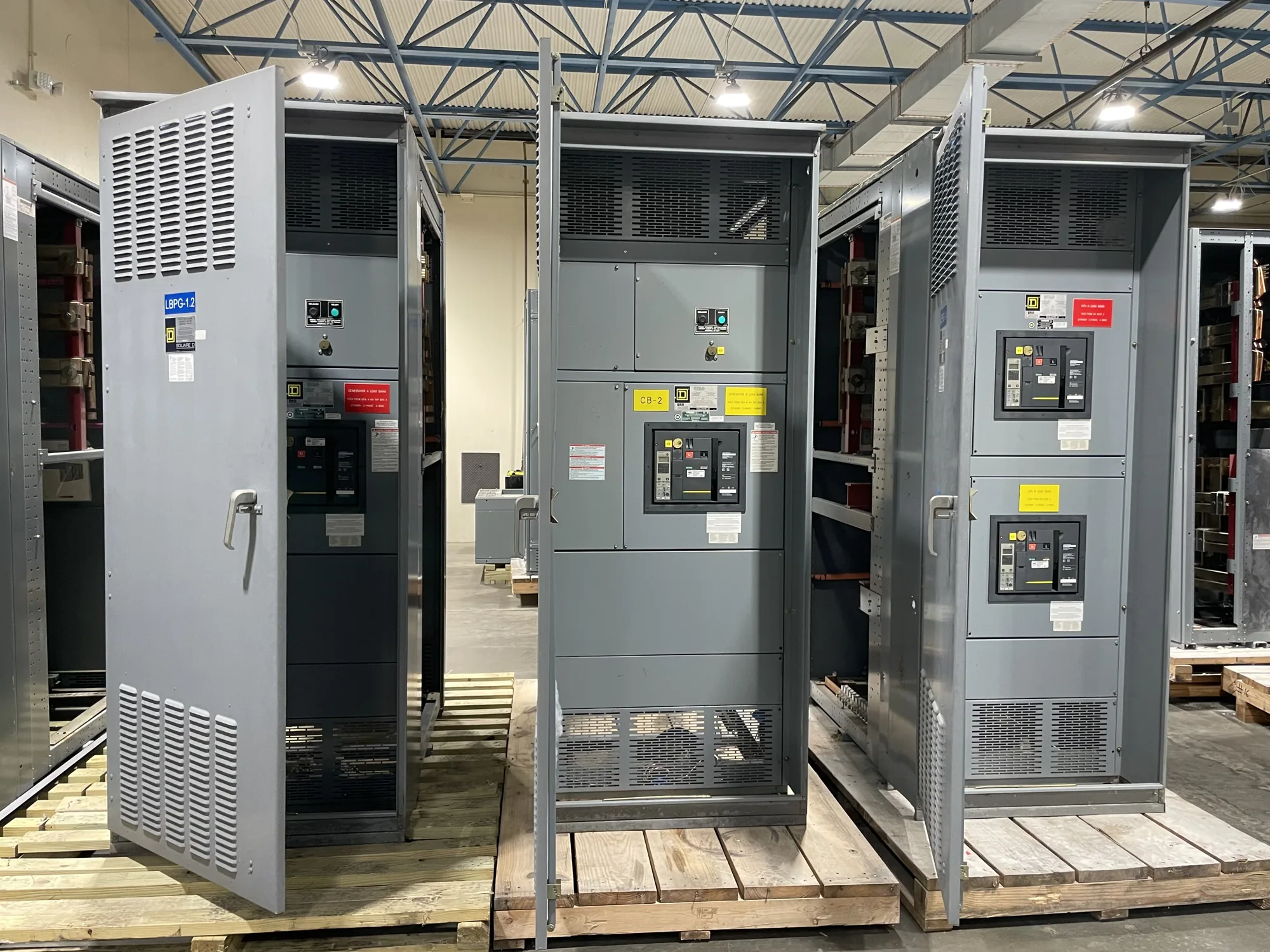
Start with the actual system, not a catalog label
Indoor switchgear voltage selection begins with the electrical system the equipment will serve. A nominal system voltage describes the system’s designated operating level; it is not necessarily the same value or terminology as an equipment’s rated maximum voltage. The project engineer should identify the system configuration and applicable requirements, then verify that the proposed equipment voltage class and ratings are suitable for that specific application.
Voltage is only one part of a complete specification. Indoor equipment may be installed in a dedicated electrical room, a manufacturing building, or another enclosed space, but the room location does not determine the voltage rating. The system design does. Buyers should avoid choosing a lineup from a single voltage number without confirming the system’s phase arrangement, grounding method, frequency, source characteristics, and intended operating conditions with the responsible engineer.
Relate nominal voltage to equipment maximum voltage
Equipment maximum voltage is a design rating that must be evaluated against the system and the governing equipment standard. It is not a recommendation to operate continuously at that value, nor should it be treated as interchangeable with nominal system voltage. The engineer should confirm the correct rated voltage class and identify any system conditions that affect selection. The manufacturer needs those confirmed requirements to configure equipment rather than infer them from a broad description.
Voltage classes must remain clear in the specification. A 480 V class product is low-voltage equipment; 5 kV and 15 kV class products are medium-voltage equipment. Those examples identify classes, not a universal boundary for every product or application. Do not assume that a medium-voltage specification can be treated as a low-voltage switchboard specification, or that a standard applicable to one equipment type applies to another. Applicable standards and any assembly listing must be checked for the actual design.
Insulation and system configuration are connected
Insulation requirements are part of the equipment’s design and rating, not an optional add-on inferred from the building’s location. The project team should specify the system voltage and configuration, then have the responsible engineer establish which insulation characteristics and other ratings apply. Questions about grounding, switching duty, fault exposure, and the installation environment may influence the completed design. Their relevance and required values must be confirmed for the project rather than assumed from a generic indoor label.
For a new indoor lineup, the specification should make clear whether the equipment serves a particular source, feeder, transformer, or other distribution function. A mismatch between system information and the requested equipment can lead to redesign, clarification, or changes to coordinated components. A buyer can reduce ambiguity by submitting the one-line diagram and identifying the intended connections, operating arrangement, and known system constraints before equipment details are finalized.
Room planning affects a sound voltage selection
Correct voltage selection does not by itself prove that equipment will fit or perform as intended in its room. Confirm access routes, door and aisle dimensions, handling limits, working clearances, and the location of cable entries with the project team. Heat rejection and ventilation requirements also need review against the specified equipment and room conditions. These factors can affect lineup arrangement and installation planning even when the electrical voltage class is established.
Discuss indoor environmental conditions, including any relevant temperature, moisture, contamination, or process-related concerns. In pharmaceutical and biotech facilities, the equipment room may sit within a larger controlled operation, but the facility type alone does not establish a required voltage rating or enclosure configuration. The engineer should define applicable environmental and operating requirements, while the equipment specification should identify the design assumptions and boundaries that the manufacturer is expected to meet.
Illustrative pharmaceutical and biotech scenario
Consider a hypothetical facility planning indoor distribution equipment for a new process area. Its nominal system voltage, grounding arrangement, available fault information, and final room layout are unknown. Those values should remain open items, not be guessed from the facility type or from a nearby piece of equipment. A qualified project engineer must calculate and review the system requirements and applicable standards before the buyer requests a final equipment configuration.
The team can still make progress by collecting the current one-line diagram, source and transformer data, operating sequence, and room drawings. The engineer can identify which values are confirmed, which require study, and which assumptions need approval. The manufacturer can then review the supplied specification for alignment with the requested new equipment. This sequence helps distinguish an engineering question from a manufacturing clarification and avoids treating an incomplete voltage description as a finished design.
Information to include in the specification
- State nominal system voltage, phase and frequency, grounding method, and confirmed equipment voltage class.
- Identify system sources, transformer relationships, operating configuration, and relevant fault or protection information as established by the engineer.
- Provide the one-line diagram, equipment function, cable-entry preferences, room drawings, access route, and required working clearances.
- List applicable standards, required documentation, environmental conditions, and any project-specific listing or testing requirements for verification.
- Mark unresolved values and identify who will confirm them; do not ask the manufacturer to assume engineering responsibility for missing system data.
Also state what is outside the equipment scope, such as upstream conductors, field installation, protective-device coordination, or building modifications, when those items are excluded. Confirm whether the requested assembly is a switchgear lineup or a switchboard, because terms and applicable standards are not interchangeable. UL 891 may apply to eligible low-voltage switchboards; applicability and assembly listing require verification for the specific design.
Coordinate review before release
Before a purchase order is finalized, reconcile the voltage requirements across the one-line diagram, equipment schedule, and written specification. Ask for review of the proposed equipment configuration, key ratings, interfaces, and stated exclusions. Resolve discrepancies through the responsible engineer and document approved revisions. Availability and actual lead times depend on the order and must be confirmed; delivery planning should follow the confirmed project schedule rather than an assumed date.
South Carolina Switchgear Builders manufactures new equipment to specification, with US-built equipment, all-American components, and nationwide shipping. Project-specific configuration, applicable ratings, listing, testing, and delivery details require confirmation against the actual specification and supplied equipment. A clear package of engineering data, room constraints, and open questions gives the manufacturer a useful basis for review and helps the project team carry a verified voltage selection into procurement and installation planning.