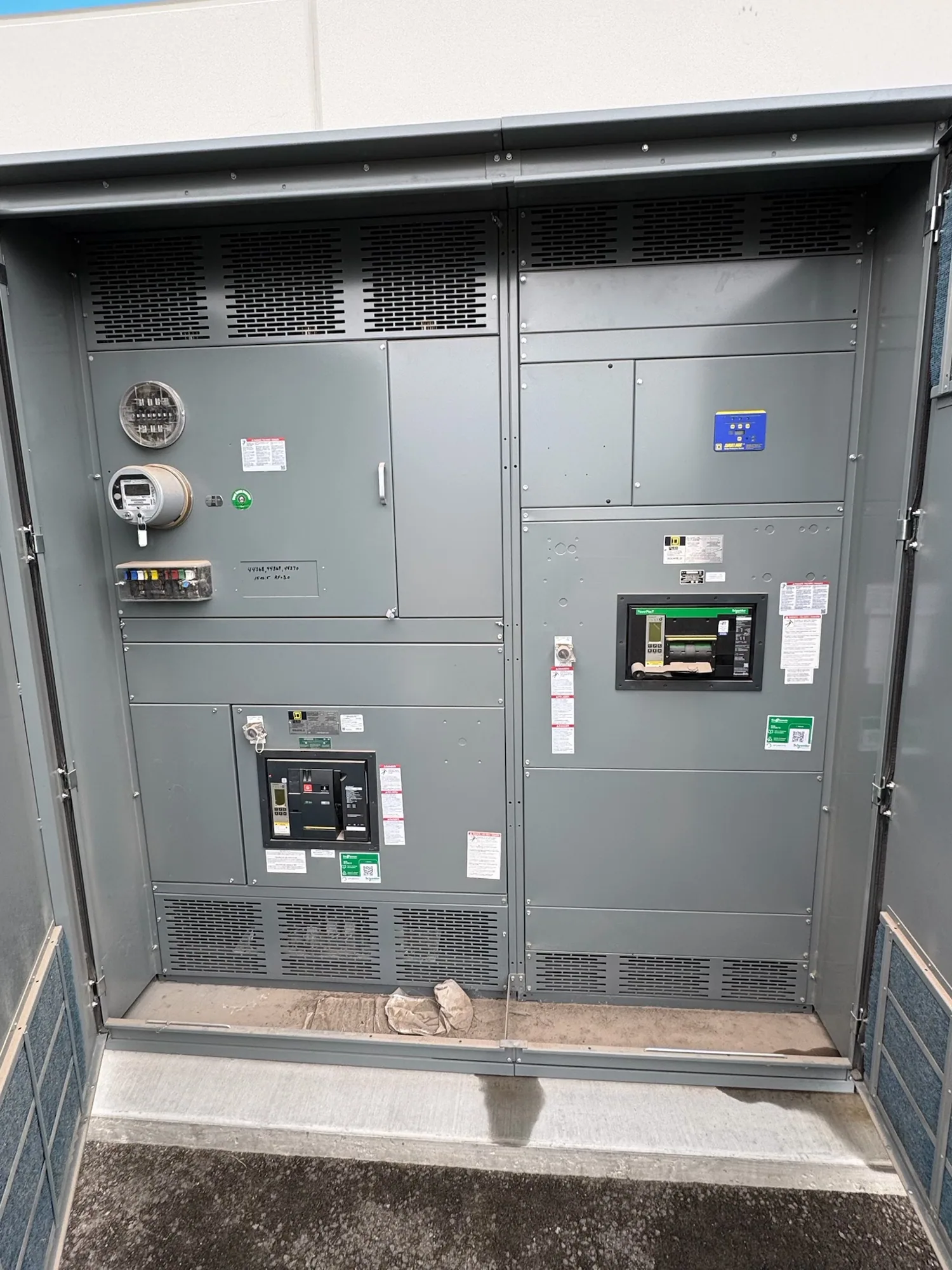
Start with the system, not a catalog label
Low-voltage switchgear voltage selection begins with the electrical system the assembly will serve. A project specification may identify a nominal system voltage, but that value alone does not establish every equipment requirement. The responsible engineer should confirm the system configuration, grounding method, frequency, source arrangement, and expected operating conditions before selecting an assembly and its protective devices.
In a distribution assembly, voltage ratings apply to the equipment and components as specified, including bus, circuit breakers, instrument transformers, and control circuits. These ratings must suit the intended application together. A breaker voltage rating, for example, should not be treated as proof that an entire switchgear assembly is appropriate. Review the complete design and its documentation against the project requirements.
Nominal voltage and equipment maximum voltage
Nominal system voltage describes the system designation used in the project documents. Equipment maximum voltage is a separate rating associated with the equipment’s permitted application. The two values are related, but they are not interchangeable. Confirm the equipment rating and its conditions of use from the specific assembly documentation rather than assuming that a familiar nominal voltage automatically determines the correct product.
Also clarify whether the system is three-phase or single-phase, its conductor arrangement, and how the neutral and ground are treated. These details can affect how equipment is configured and applied. Where a system has multiple sources, unusual grounding, or operating modes that change the electrical arrangement, the project engineer should document each relevant condition for review.
Insulation and system configuration
Insulation design is part of voltage suitability, but it is not a substitute for verifying the assembly’s complete ratings. The engineer should consider the specified system conditions and applicable requirements when reviewing insulation coordination, clearances, and the equipment’s intended environment. Any project-specific assumptions about transient exposure or other electrical stresses should be identified and evaluated by the responsible design professional.
Configuration matters as well. Incoming and feeder arrangements, bus sections, tie breakers, metering, and protective-device choices all affect the final assembly. The voltage class should remain consistent across the equipment and its components, while details such as bus layout and compartment arrangement must reflect the one-line diagram and operating plan. Ask the manufacturer to identify any design-dependent limits or exclusions in the proposed equipment documents.
Voltage is only one part of protection
Matching nominal voltage and equipment maximum voltage does not settle interrupting or withstand requirements. Available fault current, protective-device ratings, coordination objectives, and the system’s operating configuration require separate review. A suitable voltage rating cannot compensate for an interrupting rating or withstand capability that does not meet the project design. These calculations and selections belong with the qualified project engineer.
Space and maintainability also deserve attention during specification. The room layout, access clearances, cable entry direction, and planned maintenance approach may influence equipment arrangement. A compact layout should not be selected without confirming access and project constraints. Provide the manufacturer with the intended installation conditions so the proposed configuration can be checked against the complete application rather than voltage considered in isolation.
Illustrative chemical-processing application
Consider a chemical-processing facility planning a new distribution lineup. The nominal voltage, source configuration, grounding method, available fault current, and environmental conditions are not provided here, so no equipment rating can responsibly be inferred. The facility team and engineer would first establish those values from verified system documents and calculations, then define the required assembly configuration and protective-device criteria.
The specification should also identify any location-specific concerns, such as exposure conditions or process-related operating requirements, for engineering review. These are prompts for project evaluation, not assumptions about every chemical-processing site. The engineer should determine applicable standards and required safeguards; the manufacturer can then review the specified design basis and confirm whether the proposed equipment can be built to the stated requirements.
Information to include in a submittal package
For a useful quotation and technical review, provide the one-line diagram, nominal system voltage, phase and frequency, grounding details, source and tie arrangement, and required protective-device information. Include available fault-current data and the basis for it, load and feeder schedules, metering needs, cable entry preferences, room constraints, and applicable project specifications. Identify requested documentation and any required review or approval milestones.
Ask the manufacturer to state the proposed equipment’s voltage ratings, configuration, included components, and explicit exclusions in its submittal. If a listing or standard is required, specify it and request confirmation that it applies to the particular design; eligibility and assembly details must be verified rather than presumed. For low-voltage switchboards, UL 891 may apply to eligible assemblies, but applicability and listing require confirmation for the actual equipment.
Confirm the design before release
South Carolina Switchgear Builders manufactures new switchgear and switchboards to specification, with US-built equipment, all-American components, and nationwide shipping. Availability and lead times depend on the order and must be confirmed. Before approving a design or release, have the project engineer reconcile the equipment submittal with the one-line diagram, system calculations, applicable requirements, and installation constraints.
A clear voltage basis helps prevent mismatches, but it is only one part of a complete equipment specification. Resolve open questions about maximum voltage, insulation, system configuration, protection, and documentation with the responsible engineer and manufacturer before procurement. Installation, testing, and maintenance should be performed by qualified personnel following applicable safety procedures.