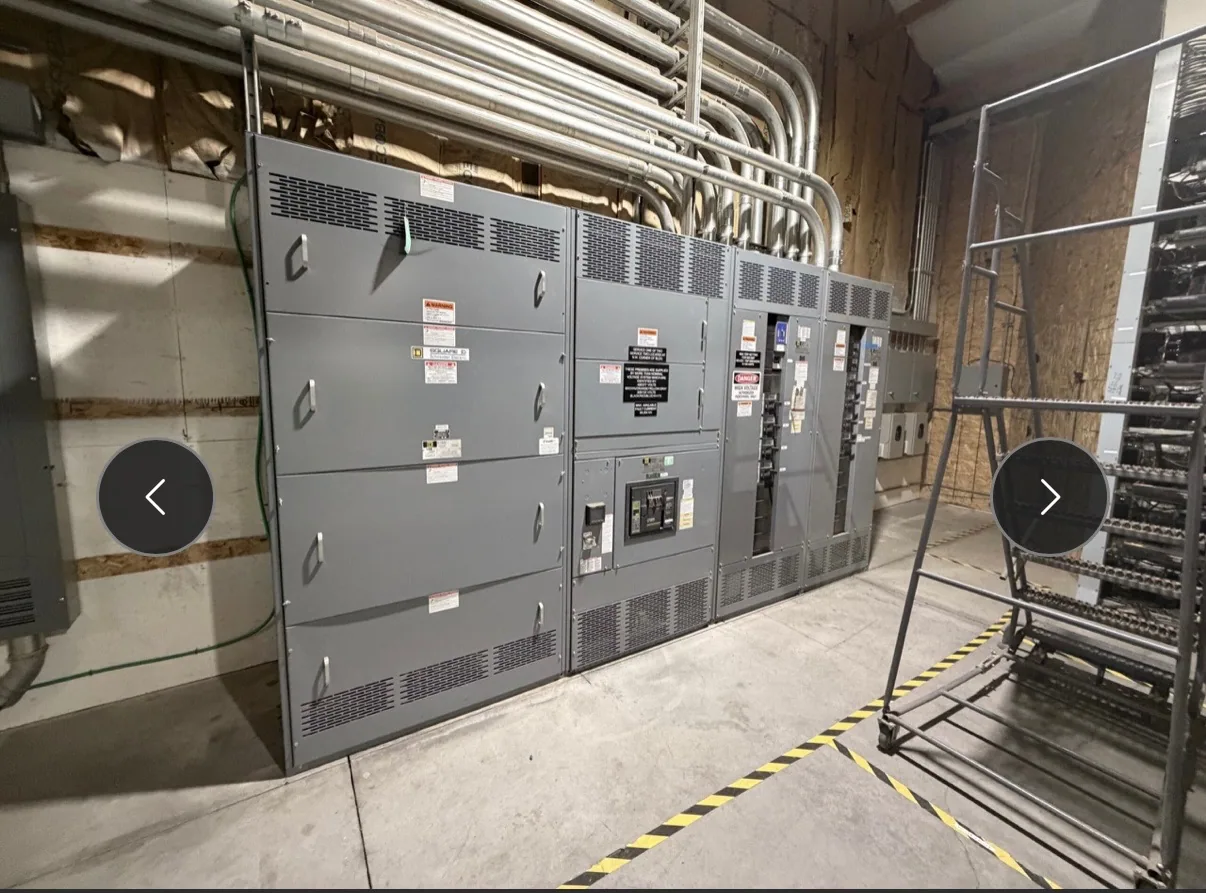
Apply arc-flash planning to the distribution system
Medium-voltage switchgear can receive power from a utility, generator, or another source and distribute it through feeder circuits to transformers, motors, and other loads. An arc-flash evaluation should consider the complete system path and the tasks people may perform, rather than treating one switchgear lineup as an isolated safety solution. Source strength, feeder arrangement, protective devices, and operating configuration all affect the engineering review.
Incident energy and related boundaries are determined through a qualified engineering analysis using project-specific system data and applicable methods. They are not inherent, fixed properties of a switchgear product. The analysis informs labels and work planning where applicable, but it does not make equipment safe to approach under every condition or replace established procedures, training, and appropriate protective measures.
Coordinate study assumptions with equipment design
A useful study depends on accurate inputs, including available fault current, upstream and downstream device information, conductor and transformer data, equipment configuration, and expected operating modes. The responsible engineer should identify assumptions, evaluate relevant configurations, and determine which tasks and locations need assessment. If data are estimated or incomplete, that uncertainty should be visible in the study and resolved when reliable information becomes available.
Switchgear specifications should give the manufacturer enough information to configure equipment for the intended system, while leaving system protection decisions with the responsible engineer. Confirm the voltage class, bus and feeder arrangement, isolation needs, control interfaces, and protective-relay requirements. Ask how the specified equipment interfaces with the selected protection scheme; do not assume a particular feature or setting will produce a particular incident-energy result.
Protection, isolation, and operating tradeoffs
Protection settings involve tradeoffs. Faster clearing may reduce exposure for some fault scenarios, while coordination requirements may constrain settings so downstream devices can operate selectively. The engineer should assess fault cases, device curves, relay functions, and operating modes together. A change to a relay, source, or feeder can affect the study, so settings and the documented system model should be controlled and reviewed as the project develops.
Isolation and equipment arrangements can also influence how work is planned, but no design feature eliminates arc-flash hazards. Specify the required means of isolation, access and compartment arrangement, interlocks, and control provisions according to the project design. Verify the scope and limits of any equipment feature with the manufacturer, then have qualified personnel determine safe work conditions and follow applicable procedures. Installation, testing, and maintenance belong to qualified personnel using the applicable safety controls.
Illustrative automotive manufacturing scenario
Consider an automotive manufacturing project adding a medium-voltage feeder for a production area. This is an illustrative case, not a description of a specific facility or known system values. Before equipment selection is finalized, the project engineer would need to establish the source configuration, fault-current data, feeder and transformer details, protective-device characteristics, and operating modes. The required incident-energy analysis cannot be inferred from the industry or load description alone.
The team should resolve practical questions: Will the feeder operate under alternate source conditions? Which device clears faults, and what coordination constraints apply? What work tasks are anticipated at the lineup, and what isolation steps are required? A qualified engineer should perform the calculations and applicable standards review using confirmed inputs. The equipment supplier can use the resulting design requirements to prepare a matching configuration, but should not substitute product selection for the system study.
Build study and work practices into the project
Define who is responsible for the study, who supplies system data, and who approves protection settings and operating procedures. Identify when the analysis must be updated, such as after a material system change or a change to protective-device settings. Establish how labels, drawings, relay documentation, and operating instructions will be reconciled with the final installed configuration. These responsibilities should be coordinated across the owner, engineer, and equipment supplier.
Procurement documents should distinguish equipment scope from engineering and field services. State which study inputs and deliverables are provided by the project team, what manufacturer submittals are required, and which configuration details need approval. Confirm the requested documentation, testing scope, ratings, and any listing applicability against the actual design and order; these details are project-specific, not assumptions that apply to every medium-voltage assembly.
Information to provide when specifying new switchgear
- System voltage class, source arrangement, available fault-current information, and known operating modes.
- One-line diagram, feeder and bus configuration, transformer data, and protective-device or relay requirements.
- Isolation, access, control, interlocking, environmental, and installation constraints relevant to the lineup.
- Study assumptions, required submittals, review responsibilities, and the intended work-practice program.
Share the specification, one-line diagram, and unresolved design questions early enough for coordinated review. South Carolina Switchgear Builders manufactures new medium-voltage switchgear to specification, with US-built equipment and nationwide shipping. Configuration, availability, delivery timing, and any requested ratings or documentation require confirmation for the specific order. Clear study assumptions and equipment requirements help the project team align the design, protection approach, and operating plan before procurement is finalized.