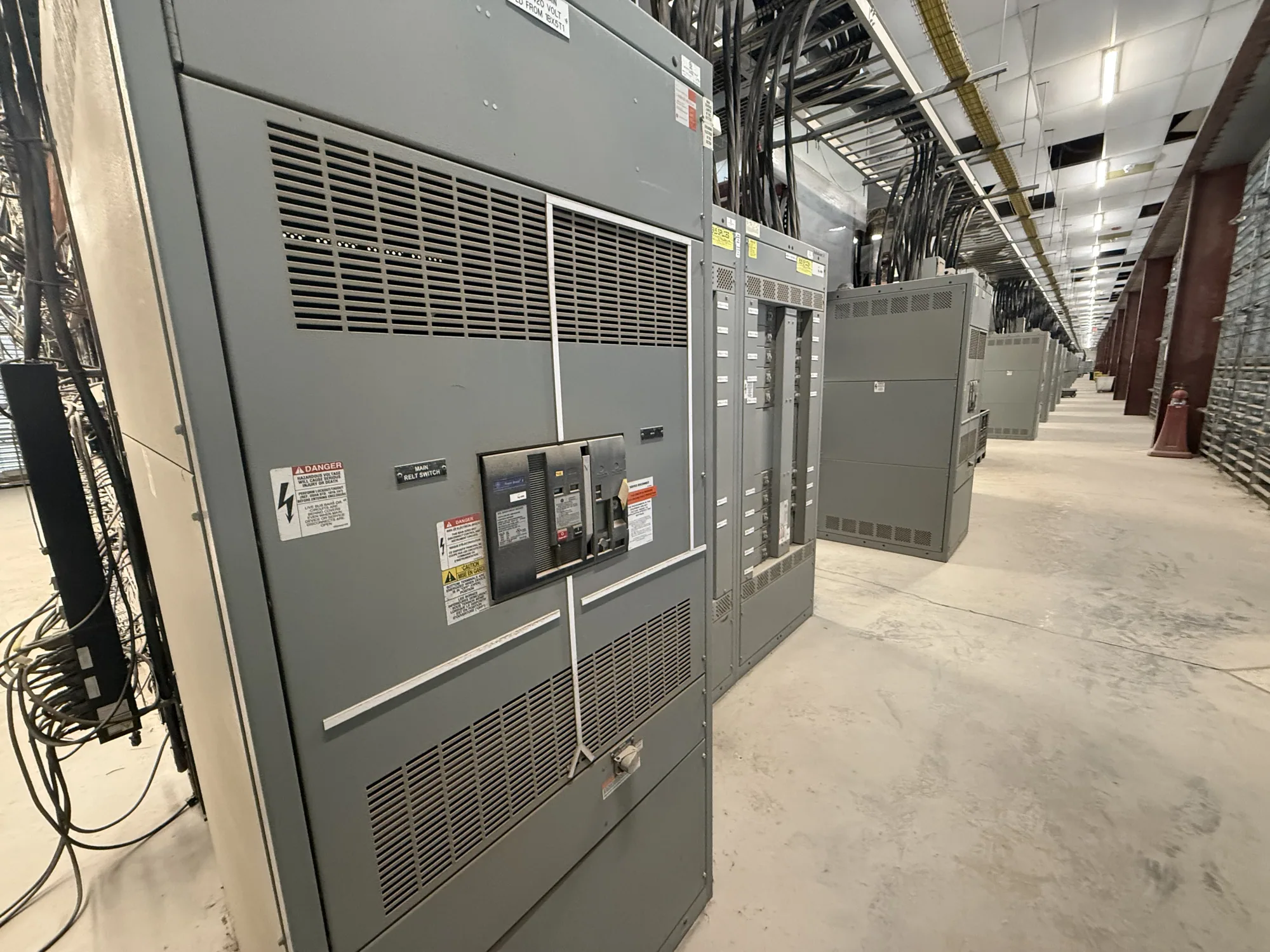
Start with the equipment and project boundary — Medium-Voltage Switchgear: Codes and Standards
Medium-voltage switchgear codes and standards are not a single checklist that applies identically to every installation. Requirements depend on the equipment’s function, construction, voltage class, system arrangement, project location, and the documents governing the work. A useful review starts by defining what the switchgear will do: receive power from a source, distribute it to feeders, protect connected circuits, or combine these roles.
Clarify where the equipment boundary begins and ends, including incoming connections, bus, protective devices, metering, control power, and outgoing feeders. The project engineer can then distinguish requirements for the switchgear itself from those governing the installation, system design, utility connection, and site. Naming the responsible reviewers early helps prevent a supplier specification from being mistaken for an installation approval.
Identify the applicable equipment standard and edition
Ask the responsible engineer to identify the equipment standard that applies to the actual medium-voltage assembly and to state the governing edition or project basis. Do not assume that a standard associated with a different product category applies, or that a familiar standard automatically covers every feature in a custom configuration. Applicability, exceptions, and any required conformity evidence must be resolved for the offered design and project documents.
Record the required standard and edition in the specification, alongside the project’s intended review and submittal process. If the contract documents cite multiple editions or appear to conflict, request a documented resolution from the engineer and, where required, the authority having jurisdiction. This is especially important when equipment is being specified early: code adoption and project criteria can change, while procurement documents may preserve an earlier design assumption.
Connect voltage class to insulation and system design
Medium-voltage equipment is not specified by a label alone. Provide the system’s nominal voltage and required equipment voltage class, and have the engineer confirm compatibility with the source, grounding arrangement, and connected system. Insulation requirements, clearances, switching duties, and the way equipment is isolated are design questions that must be evaluated against the particular assembly and its intended service.
Describe the source and feeder arrangement, including the number and purpose of incoming and outgoing circuits, available space constraints, and any provisions for future circuits. The engineer should determine which system calculations and duty checks are needed; do not infer interrupting or withstand requirements from nominal voltage. The supplier needs the approved values and configuration to prepare equipment that matches the design rather than filling gaps with assumptions.
Coordinate protection, controls, and interfaces
Protective-relay requirements need to be stated as an interface, not left as a vague request for “standard protection.” Identify which relays, instrument transformers, control power, trip and close circuits, metering, alarms, and communications are required, and which are furnished by others. The project engineer should confirm protection functions and settings through the system study and coordinate them with the equipment design and connected devices.
Also define how the switchgear connects to upstream and downstream equipment, including cable entry, termination provisions, grounding, and any required interlocks. Utility rules may apply at the point of connection, but they are not a substitute for the project’s equipment and installation requirements. Ask the utility and project team to identify the applicable interface documents and approval steps rather than assuming one utility’s rules govern another service territory.
Use scenarios to expose missing design inputs
Consider an illustrative automotive manufacturing project with unknown site voltage, source duty, feeder count, and utility conditions. Those values are intentionally unspecified: the project team must establish them. A plant may need to serve process equipment, building loads, and future expansion, but the switchgear lineup and protection cannot be selected from the industry label alone. A qualified engineer must review load and fault calculations, operating needs, and the applicable standards basis.
Trade-offs should be evaluated against the documented operating case. For example, a compact lineup may affect access, cable routing, or future extension; a particular isolation or control arrangement may influence maintenance planning and interlocking. These are prompts for engineering review, not universal prescriptions. Ask the design team to record why the selected arrangement suits the site, how it meets the stated duty, and what assumptions would require redesign if they change.
Prepare a complete specification and submittal basis
Before requesting a quotation for new equipment, provide the project location, one-line diagram, nominal system voltage, equipment class, source and feeder arrangement, and the engineer-confirmed electrical duty values. Include enclosure and environmental requirements, access and cable-entry constraints, grounding details, control and relay interfaces, metering, communications, and any required future provisions. Mark uncertain items clearly and name who will resolve them before the design is released.
- Identify the governing equipment standard, edition, and project specifications for engineer review.
- List applicable installation-code, utility, and authority having jurisdiction requirements, with responsibility for confirmation.
- State required drawings, data, review milestones, tests, and documentation without assuming every option is included.
- Identify exclusions and by-others items, including external relays, cables, terminations, studies, and site work where applicable.
Ask which documents will be submitted, what design details require approval, and how revisions will be handled. Listing, testing, ratings, delivery timing, and standard applicability must be confirmed for the actual configuration and order; none should be inferred from a general product description. Installation, inspection, testing, and maintenance belong to qualified personnel following applicable safety procedures.
Coordinate reviews before equipment release
Use a responsibility list to coordinate the project engineer, equipment supplier, utility, installer, and authority having jurisdiction. The engineer establishes the design basis and resolves code questions; the supplier confirms what the proposed assembly can provide against that basis; and the project team tracks required approvals and open inputs. South Carolina Switchgear Builders manufactures new medium-voltage switchgear to specification, with US-built equipment, all-American components, and nationwide shipping. Availability and actual lead times depend on the order and must be confirmed.
Before release, compare the approved drawings and equipment data with the one-line diagram, interface schedule, and governing specification. Resolve discrepancies in voltage class, feeder layout, protection, control power, cable provisions, and requested documentation in writing. This disciplined review gives the project team a clear record of applicable requirements and a more dependable basis for procurement, installation planning, and acceptance of the specified equipment.